

Vegetarian Fitness Meals: Real Benefits for Athletes
Most fitness-focused residents in Bucuresti face the challenge of finding fresh, nutrient-rich vegetarian meals that actually fuel progress. With over 65 percent of American athletes now incorporating plant-based options for performance and recovery, demand for expertly tailored meal plans has soared. Whether your priority is shedding weight or building muscle, you can discover practical solutions that align with a vegetarian lifestyle, emphasizing quality ingredients and dietary precision for visible results.
Table of Contents
- Understanding Vegetarian Fitness Meals
- Key Nutrients In Plant-Based Meal Plans
- Health And Performance Benefits Explained
- Comparing Vegetarian And Non-Vegetarian Meals
- Practical Tips For Transitioning Successfully
Key Takeaways
| Point | Details |
|---|---|
| Balanced Macronutrients | Athletes transitioning to vegetarian meal plans must ensure a balance of protein, carbohydrates, and fats to maintain performance. |
| Key Nutrients | Focus on essential nutrients like iron, vitamin B12, and omega-3 fatty acids, which require careful dietary management in plant-based diets. |
| Strategic Meal Planning | Implement diverse protein sources and potentially consider supplementation to meet daily nutritional requirements for optimal athletic performance. |
| Gradual Transition | A systematic approach to adopting vegetarian meals is crucial, allowing time for the body to adjust to new nutrient sources and maintaining energy levels. |
Understanding Vegetarian Fitness Meals
Vegetarian fitness meals represent a strategic nutritional approach for athletes seeking sustainable, plant-based nutrition that supports optimal performance and muscle development. The core principle centers on consuming nutrient-dense, protein-rich foods that fuel athletic endeavors without relying on animal protein sources. Nutritional guidelines from professional dietetic associations confirm that well-planned vegetarian diets can meet all physiological requirements for high-performance athletes.
Athletes transitioning to vegetarian meal plans must strategically balance macronutrients and micronutrients to maintain muscle mass, energy levels, and overall athletic performance. Key components include incorporating diverse protein sources like legumes, quinoa, tofu, tempeh, and plant-based protein powders that provide complete amino acid profiles. Strategic meal planning ensures athletes receive adequate protein, iron, vitamin B12, zinc, and omega-3 fatty acids – nutrients traditionally obtained from animal products.
Understanding macronutrient composition becomes critical in vegetarian fitness nutrition. Protein requirements vary based on training intensity, with endurance athletes needing approximately 1.2-1.4 grams per kilogram of body weight, while strength athletes might require 1.6-2.0 grams per kilogram. Plant-based proteins often require more intentional consumption to meet these benchmarks, necessitating careful meal design and potentially targeted supplementation to optimize athletic performance.
Pro tip: Incorporate protein-dense plant sources like lentils, chickpeas, and hemp seeds into each meal to ensure consistent amino acid intake and support muscle recovery.
Key Nutrients in Plant-Based Meal Plans
Plant-based meal plans require strategic nutritional planning to ensure athletes receive comprehensive nutrient profiles essential for peak performance. Comprehensive nutritional research highlights the critical importance of targeting specific nutrients that athletes might typically obtain from animal products. The primary challenge involves developing meal strategies that effectively replace traditional protein sources while maintaining optimal energy levels and muscle recovery potential.
Key micronutrients demand particular attention in vegetarian fitness nutrition. Iron, vitamin B12, calcium, zinc, and omega-3 fatty acids represent critical components that require intentional dietary management. Athletes must prioritize nutrient-dense foods like fortified plant milks, legumes, dark leafy greens, nutritional yeast, and seeds to compensate for potential nutritional gaps. Dietary guidance from the USDA’s National Agricultural Library provides comprehensive strategies for creating balanced meal plans that address these specific nutritional requirements.
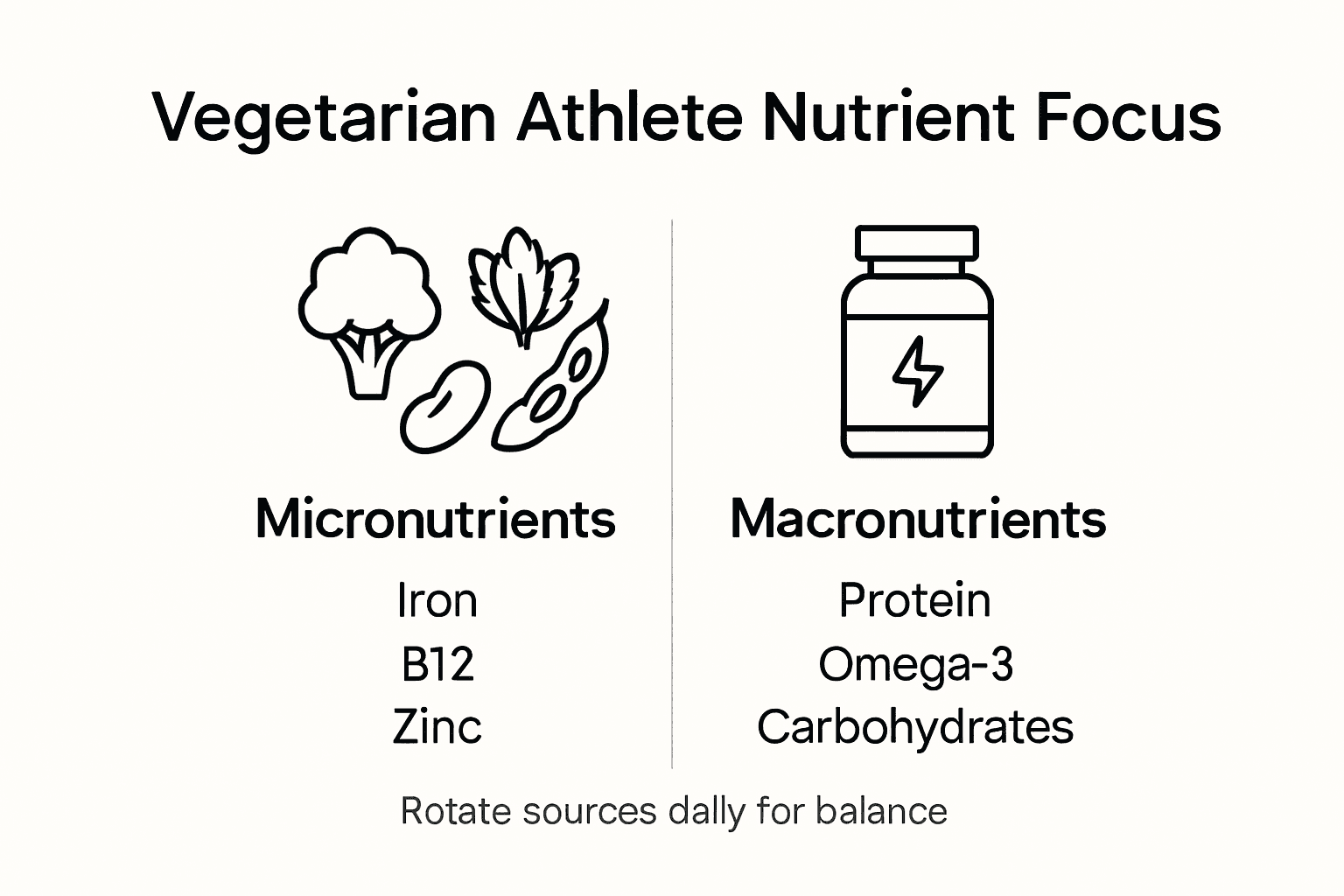
Here’s a quick reference comparing key micronutrients for vegetarian athletes and their optimal plant-based food sources:
| Nutrient | Importance for Athletes | Best Vegetarian Sources |
|---|---|---|
| Iron | Oxygen transport, endurance | Lentils, spinach, tofu |
| Vitamin B12 | Energy production, nerves | Fortified plant milks, nutritional yeast |
| Calcium | Bone health, muscle function | Fortified juices, kale, almonds |
| Zinc | Immune support, repair | Pumpkin seeds, chickpeas, quinoa |
| Omega-3 Fatty Acids | Brain & heart health, recovery | Chia seeds, flaxseed oil, walnuts |
Protein quality and quantity remain paramount for vegetarian athletes. Complete protein sources including quinoa, tempeh, seitan, and combinations of legumes with whole grains can provide comprehensive amino acid profiles. Strategic meal planning involves consuming varied protein sources throughout the day, aiming for approximately 1.6-2.0 grams per kilogram of body weight for strength athletes, with careful attention to amino acid diversity and overall protein absorption rates.
Pro tip: Rotate protein sources daily and consider tracking your macro and micronutrient intake using digital nutrition apps to ensure comprehensive nutritional coverage in your plant-based meal plan.
Health and Performance Benefits Explained
Vegetarian fitness diets offer nuanced performance advantages that extend beyond traditional nutritional expectations. Molecular research examining exercise adaptation reveals significant physiological benefits, particularly for endurance athletes, through enhanced mitochondrial function and improved cardiovascular efficiency. These dietary approaches demonstrate remarkable potential for optimizing metabolic responses and supporting sustained athletic performance.

Endurance performance sees particularly impressive improvements with plant-based nutritional strategies. Athletes adopting vegetarian meal plans often experience enhanced hemoglobin concentration, improved oxygen utilization, and more efficient mitochondrial energy production. The anti-inflammatory properties inherent in plant-based foods contribute to faster recovery times, reduced oxidative stress, and more consistent training capacity. These physiological adaptations suggest vegetarian diets can potentially provide competitive advantages in aerobic and endurance-focused athletic disciplines.
Beyond performance metrics, vegetarian fitness nutrition offers substantial long-term health benefits. Reduced risks of cardiovascular disease, improved insulin sensitivity, and lower systemic inflammation represent critical advantages for athletes seeking sustainable wellness. The diverse micronutrient profile of plant-based diets supports immune function, cellular repair mechanisms, and metabolic efficiency, creating a holistic approach to athletic nutrition that prioritizes both immediate performance and long-term physiological resilience.
Pro tip: Implement a gradual transition to plant-based nutrition, monitoring your body’s response and energy levels while working with a sports nutritionist to customize your specific dietary approach.
Comparing Vegetarian and Non-Vegetarian Meals
Comprehensive nutritional research reveals that well-planned vegetarian and non-vegetarian meal plans can effectively support athletic performance with remarkable similarity. The critical distinction lies not in dietary superiority, but in strategic nutrient management. Athletes can achieve comparable performance outcomes by carefully designing meal plans that address specific macronutrient and micronutrient requirements, regardless of protein source.
Nutritional profiles demonstrate intriguing differences between vegetarian and non-vegetarian approaches. Systematic reviews comparing dietary patterns consistently show vegetarian diets often yield additional health benefits, including lower body mass index, reduced blood pressure, and improved cholesterol levels. Non-vegetarian meals traditionally provide more direct protein sources, while vegetarian meals require more intentional protein combination and supplementation strategies to achieve equivalent amino acid profiles.
Performance metrics reveal that diet type becomes secondary to nutritional planning. Endurance athletes, strength trainers, and high-intensity performers can successfully maintain peak performance through either dietary approach. The key differentiator involves understanding individual metabolic needs, selecting high-quality nutrient sources, and maintaining consistent macro and micronutrient intake. Vegetarian athletes must pay extra attention to protein diversity, iron absorption, vitamin B12 levels, and omega-3 fatty acid sources to match the nutritional density of traditional meal plans.
The table below highlights essential differences between vegetarian and non-vegetarian fitness meal strategies for athletes:
| Aspect | Vegetarian Approach | Non-Vegetarian Approach |
|---|---|---|
| Protein Sources | Legumes, soy, grains, seeds | Meat, fish, eggs, dairy |
| Key Supplement Needs | Vitamin B12, iron, omega-3s | Usually fewer, sometimes vitamin D |
| Typical Health Impact | Lower cholesterol, less inflammation | Higher protein density, faster iron absorption |
| Meal Planning Focus | Protein diversity, micronutrient balance | Lean protein choice, portion control |
Pro tip: Conduct periodic nutritional assessments and blood panels to ensure your chosen meal plan provides comprehensive nutrient coverage, regardless of whether you follow vegetarian or non-vegetarian dietary strategies.
Practical Tips for Transitioning Successfully
Strategic guidance from nutrition experts emphasizes a gradual, intentional approach to adopting vegetarian fitness meals. Successful transitions require systematic planning, understanding personal nutritional needs, and developing a comprehensive strategy that addresses both dietary preferences and performance requirements. Athletes must view this shift as a holistic nutritional adaptation rather than an abrupt dietary change.
Nutrient diversity becomes paramount during the transition process. USDA nutritional resources recommend focusing on multiple protein sources, incorporating iron-rich plant foods, and strategically using fortified products to maintain essential nutrient levels. Key strategies include exploring diverse protein alternatives like legumes, tempeh, seitan, and quinoa, while simultaneously tracking macro and micronutrient intake to ensure comprehensive nutritional coverage. Consulting with a sports nutritionist can provide personalized guidance tailored to individual metabolic requirements and athletic goals.
Physical and psychological preparation plays a crucial role in maintaining athletic performance during dietary transitions. Athletes should implement changes incrementally, allowing their bodies to adapt to new nutrient sources and absorption patterns. Monitoring energy levels, recovery times, and overall performance metrics helps identify necessary adjustments. Supplementation might become necessary, particularly for nutrients like vitamin B12, iron, and omega-3 fatty acids, which require more intentional intake in plant-based diets.
Pro tip: Create a detailed food diary during your transition, tracking energy levels, performance metrics, and nutrient intake to identify potential gaps and optimize your vegetarian fitness nutrition strategy.
Fuel Your Fitness Goals with Tailored Vegetarian Meals
Transitioning to a vegetarian fitness diet presents clear challenges such as meeting protein needs, ensuring sufficient iron and vitamin B12 intake, and maintaining energy for peak athletic performance. If you are striving to sustain muscle mass, optimize recovery, and balance key micronutrients like omega-3 fatty acids without compromising convenience or taste you need a trusted partner that understands these specific nutritional demands. Fresh Fitness Food delivers expertly crafted, macro-balanced vegetarian meals designed to support your unique fitness objectives with vibrant plant-based ingredients that power your training and recovery.
Discover how to effortlessly integrate nutrient-dense, customized vegetarian fitness meals into your routine at Fresh Fitness Food. Start your journey today with fresh, professionally prepared meals tailored to your protein requirements, micronutrient balance, and lifestyle needs. Don’t let meal prep hold you back from reaching your athletic potential visit Fresh Fitness Food now and take the first step toward achieving lasting performance and health excellence. Explore all our options including personalized meal plans and coaching services to create a holistic nutrition strategy customized for you.
Frequently Asked Questions
What are the benefits of vegetarian fitness meals for athletes?
Vegetarian fitness meals provide numerous benefits, including enhanced endurance, improved cardiovascular function, and reduced inflammation. They also support muscle recovery and offer long-term health advantages like lower risks of cardiovascular disease.
How can athletes ensure they get enough protein on a vegetarian diet?
Athletes can meet their protein needs by incorporating diverse protein sources such as legumes, quinoa, tofu, tempeh, and plant-based protein powders into their meals. It’s crucial to consume a variety of these foods throughout the day to achieve a complete amino acid profile.
What key nutrients should vegetarian athletes focus on?
Vegetarian athletes should pay particular attention to nutrients such as iron, vitamin B12, calcium, zinc, and omega-3 fatty acids. These can be obtained from fortified foods, legumes, seeds, and dark leafy greens to prevent deficiencies that might impact performance.
How should vegetarian athletes plan their meals for optimal performance?
Meal planning for vegetarian athletes should focus on a balanced intake of macronutrients and micronutrients. It’s important to rotate protein sources, include iron-rich foods, and consider supplementation for nutrients like vitamin B12 and omega-3s to support energy levels and recovery.