

Why Prioritize Meal Prep for Busy Professionals
Busy days in Bucuresti can leave even the most motivated professionals stuck deciding between fast food and skipped meals. Meal prep turns that struggle into a solution, offering flexibility and control without extra stress. By planning ahead, you build consistent nutrition habits that simplify your routine, support weight management, and keep your energy high for fitness goals. Discover how easy meal prep can fit your life and break myths about boring food or rigid routines.
Table of Contents
- Defining Meal Prep And Common Myths
- Health And Performance Benefits Explained
- Time Management And Stress Reduction
- Customization For Fitness And Dietary Goals
- Common Pitfalls And How To Avoid Them
Key Takeaways
| Point | Details |
|---|---|
| Meal Prep Flexibility | Meal prep allows customization based on individual goals and schedules, making it adaptable for anyone. |
| Busting Myths | Meal prep does not require advanced cooking skills or expensive equipment; simple techniques suffice. |
| Health Benefits | Regular meal prep leads to better nutrition quality, enhanced energy levels, and improved workout performance. |
| Time Management | Consolidating cooking and meal planning saves significant time and reduces daily decision fatigue. |
Defining Meal Prep and Common Myths
Meal prep means planning and preparing meals ahead of time to support a consistent, healthy eating pattern. For busy professionals in Bucuresti juggling office responsibilities with fitness goals, this approach removes the daily decision fatigue of “what’s for lunch?” Instead of wondering whether to grab fast food at 1 PM, you already have a nutritious meal waiting.
The beauty of meal prep is its flexibility. Planning and preparing meals ahead doesn’t mean you’re locked into eating the same bland chicken and rice for five days straight. You can prep individual components—roasted vegetables, cooked proteins, grains—and mix them differently each day. Or you can prepare full meals. The approach adapts to your schedule, cooking skills, and personal goals.
What Meal Prep Actually Looks Like
Meal prep takes many forms depending on what works for your life:
- Component prep: Cook proteins, grains, and vegetables separately, then combine them fresh each meal
- Full meal prep: Prepare complete, balanced meals in containers ready to heat and eat
- Hybrid approach: Prep some components while outsourcing others to a meal delivery service
- Strategic prep: Focus on prepping just breakfast or dinner, leaving other meals flexible
You control the scope. A busy marketing manager might prep only lunches for the week. A fitness enthusiast training for a competition might prep all three meals plus snacks.
Here’s a quick comparison of popular meal prep approaches and who they best serve:
| Approach | Best For | Flexibility | Time Needed |
|---|---|---|---|
| Component prep | People wanting variety | High | Moderate |
| Full meal prep | Those needing convenience | Medium | High |
| Hybrid | Busy professionals | Very High | Low |
| Strategic prep | Beginners/limited schedules | High | Low |
Busting the Myths
Meal prep carries several false assumptions that stop people from trying it.
Myth #1: Meal prep requires advanced cooking skills. False. Most meal prep involves basic cooking—roasting, boiling, grilling. You don’t need culinary school credentials. Simple techniques applied consistently beat complicated recipes every time.
Myth #2: Meal prepping is rigid and boring. This one’s outdated. You prep the building blocks, not finished meals. Mix proteins, seasonings, and vegetables differently each day. Monday’s Mediterranean bowl becomes Wednesday’s Asian-inspired wrap.
Myth #3: It saves no money. Bulk purchasing and reducing food waste create real savings. Professionals typically spend 30-40% less on food when they prep versus buying meals daily.
Myth #4: You need fancy equipment. Basic containers, a sharp knife, and one good pan get the job done. Expensive gadgets are nice but optional.
Meal prep is about working smarter with your eating, not restricting yourself to boring food or complicated recipes.
Pro tip: Start small with just one meal per week—prep five lunch containers for Monday through Friday. Master that before expanding to additional meals or more complex recipes.
Health and Performance Benefits Explained
Meal prep transforms your body from the inside out. When you control what goes into your meals, you control your results. Busy professionals in Bucuresti often sacrifice nutrition for convenience, but meal prep flips that equation—convenience becomes the healthy choice.
The most immediate benefit is better diet quality. Controlling ingredients and portion sizes means you’re eating balanced nutrition consistently, not whatever’s fastest at 7 PM. You replace processed takeout with real food: lean proteins, whole grains, fresh vegetables.
This consistency drives real physical changes. University research shows a direct link between meal prep and increased physical activity levels. When your body gets proper fuel, you have more energy for workouts. Your gym sessions feel stronger. Your recovery improves.
The Performance Connection
Your fitness results depend on two factors: training plus nutrition. You can’t out-train a bad diet.
- Energy levels increase: Balanced meals stabilize blood sugar, eliminating the 3 PM energy crash
- Workout performance improves: Proper macronutrient timing supports muscle recovery and strength gains
- Metabolism stays consistent: Regular meal timing prevents metabolic slowdown from irregular eating
- Mental clarity sharpens: Better nutrition reduces brain fog during high-pressure workdays
A professional working 10-hour days notices these changes immediately. Your afternoon meetings feel sharper. Your evening training feels stronger.
Weight Management Without the Struggle
Portion control sounds restrictive but feels like freedom. Instead of wondering “how much should I eat,” your prepped containers answer the question. You eat enough to feel satisfied and fuel your fitness goals without excess.

This removes one of the biggest barriers to weight management: decision fatigue. Every meal choice is already made.
Below is a summary of key benefits for professionals adopting meal prep:
| Benefit | Impact at Work | Impact on Fitness |
|---|---|---|
| Higher energy levels | Improved focus | Stronger workouts |
| Consistent nutrition | Fewer midday crashes | Better muscle recovery |
| Reduced decision fatigue | More productivity | Easier weight control |
| Lower stress | Better time management | Increased motivation |
Consistent nutrition habits compound over time—small daily choices create noticeable results in weeks, not months.
Pro tip: Track how you feel for two weeks after starting meal prep—energy levels, workout performance, and appetite clarity. Document these personal wins before focusing on scale weight.
Time Management and Stress Reduction
Time is your most valuable resource as a busy professional. Meal prep gives it back to you. Instead of spending 90 minutes cooking dinner on a Tuesday night after back-to-back meetings, you reheat food you prepared on Sunday.
The math is simple: one 3-hour prep session beats seven separate 30-minute cooking sessions. But the real benefit goes deeper than minutes saved. Consolidating cooking into fewer sessions eliminates daily decision fatigue and last-minute cooking stress that compounds throughout your week.
Think about your Tuesday evening right now. You finish work at 6 PM. You’re tired. Your brain is spent from decisions. You open the fridge thinking “what should I make?” That friction leads to takeout orders and late-night fast food. Meal prep removes that friction entirely.
The Decision Fatigue Problem
Busy professionals make thousands of decisions daily—client calls, project priorities, team management. By evening, your decision-making ability is depleted.
- What to eat: Already decided Sunday
- How long to cook: Minimal prep time needed
- Nutritional balance: Predetermined when you prepped
- Grocery shopping stress: Done once per week
- Food waste anxiety: Planned portions eliminate guessing
Each eliminated decision preserves mental energy for what matters—your work, your training, your relationships.
Stress Reduction That Compounds
Meal-related stress isn’t just about cooking. Advanced meal prepping reduces barriers such as time constraints and stress by handling meal planning and shopping in advance. You stop experiencing “what’s for dinner” anxiety three times daily.
This consistent routine creates a sense of control. Your body knows it will receive proper nutrition. Your fitness goals feel achievable, not like constant hustling against time constraints.
Real Hours Recovered
Consider what you gain over one month:
- Grocery shopping: 2-3 hours consolidation
- Meal planning: 1 hour total versus scattered planning
- Daily cooking eliminated: 10-12 hours recovered
- Decision-making time saved: 5-7 hours
That’s roughly 20 hours per month—equivalent to a full workday—returned to your control.
When meal prep removes daily cooking stress, you reclaim time and mental energy for priorities that actually matter to your life and career.
Pro tip: Prep meals on Sunday evening between 5-8 PM, treating it like a non-negotiable appointment. Your future self will thank you every single weeknight when dinner is ready.
Customization for Fitness and Dietary Goals
One meal plan doesn’t fit all professionals. Your fitness goals differ from your colleague’s goals. Your dietary restrictions are unique. Meal prep shines because it adapts to exactly what you need.
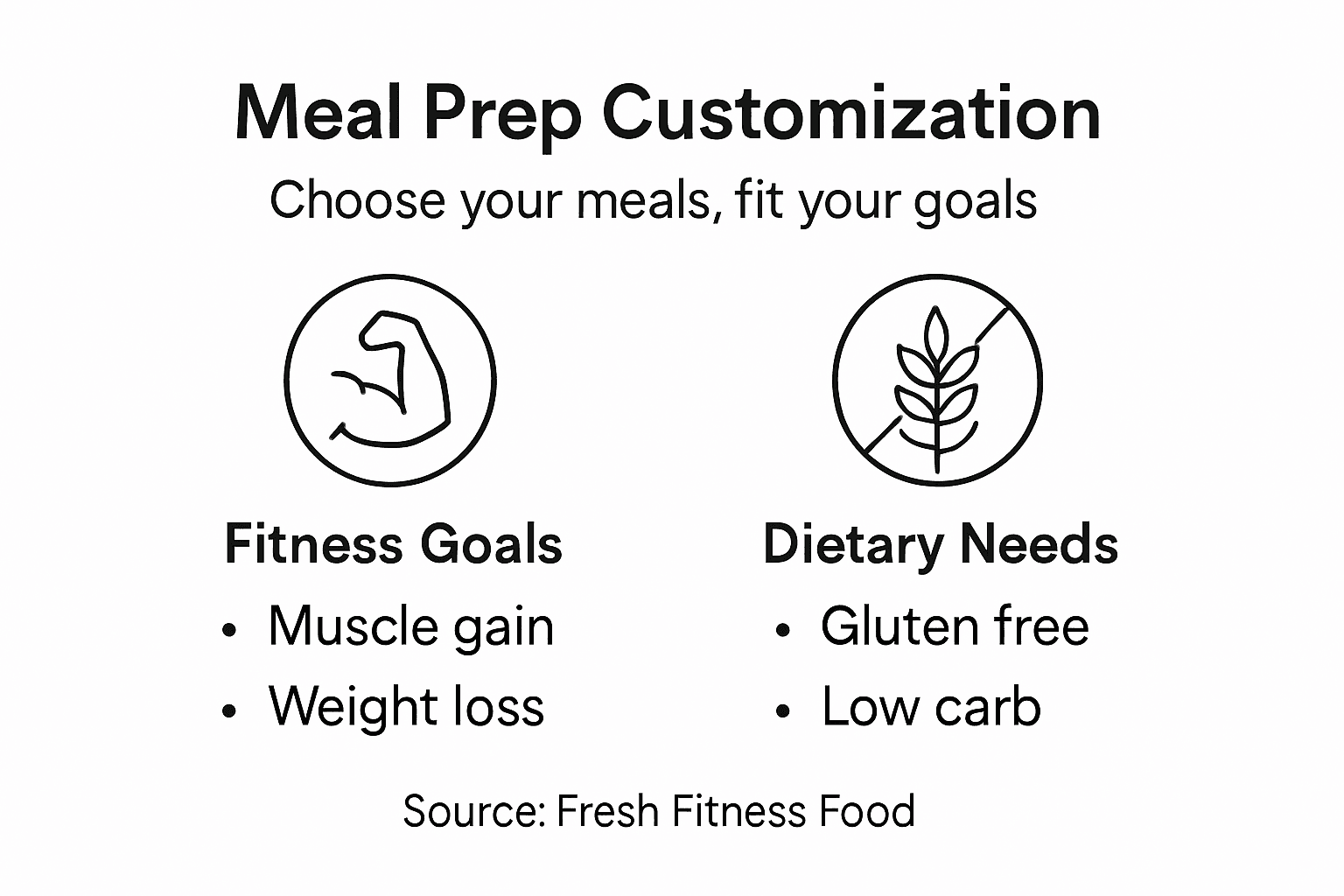
Unlike grabbing whatever’s available, customizing macronutrient distribution and portion sizes lets you build meals aligned with your specific objectives. A professional training for strength gain needs different macros than someone focused on weight loss. Meal prep accommodates both.
Tailored Approaches for Different Goals
Your fitness objective determines your nutritional strategy:
- Muscle gain: Higher protein intake, caloric surplus, strategic carb timing around workouts
- Weight loss: Controlled calories, high protein for satiety, fiber-rich vegetables
- Athletic performance: Balanced macros optimized for your sport and training schedule
- General wellness: Consistent nutrition supporting energy and disease prevention
- Dietary restrictions: Vegan, keto, gluten-free, or other specialized approaches
Meal prep lets you build exactly these frameworks without daily improvisation. You’re not hoping you hit your macros—you’ve engineered them into every container.
Control Over Every Variable
When you prep, you control everything. The protein source, the cooking method, the portion size, the sides. This precision matters more than most professionals realize.
A 200-gram chicken breast prepared at home contains what you expect. A restaurant chicken dish? Unknown variables in sauce, oil, and preparation method. Meal prep removes guesswork from nutrition.
This becomes critical when chasing specific results. A 5-kilogram body recomposition takes months. Small daily decisions compound. Consistency beats perfection, and meal prep guarantees consistency.
Adapting as Goals Evolve
Your priorities shift. You might start with weight loss, then transition to muscle gain. Meal prep adjusts immediately. You shift ingredient ratios, portion sizes, and macronutrient focus without overcomplicating your routine.
This flexibility within structure is what separates effective nutrition from complicated diets. You maintain the habit while adjusting the variables that matter.
Customization combined with consistency creates measurable results—you’re not just eating healthy, you’re eating strategically toward specific outcomes.
Pro tip: Define your primary fitness goal for the next 8 weeks, calculate target macronutrients for that goal, then build your meal prep around those numbers. Reassess and adjust every 4 weeks based on progress.
Common Pitfalls and How to Avoid Them
Meal prep sounds perfect until reality hits. You enthusiastically cook five meals on Sunday, then eat the same chicken and rice three days in a row. By Wednesday, you’re ordering takeout because boredom wins. This is the most common failure point—and it’s completely avoidable.
Most professionals quit meal prep not because it’s difficult, but because they hit predictable obstacles. Understanding these pitfalls before they derail you keeps your habit alive.
The Boredom Trap
Eating identical meals daily kills motivation faster than anything else. Your taste buds revolt. Your brain craves variety.
Starting small and rotating recipes prevents monotony from destroying your consistency. Instead of prepping five identical meals, prep three different options. Mix proteins, rotate vegetables seasonally, and vary cooking methods.
Example: Monday’s grilled salmon becomes Wednesday’s pan-seared preparation with different sides. Same protein, completely different experience.
Storage and Space Limitations
Your refrigerator has limits. An apartment in Bucuresti rarely offers unlimited space for meal prep containers.
Optimize your approach:
- Use stackable, uniform containers to maximize vertical space
- Prep components separately instead of full meals (proteins, grains, vegetables stored independently)
- Freeze portions you won’t eat within 3-4 days
- Use vacuum-sealed bags for additional freezer storage
- Consider investing in one additional small refrigerator if space is genuinely constrictive
Space problems disappear when you’re strategic about container choices and freezing strategy.
The Cost Overwhelm
Buying groceries for five prepared meals feels expensive upfront. The psychology tricks you into thinking meal prep costs more than it actually does.
Budgeting grocery purchases sustains meal prep habits by reducing waste and buying strategically. Buy proteins on sale and freeze them. Purchase seasonal vegetables when prices drop. Compare unit costs between brands.
Realistically, homemade meals cost 40-60% less than equivalent restaurant meals. Your weekly cost might be 120-150 RON instead of 250-300 RON for the same nutrition.
Time Commitment Expectations
Many professionals overestimate how long meal prep takes. A realistic 3-hour Sunday session covers five days of lunches and dinners for one person.
Start smaller: prep just lunches for the first month. Master that, then expand. An overwhelming commitment kills habits. A manageable routine becomes permanent.
Meal prep fails when expectations don’t match reality—start small, solve problems as they appear, and scale gradually.
Pro tip: Week 1: prep only lunches with two recipe variations. Week 2: add dinners. Week 3: add snacks. This gradual scaling prevents burnout and builds sustainable habits.
Simplify Your Nutrition Without Sacrificing Quality or Time
Busy professionals often struggle with the demands of meal prep despite knowing its benefits. The article highlights common challenges like time constraints, decision fatigue, and the boredom that comes with repetitive meals. If you find yourself overwhelmed trying to balance a packed schedule and fitness goals, you are not alone. Key pain points include needing convenient, nutritious meals that fit specific dietary preferences while eliminating daily cooking stress and preserving variety.
At Fresh Fitness Food we understand that meal prep can feel like a massive time investment and an added source of stress. That is why we offer personalized, macro-balanced meal plans crafted to support your weight loss, muscle gain, vegan, keto, or detox objectives so you can enjoy fresh and flavorful food with zero prep time. Our service helps you avoid the boredom trap by rotating menus regularly and guarantees portion-controlled meals tailored exactly to your fitness journey.
[Ready to reclaim your time and energize your performance?]
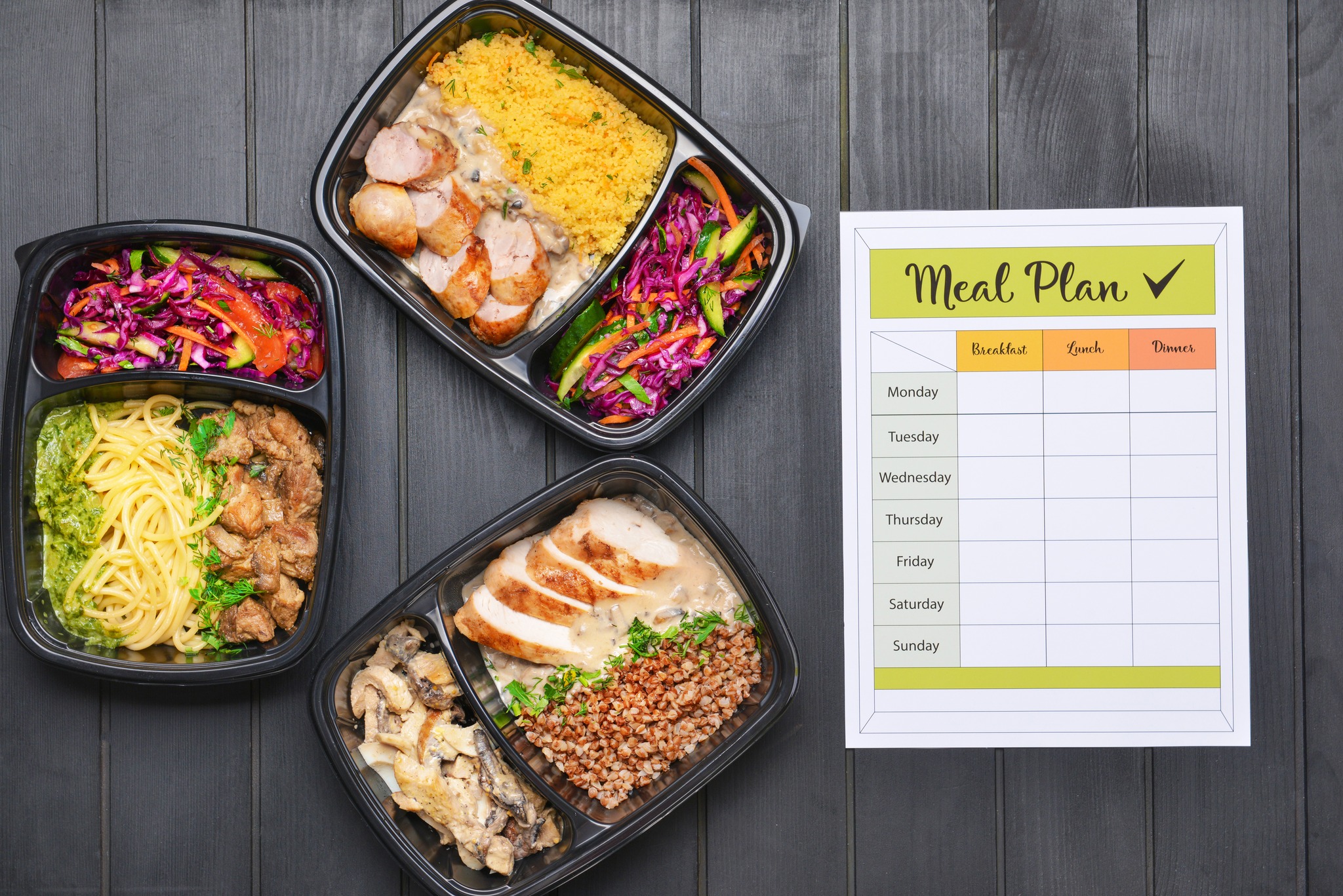
Discover how convenient healthy eating can be by exploring our flexible plans at Fresh Fitness Food. Stop spending hours in the kitchen and start fueling your body the smart way today. Take the first step toward stress-free nutrition and lasting progress now.
Frequently Asked Questions
What is meal prep and why is it important for busy professionals?
Meal prep refers to planning and preparing meals in advance to maintain a consistent and healthy eating pattern. It is important for busy professionals as it eliminates daily decision fatigue regarding meals, provides convenience, and supports health and fitness goals.
How can meal prep improve my diet quality?
Meal prep allows you to control the ingredients and portion sizes in your meals, leading to more balanced nutrition. By preparing meals ahead of time, you replace processed takeout with wholesome foods like lean proteins, whole grains, and fresh vegetables, enhancing overall diet quality.
What are some common meal prep methods I can use?
Common meal prep methods include component prep (cooking proteins, grains, and vegetables separately), full meal prep (preparing complete meals), and a hybrid approach (prepping some components while using meal delivery services). Choose the method that best fits your schedule and preferences.
How can I prevent boredom with my meal prep?
To avoid boredom, start small by preparing different meals rather than identical ones. Rotate proteins, vary cooking methods, and mix vegetables seasonally to create diverse meals throughout the week while maintaining the convenience of meal prep.