

How to Choose Macro-Balanced Meals for Healthy Living
Balancing long workdays with intense training can make healthy eating in Bucuresti feel like a daily challenge. Each body responds differently to food choices, and your goals—whether weight management, muscle building, or increased energy—demand a custom approach. A macro-balanced meal strategy helps you align nutrition with fitness results without wasting time, offering options for diverse preferences like keto or vegan. This guide breaks down the essentials so you can make every meal count toward your healthiest, most productive self.
Table of Contents
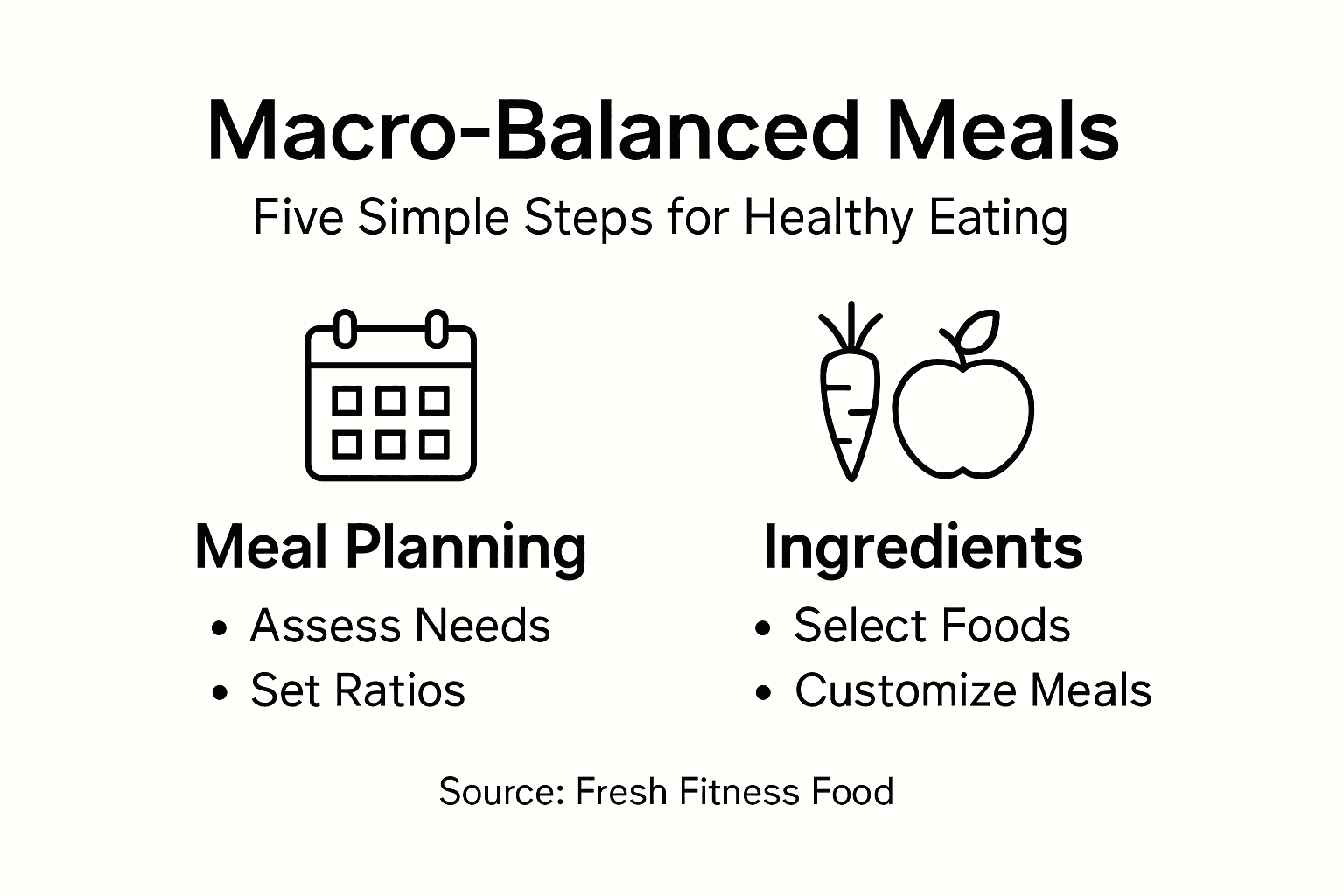
- Step 1: Assess Your Specific Dietary And Fitness Needs
- Step 2: Determine Your Ideal Macronutrient Ratios
- Step 3: Select Meal Components That Align With Your Ratios
- Step 4: Customize And Order Macro-Balanced Meals
- Step 5: Verify Your Meal Choices For Nutritional Balance
Quick Summary
| Key Point | Explanation |
|---|---|
| 1. Assess Your Dietary Needs | Analyze fitness goals, body composition, activity level, and health status for a tailored nutrition approach. |
| 2. Calculate Macronutrient Ratios | Determine ideal macro ratios based on specific fitness objectives for effective nutrition alignment. |
| 3. Choose High-Quality Ingredients | Select whole, minimally processed foods to meet your calculated macronutrient ratios effectively. |
| 4. Customize Meal Plans | Use meal services that offer personalized macro options to simplify the maintenance of your dietary goals. |
| 5. Regularly Verify Nutritional Adequacy | Continuously assess meals for macro balance and micronutrient density to optimize performance over time. |
Step 1: Assess your specific dietary and fitness needs
Choosing macro-balanced meals requires a strategic understanding of your unique physiological requirements. Your fitness goals, body composition, activity level, and health status all play critical roles in determining the ideal nutritional approach. Nutrition assessment methods provide comprehensive frameworks for evaluating individual dietary needs.
To effectively assess your nutritional requirements, follow these key steps:
- Evaluate your current fitness goals: Weight loss, muscle gain, endurance training, or general wellness
- Analyze your body composition: Calculate body fat percentage, muscle mass, and metabolic rate
- Review your activity level: Sedentary, moderately active, or high-intensity training
- Consider existing health conditions: Metabolic disorders, allergies, or dietary restrictions
Your macro balance will depend on these individual factors. Professional nutritionists recommend tracking your current food intake, understanding your metabolism, and aligning your meal plan with specific performance objectives. Athletes and fitness enthusiasts often require more precise macro calculations compared to individuals with general wellness goals.
Pro tip: Invest in a professional body composition assessment to get the most accurate baseline for your personalized nutrition strategy.
Step 2: Determine your ideal macronutrient ratios
Identifying the right macronutrient balance is crucial for achieving your specific fitness and health objectives. Macronutrient ratio calculations provide a scientific approach to personalizing your nutritional intake based on individual goals and physiological requirements.
To determine your ideal macronutrient ratios, consider these essential factors:
- Assess your primary fitness goal: Weight loss, muscle gain, endurance training, or maintenance
- Calculate your total daily energy expenditure (TDEE): Factor in basal metabolic rate and activity level
- Understand typical macro distributions:
- Weight loss: 45-55% carbs, 25-30% protein, 20-25% fat
- Muscle gain: 55-65% carbs, 25-30% protein, 15-20% fat
- Endurance training: 65-75% carbs, 15-20% protein, 10-15% fat
Your macro ratios are not a one-size-fits-all solution. They require careful consideration of your age, sex, activity level, metabolic health, and personal dietary preferences. Professional nutritionists recommend periodic reassessment and fine-tuning to ensure your macro balance continues to support your evolving fitness journey.
Here’s a summary of macro ratio approaches for common fitness goals:
| Fitness Goal | Carb Ratio | Protein Ratio | Fat Ratio |
|---|---|---|---|
| Weight Loss | 45-55% | 25-30% | 20-25% |
| Muscle Gain | 55-65% | 25-30% | 15-20% |
| Endurance Training | 65-75% | 15-20% | 10-15% |
| Maintenance | 50-60% | 20-25% | 20-25% |
Personalized macro ratios are the key to optimizing your nutritional strategy and achieving sustainable fitness results.
Pro tip: Invest in a digital macro tracking app to help you consistently monitor and adjust your nutrient intake with precision.
Step 3: Select meal components that align with your ratios
Successfully constructing macro-balanced meals requires strategic food selection that precisely matches your calculated nutritional requirements. Macronutrient meal composition plays a critical role in optimizing metabolic health and supporting your specific fitness objectives.
To create meals that align with your macro ratios, focus on these key food categories:
-
Protein sources:
- Lean meats (chicken, turkey, fish)
- Plant-based proteins (legumes, tofu, tempeh)
- Low-fat dairy products
- Eggs and egg whites
-
Carbohydrate options:
- Whole grains (quinoa, brown rice, oats)
- Vegetables and fruits
- Sweet potatoes
- Beans and lentils
-
Healthy fat selections:
- Avocados
- Nuts and seeds
- Olive oil
- Fatty fish
- Nut butters
Your meal components should prioritize whole, minimally processed foods that provide dense nutritional profiles. Professional nutritionists recommend creating a diverse menu that incorporates varied protein, carbohydrate, and fat sources to ensure comprehensive nutrient intake while maintaining your targeted macro balance.

Compare key protein, carb, and fat sources and their typical benefits:
| Food Type | Common Examples | Main Benefit |
|---|---|---|
| Protein | Chicken, tofu, eggs | Muscle repair and growth |
| Carbohydrates | Quinoa, oats, sweet potato | Energy and fiber supply |
| Healthy Fats | Avocado, olive oil, salmon | Cellular health support |
Intentional food selection is the cornerstone of achieving your nutritional and fitness goals.
Pro tip: Prep ingredients in bulk and portion them according to your macro ratios to simplify meal planning and ensure consistent nutritional alignment.
Step 4: Customize and order macro-balanced meals
Transforming your macro-balanced nutrition strategy from theory to practice requires selecting a meal service that understands and supports your specific dietary goals. Personalized meal planning enables busy professionals to maintain precise nutritional intake without sacrificing convenience or taste.
When customizing and ordering macro-balanced meals, consider these essential strategies:
-
Personalization options to evaluate:
- Macro ratio customization
- Dietary preference accommodations (keto, vegan, vegetarian)
- Calorie range selection
- Portion size flexibility
-
Key ordering considerations:
- Verify macro breakdown for each meal
- Check ingredient quality and sourcing
- Review nutrition labels thoroughly
- Select meals matching your specific fitness objectives
The most effective macro-balanced meal services offer transparent nutritional information, allowing you to precisely track and adjust your dietary intake. By selecting meals that align with your calculated macronutrient ratios, you transform nutrition from a complex calculation into a seamless, enjoyable experience.
Precision in meal selection is the bridge between nutritional knowledge and tangible health results.
Pro tip: Request a sample meal plan and macro breakdown before committing to a long-term meal service to ensure perfect alignment with your fitness goals.
Step 5: Verify your meal choices for nutritional balance
Ensuring your macro-balanced meals deliver optimal nutrition requires systematic verification beyond basic calculations. Dietary reference values provide scientifically validated frameworks for evaluating nutritional adequacy and ensuring comprehensive health support.
To effectively verify your meal choices, implement these comprehensive assessment strategies:
-
Nutritional verification checklist:
- Confirm macro percentages match your calculated ratios
- Assess micronutrient density
- Evaluate ingredient quality and sourcing
- Check for potential allergen interactions
-
Key verification techniques:
- Cross-reference nutrition labels with your target macros
- Use digital tracking apps for precise nutrient analysis
- Periodically consult nutrition professionals
- Monitor personal performance and energy levels
Professional nutritionists recommend treating meal verification as a dynamic process. Your body’s nutritional needs evolve with changes in fitness levels, age, and health status, making continuous assessment crucial for maintaining optimal performance and wellness.
Consistent nutritional verification transforms generic meal plans into personalized performance optimization strategies.
Pro tip: Create a nutrition tracking spreadsheet to document meal compositions, macro ratios, and your corresponding energy and performance metrics for ongoing refinement.
Achieve Your Perfect Macro Balance with Personalized Meal Solutions
Choosing macro-balanced meals can feel overwhelming when you try to assess your unique needs, determine ideal macronutrient ratios, and find meals that truly support your fitness goals. This article highlights common challenges such as aligning your diet with precise macro targets, tracking nutritional values, and maintaining variety while staying convenient. At Fresh Fitness Food, we understand these struggles and offer expertly crafted meals tailored to your specific macro ratios and dietary preferences. Whether you aim for weight loss, muscle gain, or endurance training, our fresh, wholesome ingredients and customizable plans make staying on track easier and more enjoyable.
Experience the confidence of knowing every meal supports your health journey without the hassle of preparing, calculating, or guessing. Our platform combines nutrition expertise with convenience, allowing you to focus on your workouts and lifestyle while we handle the nutrition details. Discover how simple and satisfying eating macro-balanced meals can be.
Explore our personalized meal options today at Fresh Fitness Food.

Start transforming your nutrition strategy now by visiting Fresh Fitness Food. Take advantage of our customizable menus designed specifically to match your calculated macro needs. Don’t wait to fuel your goals with fresh, delicious meals made just for you.
Frequently Asked Questions
How do I assess my dietary and fitness needs for macro-balanced meals?
To assess your dietary and fitness needs, evaluate your current goals, analyze your body composition, review your activity level, and consider any existing health conditions. Start by tracking your food intake and understanding your metabolism to create a personalized nutrition strategy.
What macronutrient ratios should I aim for based on my fitness goals?
Your ideal macronutrient ratios depend on your fitness objectives. For weight loss, aim for 45-55% carbs, 25-30% protein, and 20-25% fat, while muscle gain usually requires 55-65% carbs, 25-30% protein, and 15-20% fat. Calculate your TDEE and adjust these ratios according to your specific goals.
How can I select meal components that align with my macro ratios?
To select meal components, focus on high-quality protein sources, whole grains for carbs, and healthy fats. Prioritize foods like lean meats, vegetables, and nuts that fit within your calculated macronutrient ratios to ensure balanced nutrition.
What should I consider when customizing and ordering macro-balanced meals?
When ordering macro-balanced meals, check for options like macro ratio customization and ingredient quality. Ensure that meals match your specific fitness objectives and verify the nutrition labels for accuracy to maintain your targeted intake.
How can I verify that my meal choices are nutritionally balanced?
To verify the nutritional balance of your meals, use a checklist to confirm that macronutrient percentages match your calculated ratios and assess the micronutrient density. Keep a record of meals and monitor your energy levels and performance to ensure ongoing dietary alignment.