

Meal Planning for Fitness: Key to Effective Results
Most american-inspired meal planning strategies are failing to deliver lasting results for professionals in Bucuresti. For those juggling packed calendars and demanding fitness routines, nutrition often becomes an afterthought. Yet over 60 percent of individuals achieve greater weight loss and muscle gain with systematic meal planning tailored to their specific needs. Discover how personalized solutions can transform your approach by maximizing efficiency, variety, and freshness in every meal, all while supporting your unique fitness objectives.
Table of Contents
- Defining Meal Planning For Fitness Success
- Types Of Meal Plans For Fitness Goals
- How Personalized Meal Planning Works
- Essential Components Of An Effective Plan
- Common Mistakes And How To Avoid Them
Key Takeaways
| Point | Details |
|---|---|
| Personalized Meal Planning | Tailor nutrition to individual needs for optimal performance and recovery, considering metabolic rate, body composition, and fitness goals. |
| Types of Meal Plans | There are various meal plans for specific objectives such as muscle building, weight loss, endurance, and recovery, each requiring unique macronutrient strategies. |
| Common Mistakes | Avoid errors like improper meal timing, portion control issues, and nutritional imbalances to enhance performance and achieve goals. |
| Continuous Adjustment | Regularly reassess and modify meal plans based on changing physiological demands and individual progress to maintain effectiveness. |
Defining Meal Planning for Fitness Success
Meal planning for fitness success transforms nutrition from a random daily activity into a strategic performance tool. At its core, meal planning represents a systematic approach to fueling your body with precisely the right nutrients at optimal times to support athletic performance and body composition goals. Consistent eating patterns become the foundation of nutritional excellence.
Successful meal planning goes beyond simply counting calories. It involves understanding how different nutrients interact with your body’s metabolic processes, training intensity, and recovery needs. The athlete plate method provides a practical framework by adapting nutrient proportions based on workout intensity. This approach strategically balances vegetables and fruits, complex carbohydrates, lean proteins, and healthy fats to create a comprehensive nutritional strategy that supports both performance and overall health.
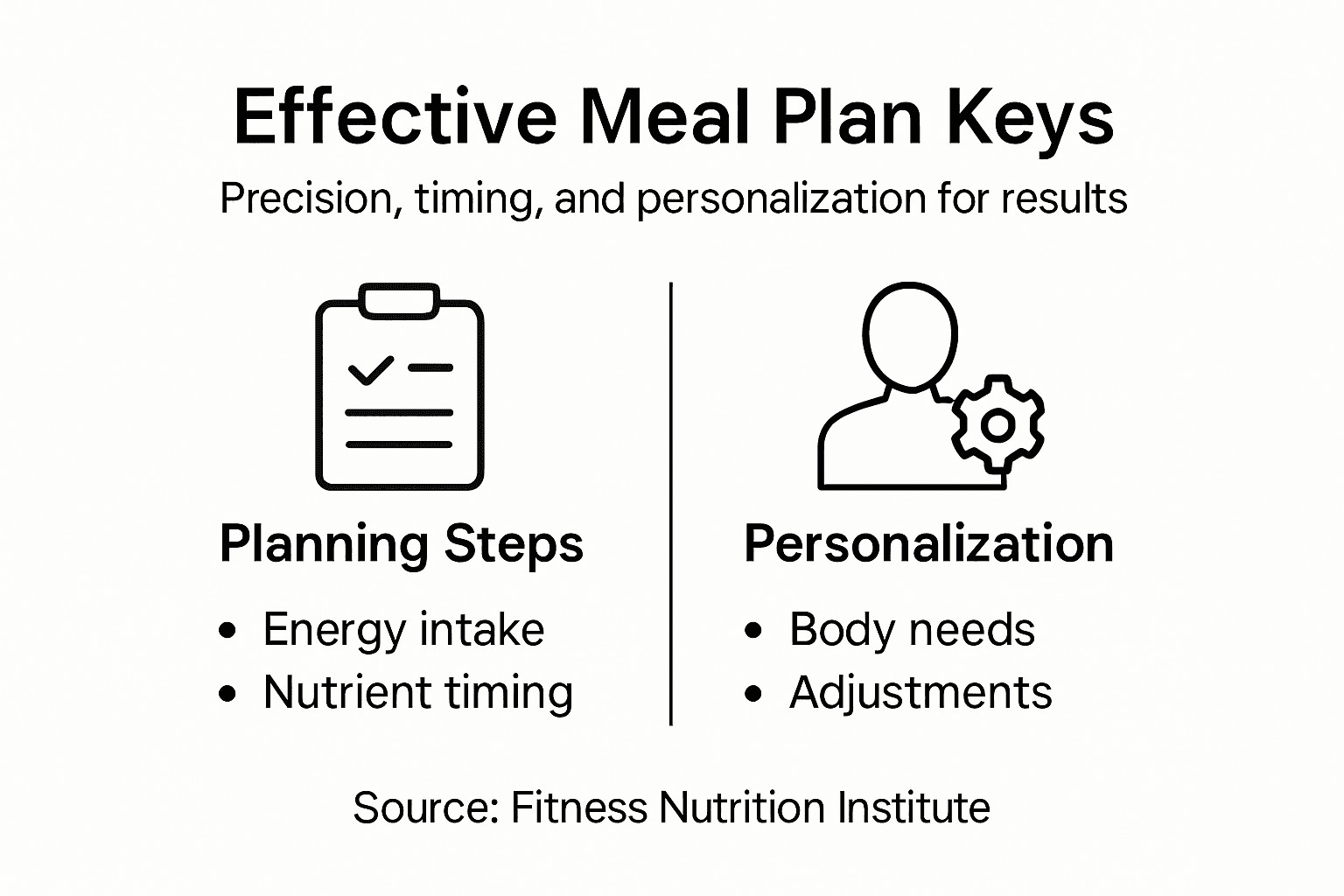
The key elements of effective meal planning include precise energy intake calculation, nutrient timing, and personalization. Every individual’s nutritional requirements differ based on factors like age, gender, fitness goals, metabolic rate, and training frequency. Evidence-based nutrition strategies demonstrate that a one-size-fits-all approach rarely delivers optimal results. Instead, successful meal planning demands a tailored approach that considers your unique physiological profile, lifestyle constraints, and specific fitness objectives.

Pro tip: Start by tracking your current nutritional intake for two weeks to establish a baseline understanding of your existing eating patterns before designing a targeted meal plan.
Types of Meal Plans for Fitness Goals
Fitness meal plans are not one-size-fits-all solutions but strategically designed nutritional approaches tailored to specific performance objectives. Athletic nutrition strategies recognize that different fitness goals demand unique nutritional frameworks, ranging from muscle building and weight loss to endurance training and competition preparation.
Typically, fitness meal plans can be categorized into several primary types based on specific objectives:
- Muscle Building Plan: Emphasizes high protein intake, complex carbohydrates, and strategic caloric surplus
- Weight Loss Plan: Focuses on calorie deficit, lean proteins, and metabolic optimization
- Endurance Athlete Plan: Prioritizes complex carbohydrates, consistent energy distribution, and hydration
- Performance Recovery Plan: Centers on rapid nutrient replenishment and anti-inflammatory foods
Each meal plan type requires precise macronutrient manipulation and careful metabolic consideration. The key is understanding how nutritional intake directly correlates with training intensity, body composition goals, and individual metabolic responses. Successful meal planning transcends generic dietary recommendations by incorporating personalized factors like age, training frequency, body type, and specific performance objectives.
Here’s a comparative overview of meal plan types and when each is most effective:
| Meal Plan Type | Primary Focus | Best For |
|---|---|---|
| Muscle Building Plan | High protein, calorie surplus | Gaining muscle and strength |
| Weight Loss Plan | Calorie deficit, lean protein | Reducing body fat, cutting phase |
| Endurance Athlete Plan | Carbohydrate-rich, hydration | Long-distance or high-volume training |
| Performance Recovery | Rapid nutrient replenishment | Post-competition or injury repair |
Pro tip: Consult a registered nutritionist to develop a meal plan that precisely matches your unique physiological profile and fitness goals.
How Personalized Meal Planning Works
Personalized meal planning transforms nutrition from a generic approach to a precision-driven strategy tailored to individual physiological needs. Athlete nutrition optimization goes far beyond simple calorie counting, integrating complex factors like metabolic rate, training intensity, body composition, and personal health objectives.
The core components of a truly personalized meal plan involve comprehensive assessment across multiple dimensions:
- Metabolic Profiling: Analyzing individual resting metabolic rate
- Body Composition Analysis: Measuring muscle mass, body fat percentage
- Performance Goals: Identifying specific fitness targets
- Lifestyle Factors: Considering sleep patterns, stress levels, and daily activity
- Nutritional Preferences: Accounting for dietary restrictions and food tolerances
Successful personalization requires dynamic nutritional strategies that adapt to changing physiological demands. This means meal plans are not static documents but living frameworks that evolve with an individual’s fitness journey. The ultimate goal is creating a nutritional approach that not only supports performance but also enhances overall metabolic efficiency, ensuring that every meal serves a specific purpose in one’s fitness ecosystem.
Pro tip: Schedule a comprehensive metabolic assessment every 12-16 weeks to recalibrate your personalized meal plan and track physiological progress.
Essential Components of an Effective Plan
Crafting an exceptional meal plan requires strategic integration of multiple nutritional and practical elements. Comprehensive meal planning strategies demand a holistic approach that goes beyond simple ingredient selection, focusing on creating sustainable, adaptable nutrition frameworks that support individual fitness objectives.
The essential components of an effective meal plan include:
- Nutritional Balance: Precise macronutrient distribution
- Portion Control: Strategically sized meals matching energy expenditure
- Food Variety: Diverse nutrient sources preventing dietary monotony
- Meal Timing: Synchronized eating patterns supporting metabolic efficiency
- Grocery Planning: Budget-conscious, strategic food procurement
- Preparation Techniques: Efficient cooking and storage methods
Successful meal planning is not a static process but a dynamic strategy that requires continuous adaptation. Practical meal preparation techniques emphasize the importance of considering individual schedules, preferences, and evolving fitness goals. The most effective plans remain flexible, allowing modifications while maintaining core nutritional principles that support overall health and performance objectives.
Pro tip: Develop a weekly meal preparation ritual that allows you to batch cook and strategically portion your meals in advance, saving time and ensuring nutritional consistency.
Common Mistakes and How to Avoid Them
Nutrition planning for fitness demands precision and strategic thinking. Exercise nutrition mistakes can dramatically undermine performance, making awareness and proactive prevention critical for achieving fitness goals.
The most prevalent meal planning mistakes include:
-
Meal Timing Errors: – Eating too close to workout sessions
- Skipping pre or post-exercise nutrition
- Inconsistent meal schedules
-
Portion Control Problems:
- Underestimating caloric needs
- Overeating after workouts
- Ignoring individual metabolic requirements
-
Nutritional Imbalances:
- Neglecting macronutrient diversity
- Relying on processed foods
- Insufficient protein or complex carbohydrate intake
Addressing these challenges requires a systematic approach. Consistent meal pattern strategies emphasize the importance of creating structured, adaptable nutrition plans that accommodate individual metabolic variations and fitness objectives. Understanding your body’s unique nutritional requirements is crucial for developing a sustainable, effective meal planning strategy.
The following table summarizes common pitfalls in meal planning and strategies to avoid them:
| Mistake Category | Typical Error | Prevention Strategy |
|---|---|---|
| Meal Timing | Skipping recovery nutrition | Plan post-workout snacks in advance |
| Portion Control | Underestimating calories needed | Use food scale and tracking app |
| Nutritional Balance | Excess processed foods | Prioritize fresh, whole ingredients |
Pro tip: Maintain a detailed food and performance journal to track how different nutritional approaches impact your energy levels, recovery, and overall fitness progress.
Unlock Your Fitness Potential with Personalized Meal Planning
Struggling to maintain consistent meal timing and balanced nutrition while pursuing your fitness goals can feel overwhelming. This article highlights how strategic fuel intake, tailored macronutrient distribution, and meal timing are essential for success. If you find yourself battling inconsistent energy levels or unclear nutritional choices, fresh, customized meal solutions designed specifically for your unique fitness needs can make a world of difference. Take the guesswork out of meal prep and focus on achieving results through precise, performance-driven nutrition.

Discover how Fresh Fitness Food can support your journey by offering fresh, macro-balanced meals tailored to muscle building, weight loss, recovery, or endurance goals. Benefit from expert-designed plans that change with your progress and lifestyle, removing common meal planning errors like poor portion control or missing nutrient timing. Get started now and experience the convenience of nutrition that matches your training demands at Fresh Fitness Food. Embrace a holistic approach by exploring our personalized meal solutions and transform your fitness nutrition today.
Frequently Asked Questions
What is the purpose of meal planning for fitness?
Meal planning for fitness aims to strategically provide your body with the right nutrients at optimal times to support athletic performance and achieve body composition goals, rather than being a random daily activity.
How do I create a personalized meal plan for my fitness goals?
To create a personalized meal plan, assess factors like your metabolic rate, body composition, specific performance goals, lifestyle factors, and dietary preferences, tailoring the plan accordingly to suit your unique needs.
What are common mistakes in meal planning for fitness?
Common mistakes include improperly timing meals, miscalculating portion sizes, and not maintaining nutritional balance. To avoid them, establish consistent meal schedules, accurately track your calorie intake, and prioritize whole foods over processed options.
Why is nutrient timing important in meal planning?
Nutrient timing is crucial because it can optimize energy levels, enhance recovery, and support metabolic efficiency, ensuring that your body receives the right nutrients before and after workouts for better performance results.