

Why Choose Meal Plans for Healthy Living
Racing from meetings to evening workouts, many Bucharest professionals struggle to balance nutrition with busy schedules. Managing weight or fitness goals often means sacrificing time or settling for generic meals. Personalized nutrition delivers macro and micronutrient balanced options, removing meal-planning stress while supporting consistent health progress. Discover how strategic meal plans can transform daily dining without the hassle of cooking, helping you reach your wellness targets efficiently.
Table of Contents
- What Meal Plans Offer and Who Benefits
- Types of Meal Plans for Fitness Goals
- How Personalized Meal Plans Work
- Cost, Time, and Health Impact Comparison
- Avoiding Common Meal Plan Pitfalls
Key Takeaways
| Point | Details |
|---|---|
| Personalized Nutrition | Meal plans offer tailored dietary strategies that align with individual fitness and health objectives, optimizing nutritional intake. |
| Time and Efficiency | These plans save time by eliminating daily meal preparation and grocery shopping, allowing more focus on personal and professional growth. |
| Health and Wellness Benefits | Structured meal plans enhance long-term health, potentially reducing healthcare costs and improving overall wellness through consistency in nutrition. |
| Avoiding Pitfalls | Successful meal planning involves flexibility and variety to prevent dietary burnout and ensure nutritional balance. |
What Meal Plans Offer and Who Benefits
Meal plans represent a strategic approach to nutrition that transforms how busy professionals manage their dietary goals. These personalized nutrition solutions go far beyond simple food delivery, offering comprehensive strategies for health optimization tailored to individual lifestyles and fitness objectives.
Personalized meal plans provide several critical advantages for health-conscious individuals:
- Precision Nutrition: Macro and micronutrient balanced meals customized to specific fitness goals
- Time Efficiency: Eliminates daily meal preparation and grocery shopping stress
- Consistent Progress: Supports weight management and fitness objectives through controlled caloric intake
- Expert Nutritional Guidance: Meals designed by professional nutritionists understanding complex dietary requirements
These meal solutions benefit multiple demographic groups, particularly individuals seeking targeted nutritional support. The core beneficiaries include:
- Fitness Enthusiasts
- Weight Management Seekers
- Busy Professionals
- Athletes and Performance-Driven Individuals
- Individuals Managing Specific Health Conditions
By offering scientifically designed meal strategies, these plans address nutritional complexity with remarkable simplicity. Personalized nutrition transforms meal planning from a burdensome task into an efficient, goal-oriented process.
Effective meal plans are not just about food – they’re comprehensive lifestyle optimization tools that support holistic wellness.
The psychological benefits are equally significant. Removing daily meal planning stress allows individuals to focus energy on professional and personal growth, creating a positive feedback loop of enhanced performance and well-being.
Pro tip: Start by identifying your specific nutritional goals and selecting a meal plan that aligns precisely with your metabolic needs and lifestyle demands.
Types of Meal Plans for Fitness Goals
Fitness meal plans are sophisticated nutritional strategies designed to support specific athletic and health objectives. Nutrition varies dramatically based on workout type, requiring targeted approaches that match individual fitness goals and metabolic needs.
Meal plans can be categorized into several core fitness-focused types:
- Muscle Gain Plans: High-protein, calorie-surplus meals optimized for muscle development
- Weight Loss Plans: Calorie-controlled, nutrient-dense meals supporting metabolic reduction
- Endurance Athlete Plans: Carbohydrate-rich meals emphasizing sustained energy and recovery
- Performance Optimization Plans: Precisely balanced macronutrient ratios for peak athletic performance
- Body Recomposition Plans: Strategic nutrition targeting simultaneous fat loss and muscle preservation
Each meal plan type incorporates unique nutritional principles tailored to specific physiological requirements. Macro-nutrient distribution becomes crucial, with precise calculations determining protein, carbohydrate, and fat ratios that support individual fitness trajectories.
Here’s a look at which meal plan types align with different personal health goals:
| Meal Plan Type | Best For | Key Macronutrient Focus |
|---|---|---|
| Muscle Gain | Bodybuilders, strength athletes | High protein, calorie surplus |
| Weight Loss | Individuals reducing body fat | Calorie controlled, low fat |
| Endurance Athlete | Runners, cyclists | Carbohydrate rich meals |
| Performance Optimization | Competitive athletes | Balanced macros, nutrient dense |
| Body Recomposition | Fitness enthusiasts | Moderate protein, controlled carbs |
Successful meal plans transform nutrition from a generic concept into a personalized performance enhancement strategy.
The science behind these plans involves understanding individual metabolic responses, activity levels, and physiological goals. Professional nutritionists leverage advanced assessment techniques to design nutritional strategies for different exercise types, ensuring optimal energy delivery and recovery.
Athletes and fitness enthusiasts benefit from these targeted nutritional approaches by experiencing more consistent progress, reduced recovery times, and enhanced overall performance. The strategic alignment of nutrition with specific fitness objectives creates a powerful synergy between diet and physical training.

Pro tip: Consult a nutrition professional to develop a meal plan precisely calibrated to your unique metabolic profile and fitness objectives.
How Personalized Meal Plans Work
Personalized meal plans represent a sophisticated approach to nutrition that transforms generic dietary recommendations into precise, individualized strategies. Customized nutrition plans leverage individual health data to create targeted meal recommendations that align perfectly with personal fitness and wellness objectives.
The core process of developing a personalized meal plan involves several critical steps:
- Comprehensive Assessment: Detailed analysis of individual metrics
- Body composition
- Metabolic rate
- Current fitness level
- Specific health goals
- Nutritional Profiling: Mapping unique dietary requirements
- Goal-Specific Targeting: Designing nutrition strategies for specific outcomes
- Continuous Monitoring: Regular adjustments based on progress and feedback
Algorithmic precision drives the creation of these personalized nutrition frameworks. Advanced systems now incorporate sophisticated technologies that go beyond traditional nutritional guidance. AI-driven meal planning systems can generate incredibly nuanced recommendations that adapt in real-time to an individual’s changing nutritional needs.
Personalized meal plans transform nutrition from a one-size-fits-all approach to a dynamic, responsive health optimization tool.
The technological backbone of modern meal planning involves complex data integration. Nutritionists and data scientists collaborate to develop systems that can parse multiple inputs – from metabolic markers to lifestyle constraints – and generate meal plans that are both scientifically sound and practically implementable.
These intelligent systems consider numerous variables, including dietary restrictions, fitness objectives, metabolic efficiency, and even psychological factors that influence nutritional adherence. The result is a holistic approach that treats nutrition as a personalized journey rather than a generic prescription.
Pro tip: Invest time in providing comprehensive initial health data to ensure your personalized meal plan delivers maximum precision and effectiveness.
Cost, Time, and Health Impact Comparison
Comparing meal plans requires a holistic evaluation of financial investment, time commitment, and potential health outcomes. Medically tailored nutrition strategies can produce substantial healthcare cost savings, presenting a compelling argument for strategic dietary investments.
A comprehensive comparison reveals multiple dimensions of value:
- Financial Investment
- Initial meal plan costs
- Long-term healthcare savings
- Potential reduction in medical expenses
- Time Investment
- Meal preparation hours eliminated
- Reduced grocery shopping time
- Streamlined nutrition management
- Health Impact
- Improved metabolic markers
- Enhanced nutritional consistency
- Preventative health benefits
Economic analysis demonstrates that personalized meal plans are more than just a dietary convenience. Sustainable healthy diets offer comprehensive health and environmental benefits that extend far beyond immediate nutritional needs.
Investing in personalized nutrition is fundamentally an investment in long-term health and wellness.
The time savings alone can be transformative for busy professionals. By outsourcing meal planning and preparation, individuals reclaim hours previously spent on grocery shopping, cooking, and nutritional research. This time can be redirected toward professional development, fitness training, or personal pursuits.
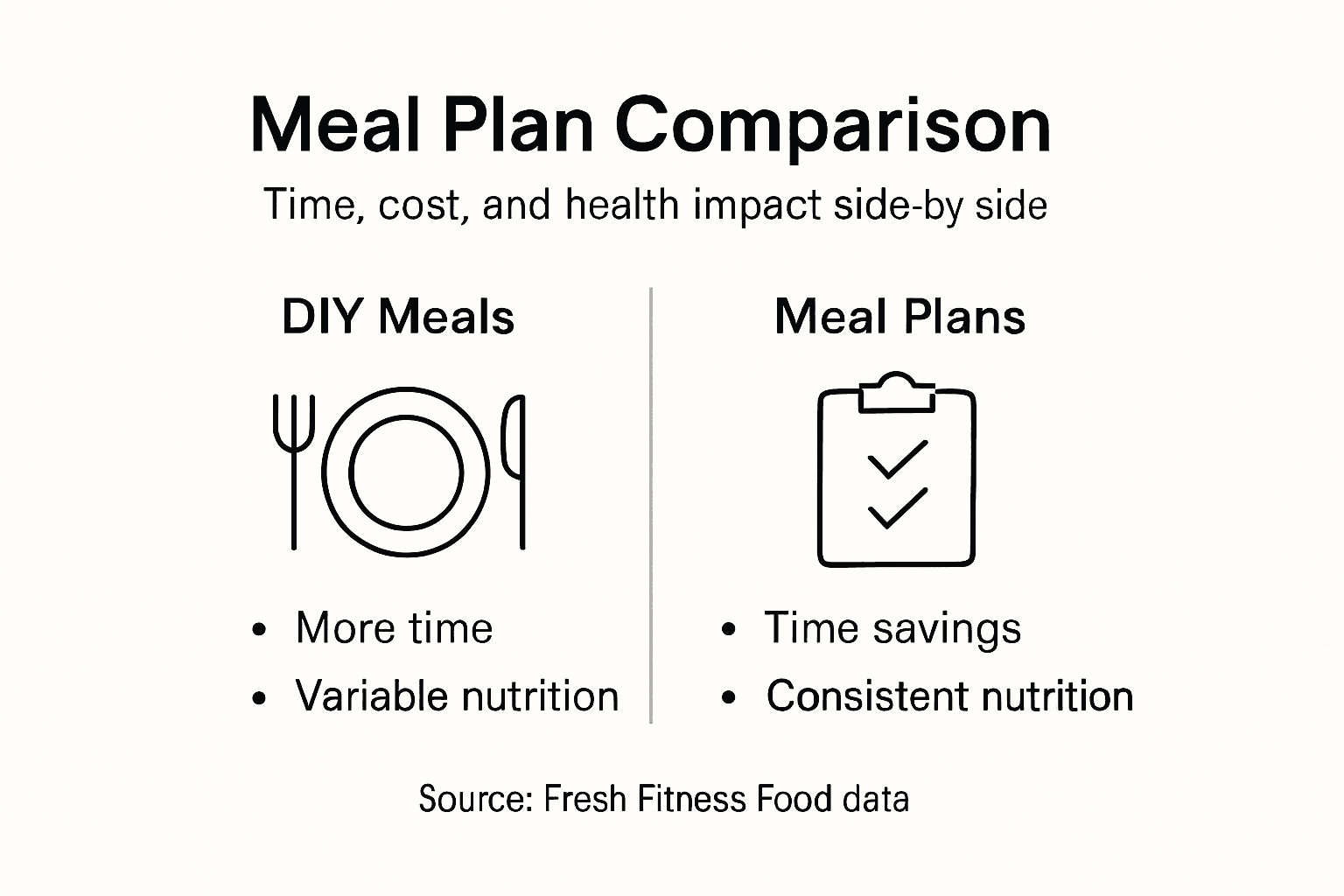
Health impact represents the most significant return on investment. Precision-engineered meal plans can help prevent chronic diseases, optimize metabolic function, and support consistent fitness progress. The cumulative effect of sustained, scientifically-designed nutrition can lead to dramatically improved health outcomes.
Below is a summary of the cost, time, and health trade-offs for DIY meal prep vs. structured meal plans:
| Factor | DIY Meal Preparation | Structured Meal Plans |
|---|---|---|
| Upfront Cost | Lower weekly spending | Higher subscription cost |
| Time Commitment | 6-8 hours weekly | 1-2 hours weekly |
| Health Consistency | Variable, less tracked | High, professionally monitored |
| Long-Term Savings | Potentially less | Increased healthcare savings |
Pro tip: Calculate your potential time and healthcare savings by comparing your current nutrition expenses with a structured, personalized meal plan approach.
Avoiding Common Meal Plan Pitfalls
Successful meal planning requires strategic navigation around potential nutritional traps that can derail health and fitness goals. Effective meal preparation strategies help prevent common dietary mistakes, ensuring consistent progress and sustainable nutrition management.
Key pitfalls to avoid in meal planning include:
- Nutritional Imbalance
- Overlooking micronutrient diversity
- Relying on limited food groups
- Ignoring individual metabolic needs
- Inflexible Meal Structures
- Rigid plans that don’t accommodate lifestyle changes
- Lack of variety leading to diet fatigue
- Minimal room for occasional indulgences
- Poor Portion Management
- Incorrect calorie calculations
- Inconsistent serving sizes
- Neglecting individual energy requirements
Dietary sustainability demands a nuanced approach. Balanced nutrition emphasizes moderation and variety, preventing the psychological burnout associated with overly restrictive eating patterns.
Successful meal plans are adaptable, personalized frameworks – not rigid, one-size-fits-all prescriptions.
Professional nutritionists recommend developing meal plans with built-in flexibility. This means creating strategies that can be adjusted based on changing fitness goals, work schedules, and personal preferences. The most effective meal plans are dynamic systems that evolve with the individual.
Understanding potential nutritional pitfalls allows for proactive strategy development. By anticipating challenges like meal prep fatigue, nutritional monotony, and inconsistent portion control, individuals can design more resilient and sustainable dietary approaches.
Pro tip: Create a meal plan template with multiple interchangeable components to maintain variety and prevent nutritional monotony.
Unlock Your Health Goals with Personalized Meal Plans
Busy professionals and fitness enthusiasts face the constant challenge of balancing nutrition with daily demands while aiming for specific health outcomes like weight loss, muscle gain, or overall wellness. The article highlights the importance of precision nutrition, expert guidance, and eliminating meal prep stress to maintain consistent progress. At Fresh Fitness Food, we understand these pain points and offer tailored meal plans that harmonize with your unique fitness and lifestyle needs.
Our fresh, macro-balanced menus are crafted to support diverse goals including vegan, keto, detox, and athletic performance. With our comprehensive services that integrate nutrition, exercise plans, and lifestyle coaching, you get more than just meals — you receive a holistic health optimization system designed to save you time and accelerate your progress. Experience the convenience of expertly prepared meals without sacrificing quality or personalization.
Elevate your nutrition with Fresh Fitness Food and transform your meal routine into a powerful tool for wellness and vitality.
Ready to simplify your nutrition and start thriving today?

Discover our range of customizable meal plans at Fresh Fitness Food and take the first step toward a healthier, more energized you. Don’t wait to experience the benefits of personalized nutrition built for your life and goals.
Frequently Asked Questions
What are the benefits of using personalized meal plans?
Personalized meal plans offer precision nutrition, time efficiency, consistent progress towards fitness goals, and expert nutritional guidance tailored to individual needs.
How do meal plans support different fitness goals?
Meal plans can be tailored to specific fitness goals such as muscle gain, weight loss, endurance training, performance optimization, or body recomposition, each with unique macronutrient focuses.
What should I consider when selecting a meal plan?
When selecting a meal plan, consider your specific nutritional goals, dietary restrictions, metabolic needs, and lifestyle demands to ensure the plan aligns with your overall health objectives.
How can I avoid common pitfalls in meal planning?
To avoid pitfalls in meal planning, focus on maintaining nutritional balance, allowing for flexibility in meal structures, and managing portion sizes accurately to meet your individual energy requirements.