

Meal Prep vs Delivery – Which Suits Your Fitness Lifestyle
Rushing between work, workouts, and social commitments in Bucharest can make healthy eating feel impossible to manage. Time, energy, and nutrition often compete for top priority, leaving little room for planning balanced meals from scratch. Whether you want complete control in your kitchen or crave the hands-off convenience of a meal arriving at your door, understanding the distinction between meal prep and delivery services is key. This guide breaks down how each option supports fitness goals so you can confidently fuel your busy lifestyle.
Table of Contents
- Defining Meal Prep And Delivery Services
- Types Of Meal Prep And Delivery Solutions
- How Meal Prep And Delivery Operate
- Convenience, Nutrition, And Cost Comparison
- Choosing The Best Option For Fitness Goals
Key Takeaways
| Point | Details |
|---|---|
| Meal Prep vs. Meal Delivery | Meal prep involves cooking at home for the week, while meal delivery provides prepared meals or kits to minimize cooking time. |
| Time Investment | Meal prep typically requires 2-4 hours weekly, whereas meal delivery takes under 10 minutes per meal. |
| Nutrition Control | Meal prep allows full control over ingredients, while delivery services vary in nutritional quality based on the provider. |
| Goal Alignment | Choose meal prep for customization and cost efficiency or delivery for convenience and adherence to specific fitness goals. |
Defining Meal Prep and Delivery Services
Let’s clear up what these two approaches actually are, because they sound similar but work completely differently. Meal prep means cooking and portioning your meals at home (usually on weekends), then storing them for the week ahead. You’re in control: selecting recipes, buying ingredients, cooking everything yourself, and dividing portions into containers. It’s hands-on work upfront, but you know exactly what goes into every bite.
Meal delivery services, on the other hand, arrive at your door ready to eat or requiring minimal preparation. These services handle the shopping, cooking, and portioning for you. Some deliver fully prepared meals you simply reheat. Others provide meal kits with pre-portioned ingredients and instructions. Both types of meal delivery services cater to specific dietary needs without the cooking burden.
The research shows clear distinctions in how these approaches function. Meal delivery services provide prepared meals or meal kits designed for convenience, saving time on grocery shopping and cooking, often catering to specific dietary needs. Meanwhile, meal prep at home gives you the flexibility to batch cook exactly what you want, when you want it, though it demands your time investment.
For busy Bucharest professionals juggling work, training, and life, this distinction matters. Meal prep appeals to those who enjoy cooking, want maximum customization, and can dedicate a few hours weekly. Delivery services suit those prioritizing time savings and consistent nutrition without the kitchen work. Neither approach is superior—they’re simply different solutions for different lifestyles and schedules.
Here’s a side-by-side overview of meal prep versus delivery services for busy professionals:
| Key Aspect | Meal Prep at Home | Meal Delivery Services |
|---|---|---|
| Time Commitment | 2-4 hours weekly | Under 10 minutes per meal |
| Customization | Full recipe control | Limited to menu options |
| Cost Structure | Lower cost, DIY ingredients | Higher cost, labor included |
| Consistency Factor | Depends on motivation | High, minimal effort required |
Pro tip: Consider doing a hybrid approach: prep simple components like grilled chicken and rice on Sunday, then supplement with 2-3 delivery meals during your busiest work days to eliminate decision fatigue without abandoning home cooking entirely.
Types of Meal Prep and Delivery Solutions
Not all meal prep looks the same, and delivery services come in wildly different flavors. Understanding what’s actually available helps you pick what fits your schedule and fitness goals.
Meal prep approaches break down into three main categories. Batch cooking means preparing full meals in advance, portioning them, and reheating throughout the week. Ingredient prep involves chopping vegetables, marinating proteins, and preparing components you assemble into meals daily. Full meals cooked in advance combines both, giving you ready-to-eat options requiring minimal effort. Each approach trades time and flexibility differently.
Meal delivery services vary significantly in structure. Meal kits include raw ingredients and recipes, requiring you to cook but saving shopping time. Fully prepared fresh meals arrive ready to reheat in minutes. Frozen meal options provide long-term storage and convenience. Specialized plans target specific goals: keto for fat adaptation, vegan for plant-based diets, high-protein for muscle building. Some services focus on macro-balanced nutrition tailored to your specific fitness objectives.
Then there’s the grocery delivery angle. These services supply ingredients without recipes, giving maximum flexibility but requiring you to plan meals and cook. This sits between traditional shopping and full meal delivery, suiting those who want fresh produce but prefer cooking their own recipes.
For Bucharest professionals training hard, the real question is what reduces friction in your life. Batch cooking works if you have time on weekends and enjoy cooking. Meal kits suit those who want to feel involved but skip grocery shopping. Prepared meals eliminate all cooking stress. Understanding how meal delivery services support fitness success matters because your nutrition system only works if you actually stick to it.
This table summarizes popular meal prep and delivery service types found in the market:
| Solution Type | Description | Best For |
|---|---|---|
| Batch Cooking | Cook and portion whole meals weekly | DIY enthusiasts |
| Ingredient Prep | Prepare and organize ingredients | Flexible home cooks |
| Meal Kits | Pre-portioned ingredients, recipes | Those wanting partial control |
| Prepared Meals | Ready-made meals for reheating | Maximum convenience seekers |
Pro tip: Start with one delivery service for 2 weeks while continuing your usual meals, then assess whether the convenience and nutrition quality justify the cost before committing fully.
How Meal Prep and Delivery Operate
Meal prep and delivery services operate on completely different timelines and logistics. Understanding how they function behind the scenes clarifies why they demand different things from you.
Meal prep at home follows a straightforward personal process. You decide on recipes, shop for ingredients, cook everything during a dedicated block (usually Sunday), and divide portions into containers. The entire operation happens under your roof, controlled by your schedule. You manage food safety, storage, and reheating. This approach gives complete control but requires consistent execution on your part.

Meal delivery services manage complex supply chains differently. Effective meal delivery requires coordinated efforts including menu design aligned with nutritional standards, inventory scheduling, and quality assurance. Services handle sourcing ingredients, preparing meals in commercial kitchens, and managing refrigerated transport or shipping to your door. They absorb all the operational burden so you simply reheat or eat.
Think of it this way: meal prep puts you in the driver’s seat but demands your presence weekly. Delivery services put you in the passenger seat, handling everything except your willingness to consume the meal. Both involve supply chain management and production scheduling, but delivery companies absorb that complexity.
For busy Bucharest professionals, this distinction matters practically. Meal prep requires 2-4 hours weekly but costs less money. Delivery requires zero cooking time but costs more. Meal prep offers total customization. Delivery offers convenience and consistency. The operational difference determines which actually fits into your real life, not your ideal life.
Pro tip: Track what time you actually spend on meal prep versus how much you pay for delivery in your first month, then calculate hourly cost savings to make a data-driven decision about which approach genuinely suits your situation.
Convenience, Nutrition, and Cost Comparison
Here’s where the rubber meets the road. Meal prep and delivery services offer different tradeoffs across three factors that actually matter to your fitness: convenience, nutrition quality, and what you pay.
Convenience is straightforward. Meal prep demands 2 to 4 hours weekly of shopping, cooking, and portioning. You control the schedule but own the time investment. Delivery eliminates all that work. Your meals arrive ready to eat or requiring 5 minutes of reheating. For professionals training after work and managing client calls, this time difference feels massive.
Nutrition quality varies more than most people realize. Studies comparing meal prep and delivery services with home-cooked meals reveal trade-offs: some prepared meals match home-cooked nutrition while others contain higher sodium and saturated fats. When you meal prep, you control every ingredient. With delivery, quality depends entirely on the service you choose. Budget options skimp on macros. Premium services nail macro ratios and ingredient quality.
Cost analysis gets interesting when you factor in time. Basic meal prep costs less per meal but requires your labor. Convenience and nutritional adequacy are balanced against monetary cost and effort of meal preparation, meaning delivery can actually be cost-effective if you value your time. A professional earning 50 euros per hour spending 3 hours weekly on meal prep essentially loses 150 euros in opportunity cost. Delivery at 10 euros per meal suddenly looks smarter mathematically.
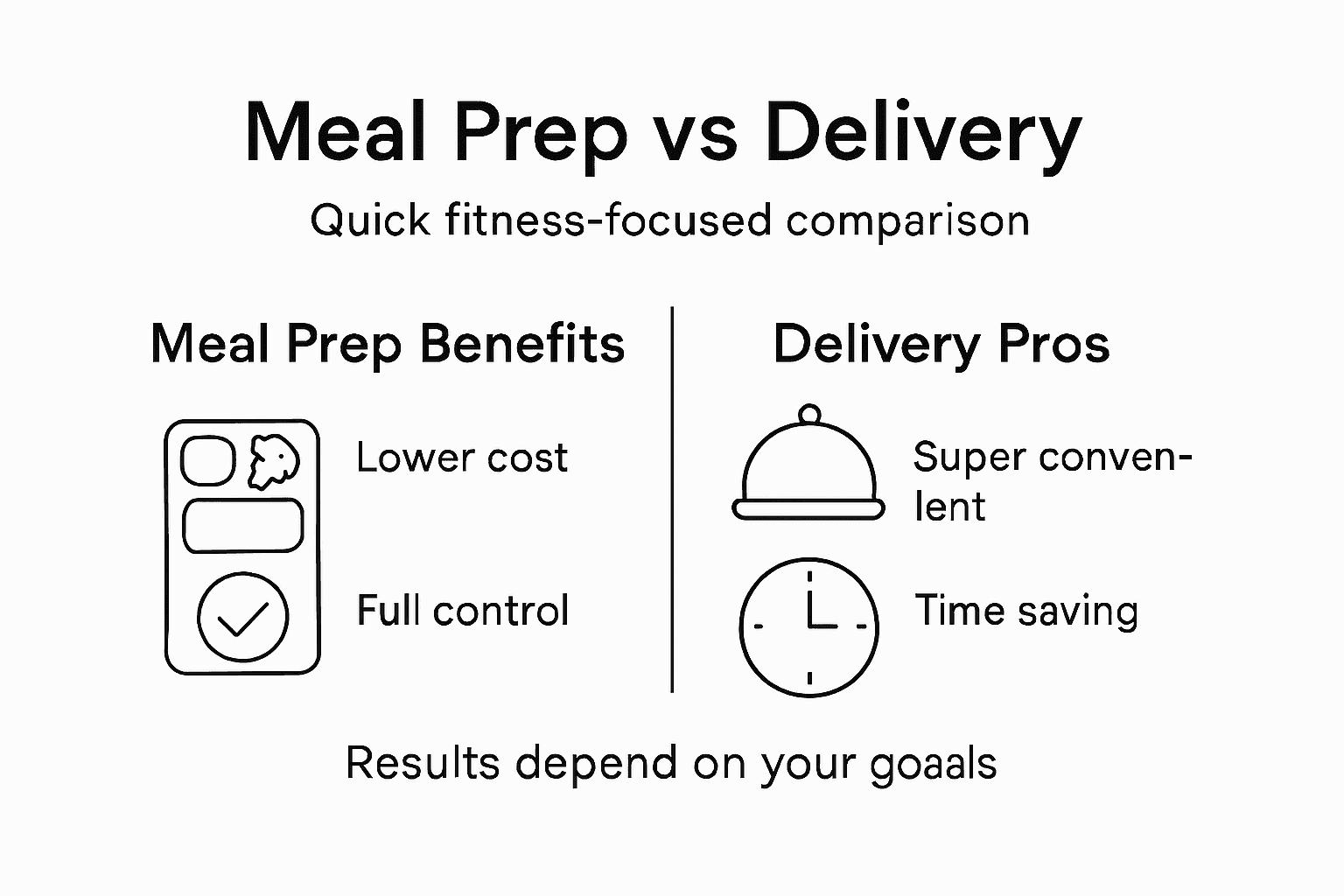
For Bucharest fitness enthusiasts, the real calculation depends on your priorities. Obsessive about macros and budget-conscious? Meal prep wins. Valuing time over money and seeking convenience? Delivery makes sense. Many professionals land in the middle, using delivery 60 percent of the time and prepping their own meals 40 percent.
Pro tip: Calculate your hourly earning potential, multiply by hours spent on meal prep weekly, then compare that true cost against delivery pricing to see which approach actually saves you money based on your specific situation.
Choosing the Best Option for Fitness Goals
Your fitness goal should drive your meal choice, not the other way around. Different objectives demand different nutrition strategies, and your meal system needs to support that.
Muscle gain requires consistent protein intake and caloric surplus. You need precision. Meal planning focusing on macronutrient balance, calorie control, and meal timing plays a vital role. If you’re tracking grams of protein daily, meal delivery with macro-specific options works better than guessing portions during meal prep. Services offering high-protein plans eliminate the guesswork. Alternatively, meal prep works if you weigh portions obsessively and log everything.
Weight loss hinges on caloric deficit and consistency. Here’s the truth: people stick to what requires zero willpower. Delivery services handling portion control prevent you from eating extra out of convenience or habit. Meal prep requires discipline weekly. If you struggle with portion sizes, let a delivery service solve that problem. If you enjoy the control of cooking, meal prep teaches you actual portion awareness.
Endurance and athletic performance demand balanced nutrition supporting training volume. Effective fitness meal planning involves setting caloric needs based on activity level and goal, structuring meals with protein, complex carbs, and healthy fats. Delivery services supporting athletic nutrition often understand fueling strategies meal prepping solo requires research to match. Consider which option better supports your specific sport’s demands.
Consistency matters more than perfection. The best meal system is the one you’ll actually follow for months, not the theoretically optimal one you abandon after three weeks. A Bucharest professional training 5 days weekly doesn’t benefit from theoretically perfect meal prep if work chaos derails the system halfway through. Spending slightly more on delivery but staying consistent beats cheaper meal prep you abandon.
Pro tip: Identify your primary fitness goal, calculate required daily macros for that goal, then trial whichever approach (prep or delivery) aligns with how you naturally maintain consistency under stress.
Find Your Perfect Fit Between Meal Prep and Delivery
Are you struggling to choose between spending hours cooking or sacrificing control for convenience? This article breaks down the challenges busy professionals face juggling meal prep and delivery while aiming for fitness success. Whether your priority is precise macro tracking, saving valuable time, or maintaining consistent nutrition, the key pain points are clear: time commitment, customization, and nutrition quality.
At Fresh Fitness Food, we understand that the best meal solution supports your lifestyle and fitness goals without adding stress. Our personalized meal delivery service offers fresh, macro-balanced meals tailored to weight loss, muscle gain, vegan, keto, or detox plans. This lets you enjoy high-quality nutrition with minimal effort so you can focus on training and living well. Explore how we remove the hassle of meal prep while keeping your diet on track in every way.
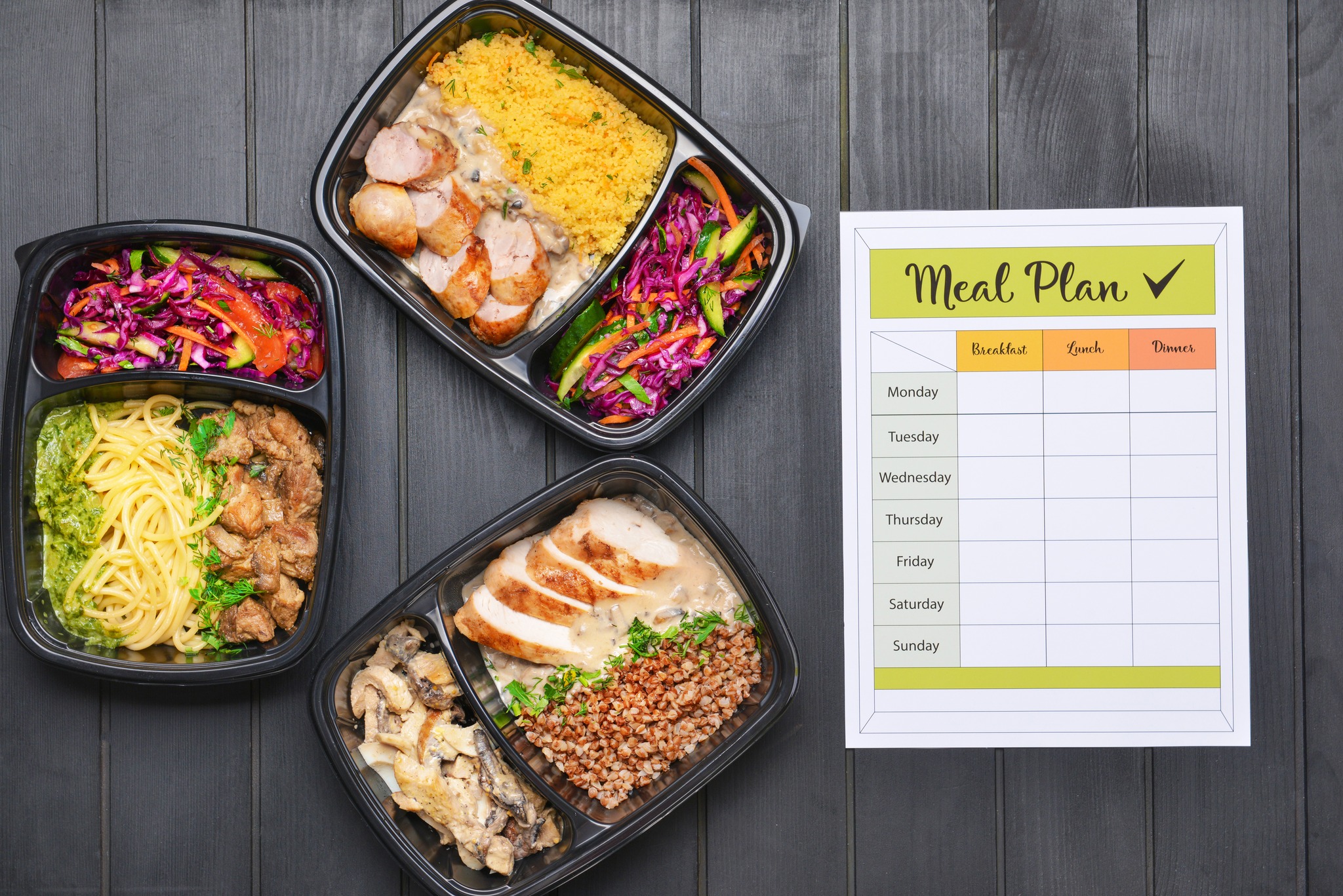
Take control of your nutrition without the kitchen burden starting today. Visit Fresh Fitness Food to discover customized meal plans built just for you. Learn more about how our healthy meal delivery options can fit your busy schedule and fitness ambitions. Make your next meal count toward the body and lifestyle you want. Act now to transform your health with ease.
Frequently Asked Questions
What is the main difference between meal prep and meal delivery services?
Meal prep involves cooking and portioning meals at home, allowing for full control over recipes and ingredients, while meal delivery services offer pre-prepared meals or meal kits that require minimal preparation.
How much time does meal prep require compared to meal delivery?
Meal prep typically requires 2-4 hours weekly for shopping and cooking, whereas meal delivery generally requires under 10 minutes per meal for reheating or minimal preparation.
Which is more cost-effective: meal prep or meal delivery?
Meal prep is generally less expensive per meal since you buy ingredients yourself, while meal delivery can be pricier due to convenience and labor costs. However, calculating opportunity costs can sometimes make delivery more economical for busy professionals.
How do I choose the best option for my fitness goals?
Choosing the best option depends on your specific fitness goals. Meal delivery services can provide controlled portions for weight loss or high-protein meals for muscle gain, while meal prep allows for greater customization if you track macros closely.