

Personalized Meal Plans: Unlocking Results for Busy Lives
The struggle to balance demanding workdays with healthy eating is familiar to many professionals in Bucharest. When generic diets and rigid meal plans fail to deliver sustainable results, the need for truly personalized nutrition becomes clear. By matching meals to your unique requirements—such as age, weight, activity level, and preferences—personalized meal plans adapt to individual needs and offer practical solutions that fit your schedule and fitness goals. Discover how this approach delivers satisfaction and consistency while removing the burden of daily cooking decisions.
Table of Contents
- Defining Personalized Meal Plans And Their Value
- Types Of Meal Plans For Different Goals
- How Custom Meal Planning Works
- Key Features For Effective Personalization
- Risks, Mistakes, And Alternatives To Consider
Key Takeaways
| Point | Details |
|---|---|
| Personalized Meal Plans | Tailored plans adjust to individual needs, preferences, and lifestyles, enhancing adherence and satisfaction. |
| Flexibility in Plans | Unlike generic diets, personalized plans evolve with changing schedules and goals, making nutrition easier to manage. |
| Goal-Oriented Strategies | Different meal plans cater to specific objectives, such as weight loss, muscle gain, or health management, ensuring targeted nutrition. |
| Data-Driven Adjustments | Custom meal planning employs intelligent systems to continuously refine meal selections based on individual feedback and results. |
Defining Personalized Meal Plans and Their Value
A personalized meal plan is far more than a generic diet list you find online. It’s a tailored nutritional roadmap designed specifically for your body, your goals, and your lifestyle. Unlike one-size-fits-all approaches, personalized nutrition adapts to individual needs such as your age, weight, activity level, and dietary preferences through intelligent systems that account for your unique metabolic differences. This targeted approach transforms how busy professionals in Bucharest achieve their fitness goals without the stress of generic meal plans that rarely fit real life.
What makes personalized meal plans truly valuable is their ability to address your specific situation. Rather than forcing you into a restrictive eating pattern, these plans consider your schedule, food preferences, restrictions, and health conditions. Whether you’re managing weight loss, building muscle, or simply trying to maintain energy through long workdays, meal plans designed around health conditions and nutritional requirements significantly improve adherence and satisfaction. You’re more likely to stick with a plan that actually matches what you enjoy eating and how you live.
Here’s what sets personalized meal plans apart from standard diet advice:
- Flexibility: Plans adapt as your schedule changes, not the other way around
- Macro-balanced nutrition: Precise protein, carbohydrate, and fat ratios targeted to your specific goals
- Fresh, quality ingredients: No processed meal replacements or bland diet food
- Time efficiency: Meals prepared for you, eliminating the cooking burden busy professionals face
- Real sustainability: Better results because the plan actually fits your life, not some theoretical ideal
For busy Bucharest professionals, the game-changing element is convenience paired with precision. Imagine starting your week knowing exactly what nutrients you’re consuming, how each meal supports your fitness objectives, and having everything prepared so you can focus on work and training instead of meal prep stress. That’s the actual value delivered: freedom from nutritional uncertainty combined with the science-backed nutrition your body needs.
The transformation happens because personalized plans remove two major obstacles. First, they eliminate decision fatigue—you’re not deciding what to eat multiple times daily. Second, they solve the inconsistency problem that derails most people. Generic plans work for maybe two weeks until life gets hectic and you abandon them. Personalized plans, by contrast, work with your reality rather than against it.
What this means in practical terms: you’ll see better results not because the science is mysterious, but because a plan designed around your actual life gets followed consistently. A professional pulling 10-hour days with gym sessions squeezed in between needs something different than a student with flexible hours. The plan acknowledges this. Your nutritional guidance becomes as individualized as your fingerprint, not a photocopy of someone else’s journey.
Here’s how personalized meal plans compare to generic diet plans for busy professionals:
| Aspect | Personalized Meal Plan | Generic Diet Plan |
|---|---|---|
| Adaptability | Adjusts to lifestyle changes | Stays rigid and inflexible |
| Meal Enjoyment | Matches food preferences | Often ignores preferences |
| Adherence Rate | Typically much higher | Drops off quickly |
| Results Timeline | Consistent and sustained | Inconsistent, short-term |
Personalized meal plans improve adherence, nutritional adequacy, and satisfaction by adapting to your unique health conditions, preferences, and lifestyle constraints—not by forcing you into someone else’s mold.
Pro tip: When starting a personalized meal plan, track how you feel during the first two weeks—your energy levels, workout performance, and hunger patterns—rather than obsessing over the scale. These indicators show whether the plan is genuinely working for your body and lifestyle.
Types of Meal Plans for Different Goals
Not all meal plans are created equal, and what works for someone training for a marathon won’t work for someone managing diabetes or trying to drop 10 kilograms before summer. The reality is that meal plans serve distinct nutritional and health goals ranging from calorie restriction for weight management to macronutrient balancing for metabolic health. Your goals determine the structure of your plan, and your plan determines your results. For busy professionals in Bucharest juggling careers and fitness ambitions, understanding these different approaches helps you pick the one that actually aligns with what you’re trying to achieve.
The main meal plan categories break down like this:
- Weight Loss Plans: Focused on calorie deficit while maintaining muscle, typically incorporating moderate protein and controlled portions
- Muscle Building Plans: High-protein emphasis with elevated total calories to support training recovery and lean mass gain
- Athletic Performance Plans: Tailored carbohydrate and electrolyte timing around training sessions for endurance and strength athletes
- Health Management Plans: Designed for specific conditions like diabetes, heart health, or managing cholesterol levels
- Lifestyle-Based Plans: Mediterranean, vegetarian, or allergen-free approaches that align with cultural preferences and dietary restrictions
Each category requires different macronutrient ratios and timing strategies. A weight loss plan might target 30% protein, 40% carbohydrates, and 30% fat with smaller meal portions. A muscle-building plan could shift to 35% protein, 45% carbohydrates, and 20% fat with larger overall calorie targets. An athlete might need carbohydrate loading before competitions and strategic protein distribution throughout the day. Personalized nutrition tailors these categories to individual genetic factors, lifestyle constraints, and health objectives, ensuring your specific plan matches your specific situation.

For the Bucharest professional, this means you’re not locked into one rigid approach. Your meal plan adapts as your goals shift. Training for a half-marathon in three months? Your plan adjusts. Finished your competition and want to build strength over winter? The plan evolves. Life changes, work stress fluctuates, and your nutrition should accommodate reality instead of fighting it. This flexibility is what separates plans that people actually follow from plans that sit forgotten in a notebook.
The practical difference shows up quickly. Someone on a weight loss plan eating prepared meals knows exactly how many calories they consume and sees consistent progress. Someone on a high-protein building plan gets the macro support their muscles need to grow from training. Someone managing a health condition gets meals specifically designed to support their clinical requirements. Generic advice tries to handle all three situations simultaneously, which means it handles none of them well.
The right meal plan type isn’t determined by what worked for your friend or what you read online—it’s determined by your current goal, your activity level, and your health status.
Your goal also determines how quickly you see results. Weight loss plans typically show visible changes within 3-4 weeks with consistent adherence. Athletic performance improvements might take 6-8 weeks of proper fueling before you notice significant gains. Health management plans focus less on rapid transformation and more on sustainable long-term markers like blood pressure or cholesterol levels. Understanding this timeline helps you stay motivated during the adjustment period when your body is adapting to new eating patterns.
This overview helps you choose the right meal plan for your fitness goals:
| Goal | Typical Nutrition Strategy | Estimated Results Timeline | Key Benefit |
|---|---|---|---|
| Weight Loss | Moderate protein, calorie deficit | 3-4 weeks | Steady fat reduction |
| Muscle Gain | High protein, increased calories | 4-6 weeks | Lean mass and strength gains |
| Athletic Performance | Carb timing, balanced electrolytes | 6-8 weeks | Enhanced stamina and recovery |
| Health Management | Customized for medical needs | Ongoing, gradual | Better clinical health markers |
Pro tip: Identify your primary goal first—weight loss, muscle gain, performance, or health management—then structure your meals around that single objective rather than trying to pursue conflicting goals simultaneously, which dilutes progress in both directions.
How Custom Meal Planning Works
Custom meal planning sounds technical, but the process itself is straightforward: it gathers information about you, applies intelligent analysis to that information, and produces meals specifically designed for your situation. Behind the scenes, custom meal planning integrates user health data, preferences, and constraints into AI-based systems that evaluate hundreds of food combinations to find the optimal matches for your goals. The system isn’t guessing or applying generic rules. It’s analyzing your specific requirements and using data-driven logic to build something that actually fits.
Here’s how the process actually breaks down:
- Data collection: You provide health information (age, weight, activity level), dietary goals (weight loss, muscle gain, performance), food preferences (what you enjoy eating), and restrictions (allergies, cultural preferences, disliked foods)
- Nutritional analysis: The system calculates your caloric needs based on your activity level and goals, then determines optimal macronutrient ratios (protein, carbohydrates, fats) for your specific objective
- Meal generation: Algorithms apply optimization techniques that balance caloric intake and macronutrients while respecting your food preferences, then select specific meals that meet all these requirements simultaneously
- Flexibility adjustment: The plan adapts based on your feedback—if you don’t like a meal, it substitutes alternatives that maintain the same nutritional profile
- Ongoing refinement: As your goals shift or life circumstances change, the plan adjusts without requiring you to restart from scratch
For a busy Bucharest professional, this means the system works harder than you do. You’re not calculating macros in spreadsheets or researching recipes that might fit your numbers. The technology handles that complexity, and you simply receive meals aligned with your goals.
The sophistication comes from how these systems balance competing requirements. You might want high protein for muscle building, but you also want meals you actually enjoy eating. You need specific calorie targets, but you also have time constraints during your week. You might prefer vegetarian options, but still require athletic performance nutrition. A generic plan can’t juggle all these variables simultaneously. A custom system can.
Custom meal planning succeeds because it removes the guesswork between your nutritional requirements and the meals you actually eat.
What makes this particularly powerful for your situation is that the system learns from you. During your first two weeks, the algorithms understand how you respond to different meal types, portion sizes, and meal timing. If you consistently report feeling hungry at 3 PM, the plan adjusts breakfast or lunch composition to extend satiety. If you skip workouts on days with certain meals, the system correlates that data and modifies nutrition timing around training. This isn’t a static document you follow blindly—it’s a living plan that evolves with your real experience.
The technology also respects practical constraints that matter to busy professionals. Meal prep time, ingredient availability, food variety preferences, and cost considerations can all factor into plan generation. Some people get bored eating the same meal twice weekly. Others prefer simplicity and repetition to minimize decision-making. The system accommodates both approaches, generating different plans based on these lifestyle factors.
Most importantly, custom meal planning dramatically improves adherence. Research consistently shows that people follow personalized nutrition plans longer than generic diets because the plans actually fit their lives. You’re not forcing yourself into someone else’s framework. You’re working within a structure designed around your specific needs, preferences, and constraints. That alignment is what transforms meal planning from another failed diet into a sustainable system you actually maintain.
Pro tip: When starting your custom plan, log your energy levels and performance for the first week before making adjustments—the initial period is when the system learns your baseline, and premature changes disrupt that learning process.
Key Features for Effective Personalization
Not all personalized meal plans are created equal. The difference between a plan that transforms your results and one that sits abandoned in your phone comes down to specific features that make personalization actually work. The most effective systems include dynamic adaptation to user preferences, health history, and dietary restrictions, combined with intelligent feedback mechanisms that continuously refine recommendations. For busy Bucharest professionals, these features mean your plan gets smarter the more you use it, constantly optimizing around your actual life rather than staying static.
The core features that separate effective personalization from generic meal planning break down like this:
- Real-time adjustment: Your plan responds immediately to feedback, substituting meals you dislike while maintaining nutritional targets without requiring manual recalculation
- Nutritional adequacy: The system ensures every meal and every week meets your complete micronutrient needs (vitamins, minerals, electrolytes) alongside macronutrient targets
- Cultural and preference relevance: Meals align with your food preferences, cultural eating patterns, and lifestyle values, not some one-size-fits-all approach
- Cost and convenience optimization: The plan balances fresh ingredients, minimal prep time, and budget considerations simultaneously
- User feedback integration: Your comments about meal enjoyment, energy levels, and performance directly shape future recommendations
What makes these features powerful is how they work together. Key systems employ semantic reasoning to filter incompatible foods, fuzzy logic to handle nutritional uncertainties, and heuristic search for optimized meal combinations, enabling truly flexible plans that respond to your evolving needs. This isn’t software forcing you into predetermined categories. It’s intelligent technology reasoning through complex requirements to find solutions that actually fit.
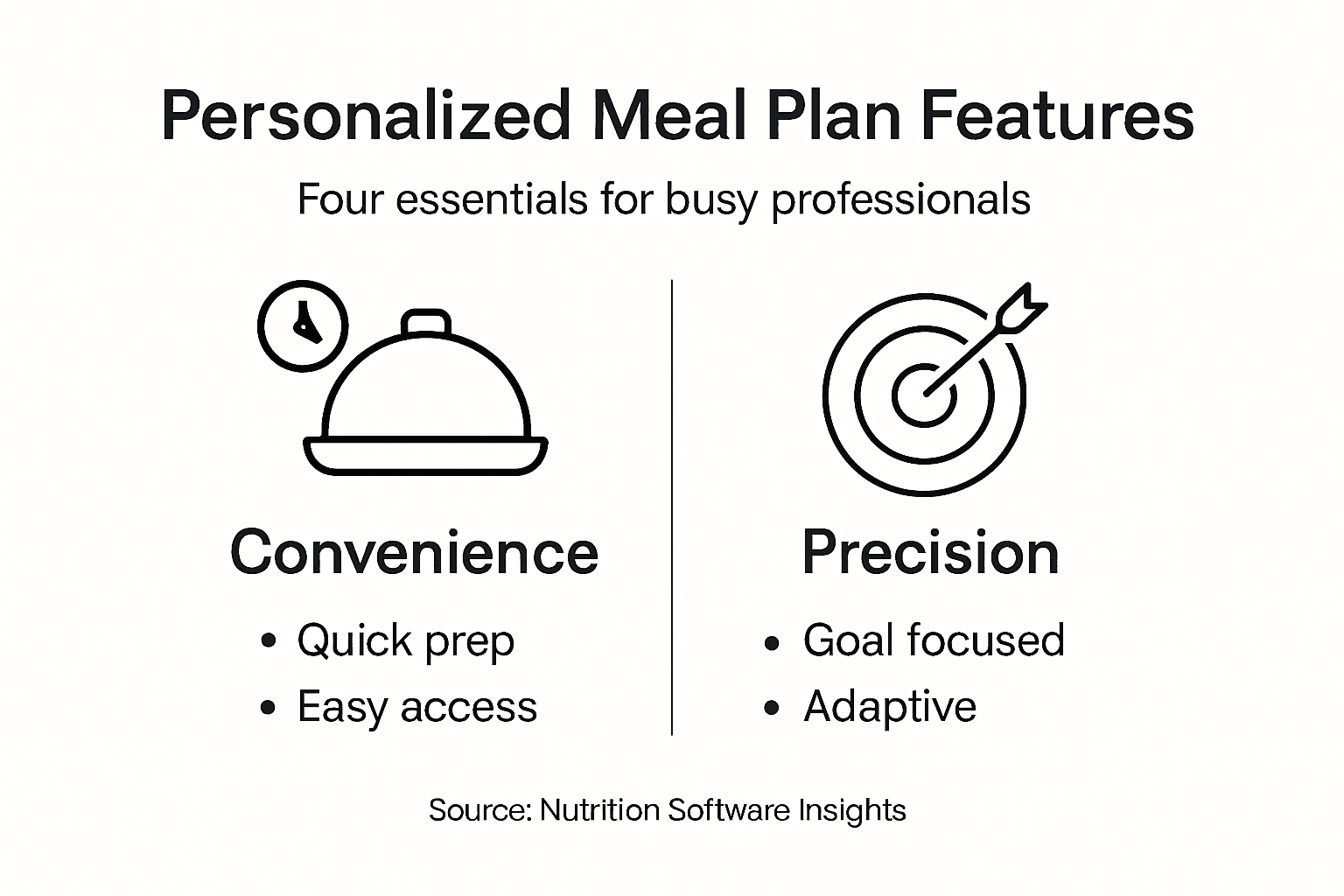
Consider the real-world difference. A static meal plan says “eat chicken, rice, and broccoli Monday through Friday.” Within two weeks, boredom sets in and you abandon it. A personalized plan with effective features says “you enjoy chicken, so here are 12 different chicken preparations this month, each hitting your protein targets but varying carbohydrate sources and cooking methods based on your workout schedule.” Suddenly, the plan accommodates your preferences instead of fighting them.
The feedback loop is where real transformation happens. During week one, the system learns how your body responds to different meal types. By week three, it understands which breakfasts keep you satisfied through 2 PM meetings and which leave you hungry by 11 AM. By week six, the plan has essentially learned your metabolism and optimized around it. This ongoing refinement separates personalized nutrition from generic diet advice.
Effective personalization isn’t a one-time calculation—it’s a continuous learning system that improves with every meal you eat and every piece of feedback you provide.
Another critical feature is practical integration with your actual schedule. The system recognizes that Tuesday might include a late work meeting requiring quick meals, while Wednesday offers time for slightly more involved preparation. Your plan adjusts meal complexity accordingly without compromising nutrition. Monday might feature simple grab-and-go options, while Saturday includes something more elaborate. This contextual awareness transforms meal planning from a rigid framework into a flexible system that works with your reality.
Many systems also incorporate collaborative filtering, which means learning from similar users’ experiences. If thousands of busy professionals with your profile and goals found that Greek yogurt-based breakfasts improved their adherence, the system might recommend that option. This peer-informed approach combines your individual data with broader population insights, creating recommendations informed by both your unique situation and what works for similar people.
The transparency of your plan matters too. The best personalization systems show you why specific meals appear in your plan—you understand the nutritional reasoning, not just the what. This builds confidence and helps you make informed decisions when life disrupts your schedule. You know that your plan includes higher carbs on training days because your body needs that fuel, so you can make intelligent substitutions if needed.
Pro tip: When your personalized plan recommends a meal you’re unsure about, try it for at least two instances before marking it as disliked—your initial reaction might be unfamiliarity rather than genuine preference, and giving new options a fair trial helps the system learn your true tastes versus your comfort zone.
Risks, Mistakes, and Alternatives to Consider
Personalized meal planning isn’t a magic solution, and understanding where things can go wrong helps you avoid the pitfalls that derail most people. The primary risk involves reliance on inaccurate self-reported data, potential biases in algorithmic recommendations, and overemphasis on genetic data without considering behavioral and environmental factors. If you misreport your activity level, food intake, or how you actually feel, the system optimizes around incorrect information and generates a plan that doesn’t match your reality. Garbage in, garbage out—the sophistication of the technology can’t fix fundamentally flawed input data.
Common mistakes that undermine personalized meal planning also deserve attention:
- Rigid adherence without flexibility: Treating your plan like a contract instead of a guide, refusing any substitutions even when circumstances change
- Ignoring cultural context: Following recommendations that contradict your food preferences, family traditions, or cultural eating patterns, causing resentment and abandonment
- Neglecting nutritional balance: Overemphasizing one metric (like protein) while ignoring micronutrients, fiber, or sustainable eating patterns
- Failing to reassess goals: Continuing a weight loss plan long after reaching your target instead of transitioning to maintenance or performance goals
- Poor compliance expectations: Not acknowledging that 95% adherence to a personalized plan beats 40% adherence to a perfect plan
Another significant risk involves algorithmic bias. If the system was trained primarily on data from one demographic group, its recommendations might not work equally well for everyone. Someone managing a specific health condition might receive recommendations that conflict with their medical needs. Common mistakes in meal planning involve rigid adherence without flexibility, neglecting user preferences causing poor compliance, and failing to incorporate diverse dietary needs, which is why the best systems incorporate professional oversight and continuous refinement.
The mistake many busy professionals make is treating a personalized meal plan as a permanent solution rather than a tool that evolves with their life. Your plan made sense when you were training for a competition, but it might not serve you equally well during a high-stress work period or after an injury. The system should adapt, but you also need to communicate changing circumstances. Otherwise, you’ll follow recommendations optimized for a situation that no longer applies to you.
The biggest risk in personalized meal planning isn’t technical—it’s assuming the system knows your life better than you do and overriding your own judgment about what’s actually sustainable.
Understanding Your Alternatives
Several legitimate alternatives exist alongside fully personalized meal planning. Flexible eating guidelines provide structure without rigidity—think macronutrient ranges instead of exact targets, food categories instead of specific meals. This approach works well for people who want guidance but need freedom to make daily decisions. Modular meal prep strategies let you build meals from components you enjoy, maintaining nutritional consistency without identical meals every week. You pick proteins, carbohydrates, and vegetables from pre-approved lists and assemble them as you prefer.
A hybrid model combining AI with human dietitian expertise addresses many personalization risks. Technology handles data analysis and pattern recognition, while a registered dietitian ensures recommendations account for your complete health picture, cultural preferences, and practical constraints. This approach costs more but eliminates algorithmic blind spots. Some people benefit from this comprehensive oversight, especially those managing complex health conditions alongside fitness goals.
Periodic reassessment plans work well for busy professionals with changing schedules. Rather than continuous refinement, you reset your plan every 6-8 weeks, providing updated information about what worked, what didn’t, and how your goals have evolved. This rhythm prevents stagnation while avoiding the feeling of constant adjustment.
The key is matching your approach to your personality and situation. If you thrive with rules and want maximum optimization, fully personalized AI-driven planning delivers results. If you prefer flexibility and autonomy, guideline-based approaches work better. If you have complex health needs, human expertise becomes non-negotiable. Honest self-assessment about how you actually function—not how you think you should function—determines which approach serves you.
Pro tip: Before committing to any meal planning approach, test it for two weeks with a clear success metric (energy levels, workout performance, or how your clothes fit) rather than a scale number—this reveals whether the system actually works for your lifestyle before making a longer-term commitment.
Unlock Your Best Self with Personalized Meal Plans Designed for Your Busy Life
If you struggle with meal planning that fits your hectic schedule and unique fitness goals, you are not alone. The challenge lies in finding flexible, macro-balanced nutrition that adapts to your lifestyle and preferences while eliminating guesswork and decision fatigue. Personalized meal plans offer the targeted support you need to stay consistent and see real results over time. Now, imagine combining that scientific approach with fresh, delicious meals prepared just for you so you never have to sacrifice convenience or flavor.
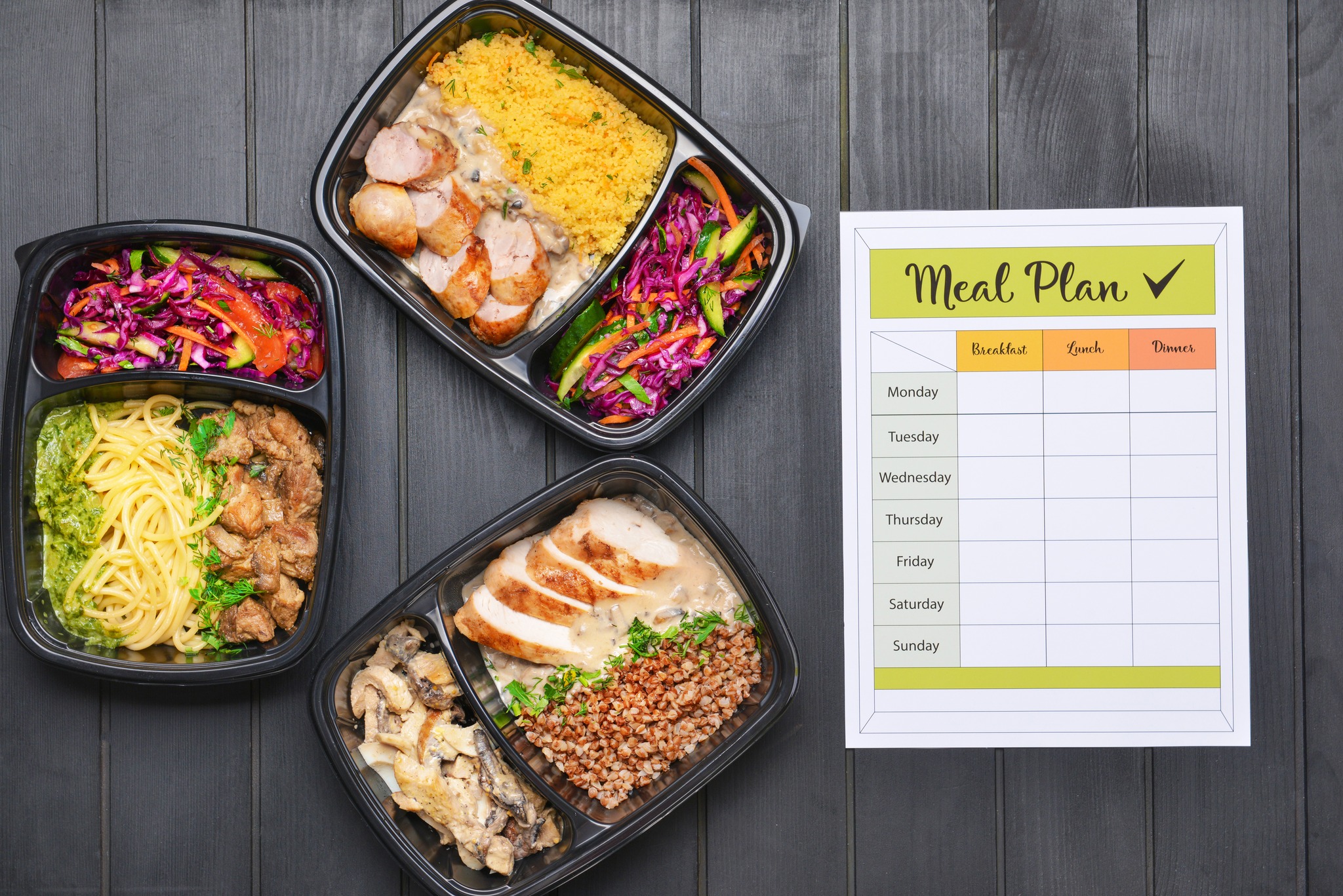
At Fresh Fitness Food, we specialize in delivering exactly that: customized meal plans tailored to your goals—whether it is weight loss, muscle gain, or sustained energy through demanding workdays. Backed by expert nutrition insights and built around your preferences and restrictions, our platform removes the stress of tracking macros or prepping meals. Explore how our fresh meals and comprehensive lifestyle coaching can enhance your fitness journey today. Don’t wait to fuel your success with nutrition that works for your real life. Visit Fresh Fitness Food and take the first step toward smarter, easier meal planning that truly fits your unique needs.
Frequently Asked Questions
What are personalized meal plans?
Personalized meal plans are tailored nutritional roadmaps designed specifically for your body, goals, and lifestyle, adapting to individual needs like age, weight, activity level, and dietary preferences.
How do personalized meal plans differ from generic diet plans?
Personalized meal plans offer flexibility, macro-balanced nutrition, fresh ingredients, and time efficiency, while generic diet plans are often rigid, ignore food preferences, and have lower adherence rates.
What types of goals can personalized meal plans address?
Personalized meal plans can serve various goals, including weight loss, muscle building, athletic performance, health management for specific conditions, and lifestyle-based approaches like vegetarian or Mediterranean diets.
How does the custom meal planning process work?
The custom meal planning process involves data collection about your health, dietary goals, and preferences, followed by nutritional analysis and meal generation that adapts to your feedback, ensuring continuous refinement based on your needs.