

What Is a Fitness-Focused Diet and Why It Matters
Long days and packed calendars make eating for fitness feel complicated, especially when you are balancing demanding work in Bucharest with workout goals. The right diet is more than just lower calories or skipping takeout. It is a strategic plan focused on fueling exercise, recovery, and sustained energy for real results. If you want muscle gain, weight loss, or need a keto or vegan menu, a fitness-focused diet built on nutrient-rich whole foods and smart timing can make every meal work for your goals.
Table of Contents
- Defining A Fitness-Focused Diet And Its Core Principles
- Key Types: Weight Loss, Muscle Gain, Vegan, Keto
- Macronutrient Balance For Performance And Recovery
- Timing Strategy For Maximum Results
- Personalization: Adapting Diets To Fitness Goals
- Risks, Common Mistakes, And Safer Alternatives
Key Takeaways
| Point | Details |
|---|---|
| Fitness-Focused Diet | A strategic approach prioritizing nutrient density and timing over calorie restriction to enhance performance, recovery, and results. |
| Core Macronutrients | Carbohydrates, proteins, and healthy fats are essential, each serving critical roles in energy, recovery, and hormone regulation. |
| Personalization Is Key | Tailoring your diet based on individual goals, lifestyle, and body response is vital for sustainable success. |
| Avoid Quick Fixes | Extreme diets often lead to negative health outcomes; focus on gradual, balanced dietary changes for long-term results. |
Defining a Fitness-Focused Diet and Its Core Principles
A fitness-focused diet isn’t just about eating less or choosing salads over burgers. It’s a strategic approach to fueling your body for performance, recovery, and long-term results. At its core, this type of diet provides the specific nutrients your body needs to support intense physical activity, repair muscle tissue, and maintain the energy levels required for your fitness goals, whether you’re aiming for muscle gain, weight loss, or athletic performance.
Think of your body as an engine. Regular exercise creates increased demands on that engine, and your diet is the fuel. Carbohydrates serve as the primary energy source, especially during intense workouts, with glucose and glycogen playing critical roles in powering through your training sessions. Proteins rebuild and repair the muscle fibers that break down during exercise, making recovery possible. Healthy fats regulate hormones like testosterone and cortisol while providing sustained energy between meals. The timing and quality of these nutrients matter just as much as the amounts. You could eat the right calories but at the wrong times and still underperform or recover poorly.
For busy professionals in Bucharest juggling demanding careers and fitness routines, understanding these core principles becomes practical knowledge. A fitness-focused diet emphasizes nutrient density from whole foods, meaning every calorie counts. Whole grains, fresh fruits, vegetables, lean proteins, and healthy fats form the foundation. These are the foods that deliver vitamins, minerals, and phytochemicals your body needs without excess processing or hidden sugars. This differs significantly from a “diet” focused solely on calories, which often leaves you hungry, weak, or unable to recover properly from workouts.
The broader framework follows evidence-based principles: emphasize plant foods rich in micronutrients, consume adequate protein from diverse sources including both animal and plant-based options, choose minimally processed foods to avoid excess sodium and added sugars, and maintain variety to cover all your nutritional bases. Flexibility matters here too. Strict, unsustainable approaches fail for most people. The goal is building habits you can maintain alongside your career, social life, and training schedule. Whether you’re following a keto approach, vegan protocol, or simply trying to lose weight while maintaining muscle, these principles apply universally. What changes is how you distribute macronutrients and select specific foods, but the underlying logic stays constant.
When building your nutrition strategy around your fitness goals, structure matters as much as selection. Meal planning for fitness creates the foundation for consistent results, eliminating daily decisions about what to eat and whether it aligns with your objectives. Without a plan, you default to convenience, which rarely supports serious fitness goals.
Pro tip: Start by identifying your primary fitness goal this month (muscle gain, weight loss, or performance), then ensure at least 70% of your meals contain whole foods with visible protein sources, vegetables, and minimal processing. This single adjustment often produces measurable results within 3-4 weeks.
Key Types: Weight Loss, Muscle Gain, Vegan, Keto
Fitness-focused diets aren’t one-size-fits-all. Different goals demand different nutritional strategies. Whether you’re trying to shed fat, build muscle, or align your eating with your values, understanding the specific approach matters for success. The most common types served at specialized nutrition providers like Fresh Fitness Food cater to distinct objectives, each with its own macronutrient ratios, timing strategies, and food selections. Your choice determines not just what you eat, but how your body responds to training.
Weight Loss Diet starts with a simple principle: you must consume fewer calories than you burn. But it’s more nuanced than starvation. A proper weight loss approach maintains protein intake to preserve muscle mass while you’re in a calorie deficit, ensuring the weight you lose comes primarily from fat. This typically means creating a moderate deficit (around 300-500 calories below maintenance) rather than a dramatic crash diet that leaves you weak and depleted during workouts. The quality of those calories matters tremendously. You could hit your calorie target with processed foods and still feel hungry all day, or eat whole foods and feel satisfied while losing fat consistently. Nutrient density becomes your best friend here, which is why emphasis falls on lean proteins, vegetables, whole grains, and healthy fats that keep you full.
Muscle Gain Diet takes the opposite approach. Building muscle requires consuming more energy than your body burns, plus adequate protein to support muscle tissue synthesis. Athletic diets for muscle gain prioritize increased energy intake and higher protein consumption, with timing around workouts becoming crucial. You’re typically looking at a modest surplus (200-400 calories above maintenance) paired with protein targets around 0.8 to 1 gram per pound of bodyweight daily. Without the surplus, your body lacks the resources to build new tissue. Without adequate protein, you gain fat instead of muscle. The goal is controlled growth where most of the weight you gain comes from muscle, not body fat.

Vegan Diet excludes all animal products, which requires intentional planning to hit protein and micronutrient targets. Plant-based proteins like legumes, tofu, tempeh, nuts, and seeds work, but they often contain less protein per serving than animal sources and may lack certain amino acids in optimal ratios. A well-planned vegan fitness diet requires diverse protein sources throughout the day to ensure you get all nine essential amino acids. Micronutrients like vitamin B12, iron, and omega-3s need special attention since these nutrients concentrate in animal products. This approach absolutely works for muscle gain, weight loss, and athletic performance, but it demands more deliberate food selection and often supplementation to avoid deficiencies.
Ketogenic Diet restricts carbohydrates severely (typically under 50 grams daily), forcing your body to burn fat for fuel instead of glucose. Many people use keto for fat loss because it often naturally reduces appetite and can create a calorie deficit without conscious restriction. However, keto comes with trade-offs. High-intensity training performance may suffer without adequate carbs, and most athletes find keto better suited for fat loss than muscle building. The diet requires careful planning to maintain nutrient balance, particularly electrolytes like sodium, potassium, and magnesium. Your energy levels, workout performance, and recovery can suffer if done poorly.
The table below compares these approaches across key dimensions:
| Approach | Primary Goal | Protein Focus | Carbs | Fats | Best For |
|---|---|---|---|---|---|
| Weight Loss | Calorie deficit with muscle preservation | High (preserve muscle) | Moderate to high | Moderate | Reducing body fat |
| Muscle Gain | Energy surplus with muscle synthesis | Very high | High (fuel workouts) | Moderate | Building lean mass |
| Vegan | Exclude animal products while meeting needs | Moderate to high (diverse sources) | Typically high | Varies | Ethical alignment plus fitness |
| Keto | Fat metabolism via carb restriction | Moderate to high | Very low (under 50g) | Very high | Fat loss, therapeutic goals |
Choosing your approach depends on your current goal, lifestyle, preferences, and how your body responds to different macronutrient distributions. A professional assessment helps match the right diet to your specific situation. Someone preparing for competition might rotate between approaches. Someone managing a demanding job in Bucharest might prefer consistency and stick with one approach for months. What works brilliantly for your colleague might leave you feeling terrible.
Pro tip: Select one diet type aligned with your primary goal this month, commit to it for 4 weeks while tracking your energy levels and performance, then adjust based on results rather than constantly switching approaches.
Macronutrient Balance for Performance and Recovery
Your body isn’t generic. It has specific fuel demands based on what you ask it to do. When you train hard, you create a metabolic emergency. Your muscles deplete glycogen stores, suffer micro-tears, and experience hormonal shifts. Recovery isn’t passive. It requires deliberate nutritional support. Getting the macronutrient ratios right directly determines whether you bounce back stronger or limp into your next session still depleted. This balance changes based on your training phase, your goal, and your individual response patterns.
Carbohydrates function as your body’s primary fuel, especially during moderate to high intensity exercise. During a tough workout, your muscles burn through glycogen stores rapidly. Without adequate carbs, you can’t generate the power needed for intense training, and your performance tanks. Post-workout, carbohydrates become equally critical for replenishing those depleted glycogen stores, which accelerates recovery and prepares your body for the next training session. The timing matters tremendously. Consuming carbs immediately after intense exercise, paired with protein, optimizes glycogen refilling and sets up faster recovery. Carbohydrate needs vary based on training volume and intensity. Someone doing heavy strength training daily needs substantial carbs. Someone doing light training or focusing on fat loss might consume less.
Protein repairs and builds muscle tissue. When you train, you create damage at the cellular level. Protein provides the amino acids your body uses to repair that damage and construct new muscle tissue, making you stronger and more resilient. Performance and recovery depend on adequate protein intake spread consistently across your day, not concentrated in one massive meal. Most research suggests shooting for 0.7 to 1 gram per pound of bodyweight daily if you’re training seriously. This gets distributed across 4 to 6 meals to maximize muscle protein synthesis throughout the day. A professional nutrition plan accounts for your specific training intensity and body composition goals.
Healthy fats regulate hormones and manage inflammation. They’re not the enemy. Fat soluble vitamins like Vitamin D, A, E, and K require dietary fat for absorption. Hormones like testosterone depend on adequate fat intake. Omega-3 fatty acids actively reduce exercise-induced inflammation, supporting faster recovery. Most people underestimate their fat needs, especially during recovery windows. Quality fats from avocados, olive oil, fatty fish, nuts, and seeds support hormone function while providing sustained energy between meals.
Here’s a quick reference for how each macronutrient supports fitness:
| Macronutrient | Main Role in Fitness | Key Food Sources |
|---|---|---|
| Carbohydrates | Provide fast energy for intense workouts | Oats, rice, fruits, potatoes |
| Protein | Repair and build muscle tissue | Chicken, fish, tofu, beans |
| Fats | Regulate hormones and reduce inflammation | Olive oil, nuts, avocado, salmon |
Timing Strategy for Maximum Results
Macronutrient timing amplifies everything. Your body processes nutrients differently depending on when you consume them relative to training.
Before training (30 minutes to 2 hours): Consume easily digestible carbs paired with minimal protein and fat. Think oatmeal with berries, or a banana with almond butter. You want fuel without heaviness.
Immediately after training (within 30 to 60 minutes): This is your recovery window. Combine carbs and protein in roughly a 3-to-1 ratio to maximize glycogen replenishment and protein synthesis. A protein shake with fruit, or grilled chicken with rice, both work.
Throughout the day: Space protein across meals to consistently signal muscle growth. Skip the idea that one huge chicken breast at dinner builds muscle. Distributed protein intake drives better results.
The table below shows sample macronutrient targets for different training phases:
| Training Phase | Primary Goal | Carbs | Protein | Fat |
|---|---|---|---|---|
| Strength Block | Build lean mass | 4-6g per kg bodyweight | 1.6-2.0g per kg | 0.8-1.2g per kg |
| Hypertrophy Phase | Maximize muscle gain | 5-7g per kg bodyweight | 1.6-2.2g per kg | 0.8-1.0g per kg |
| Fat Loss Phase | Reduce body fat | 3-4g per kg bodyweight | 2.0-2.4g per kg | 0.6-0.8g per kg |
| Maintenance | Sustain current body | 4-5g per kg bodyweight | 1.4-1.8g per kg | 0.8-1.0g per kg |
Balance isn’t static. Balancing macronutrients strategically means adjusting your ratios based on which training phase you’re in, how your body responds, and your performance metrics. Someone preparing for an intense competition phase might increase carbs temporarily. Someone focused on lean muscle gain might prioritize protein and reduce carbs slightly. The key is intentional adjustment based on real results, not guessing.
Most busy professionals in Bucharest trying to balance demanding careers with serious fitness goals benefit from pre-planned meals with calculated macronutrients. Guessing daily about ratios leads to inconsistency, which kills results. One week you nail your protein target. Next week you miss it by 40 grams. Performance suffers. Recovery stalls. A structured meal plan removes that variable.
Pro tip: Track your actual macronutrients for one week to establish your baseline, then adjust your targets upward or downward by 5 to 10 percent based on how your energy, strength, and recovery respond.
Personalization: Adapting Diets to Fitness Goals
One diet doesn’t work for everyone. Your coworker might thrive on intermittent fasting while you crash by 2pm. Your training partner might build muscle aggressively on 2,500 calories while you need 3,200. Your genetics, metabolism, training experience, lifestyle stress, and goals all interact in ways that make cookie-cutter approaches fundamentally flawed. Personalization isn’t optional for serious results. It’s the difference between steady progress and frustrating plateaus.
The foundation of personalization starts with identifying your specific fitness goal. Are you trying to lose fat, build muscle, improve athletic performance, or maintain your current condition? These aren’t just different endpoints. They require completely different nutritional strategies. Someone cutting weight needs aggressive protein to preserve muscle while in a calorie deficit. Someone building muscle needs a slight calorie surplus plus adequate carbs to fuel intense training and support recovery. Someone optimizing endurance performance needs different macronutrient timing than someone focused on strength. Your primary goal becomes the anchor point from which everything else flows.
Next comes honest assessment of your current lifestyle. You’re a busy professional managing demanding work schedules, social commitments, and family obligations. A personalized diet accounts for that reality. If you travel frequently for work, a meal plan built around elaborate home cooking fails. If you skip breakfast due to morning meetings, forcing a breakfast requirement creates compliance problems. If you train at 6am before work, your pre-workout nutrition differs from someone training at noon. Effective personalization works with your actual life, not against it.
Energy needs vary dramatically based on your bodyweight, training intensity, daily activity level, and metabolism. Two people who look similar might have completely different caloric requirements. One might build muscle at 2,800 calories daily while another needs 3,400. Rather than guessing, start with baseline calculations then adjust based on actual results. Track your weight, performance, energy levels, and recovery over 3 to 4 weeks. If you’re gaining too quickly during a muscle-building phase, reduce calories slightly. If you’re losing energy during intense training, increase carbs. Real data beats theory every time.
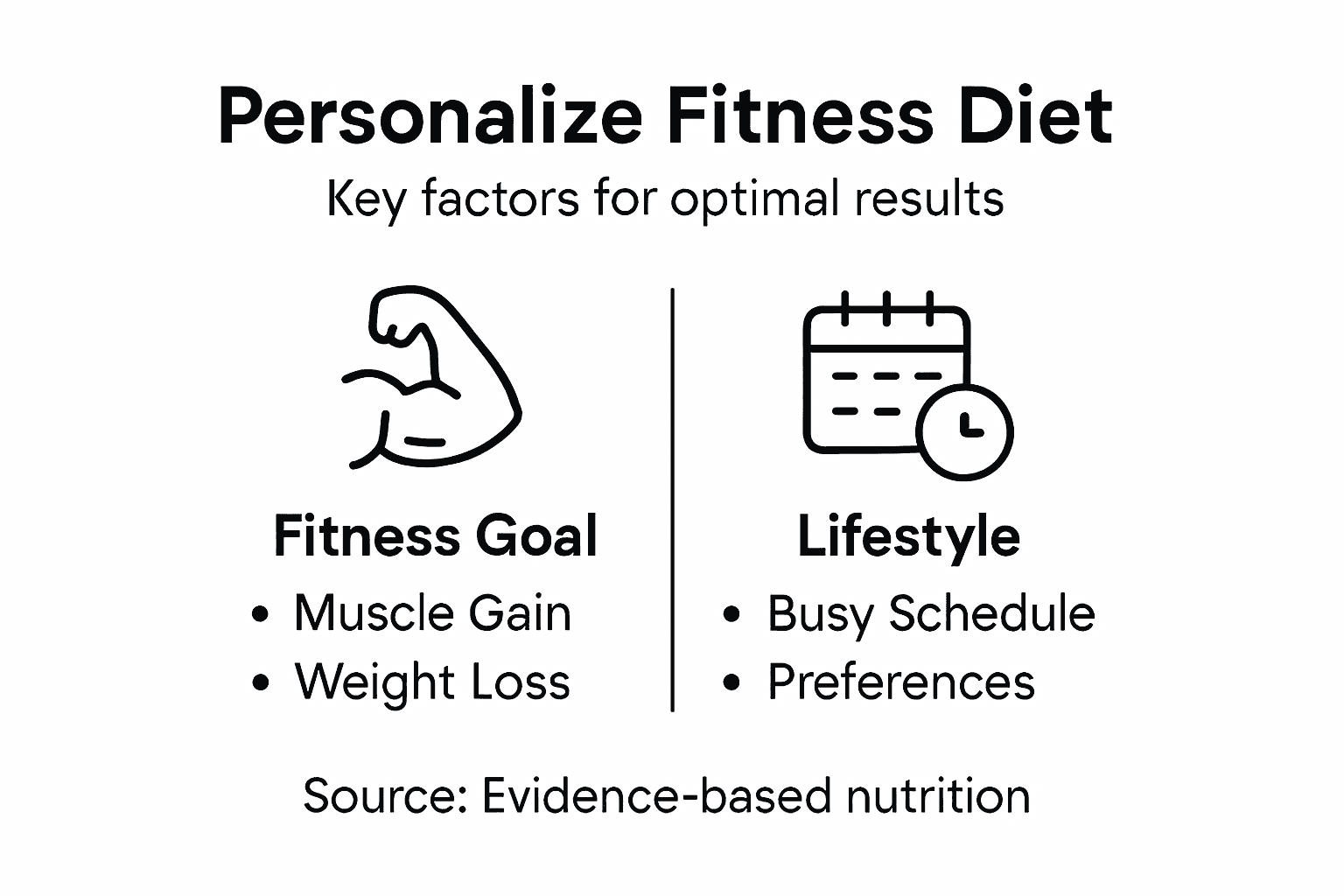
Your food preferences matter more than you think. You’ll stick to a diet you enjoy eating infinitely longer than one you hate. If you dislike fish, forcing salmon daily creates resentment and eventual failure. If you thrive on Mediterranean flavors, build your plan around olive oil, vegetables, lean meats, and legumes rather than fighting against your preferences. Personalizing your nutrition to match your lifestyle means acknowledging your actual food preferences and building around them rather than imposing restrictions that feel punitive.
Below is a summary of personal factors that influence successful diet personalization:
| Factor | Influence on Diet Success | Example Adaptation |
|---|---|---|
| Lifestyle | Meal timing and consistency | Plan meals around work schedule |
| Training Intensity | Caloric and carb needs | Increase carbs for heavy training |
| Food Preferences | Long-term adherence | Choose familiar, enjoyable foods |
| Body Composition Goals | Macro distribution | Adjust protein for fat loss or gain |
The Adaptation Process
Personalization isn’t static. Your needs shift with seasons, life changes, and training phases. Here’s how to build a system that evolves:
-
Establish baseline metrics for one month: track calories, macronutrients, bodyweight, strength levels, energy, and recovery quality.
-
Identify patterns in what works and what doesn’t. Which foods leave you energized versus sluggish? When do you feel strongest? When do you crash?
-
Adjust one variable at a time rather than overhauling everything. Change your protein target by 15 grams, or add carbs around training, or adjust meal timing. Wait 2 to 3 weeks to assess impact.
-
Track results objectively. Don’t rely on how you feel alone. Measure performance (strength levels, workout performance), body composition (photos, measurements, how clothes fit), and subjective factors (energy, recovery, mood).
-
Communicate with professionals. If you’re serious about results, working with a nutrition coach accelerates progress by eliminating guesswork.
Think of personalization like tuning an engine. Off the shelf settings work for most people, but optimal performance comes from fine-tuning based on how that specific engine responds. Your body is that engine.
For busy professionals in Bucharest aiming for muscle gain, weight loss, or performance improvements while managing hectic schedules, the right approach removes daily decision fatigue. Adjusting your meal program systematically based on measurable results ensures continuous improvement rather than spinning your wheels month after month. A personalized meal plan from a service designed around your specific goals and lifestyle constraints accelerates results while reducing the mental burden of constant dietary decisions.
Pro tip: Build your personalized nutrition around your three favorite protein sources, three favorite vegetables, and three favorite carbohydrate sources, then rotate them to maintain adherence while hitting your macro targets consistently.
Risks, Common Mistakes, and Safer Alternatives
The fitness industry thrives on selling quick fixes. Drop 20 pounds in 30 days. Build muscle while sleeping. Achieve six-pack abs with one weird trick. The appeal is obvious. You’re busy, ambitious, and you want results fast. But extreme diets and unsustainable approaches consistently backfire. They create short-term wins followed by long-term failures, wasted money, and sometimes serious health consequences. Understanding what goes wrong helps you avoid the traps that catch most people.
Common mistakes start with elimination diets that remove entire food groups. Cut carbs completely. Eliminate all fats. Eat only protein. These approaches create nutrient gaps that harm your health and performance. Without adequate carbs, your workouts suffer. Without healthy fats, your hormones crash. Without diverse nutrients, your immune system weakens. Elimination feels decisive. You’re taking action. But your body doesn’t care about decisiveness. It cares about getting the nutrients it needs. Fad diets often eliminate essential nutrients and promote unsustainable patterns that fail long-term, leaving you worse off than before you started.
Another critical error is chasing short-term results without considering sustainability. You lose 10 pounds in two weeks through extreme restriction, then regain 12 pounds over the next month when you resume normal eating. This cycle, called weight cycling or yo-yo dieting, harms your metabolism over time. Each cycle makes future fat loss harder and muscle gain slower. Your body adapts to extreme restriction by increasing hunger hormones and decreasing satiety signals, making the next diet even harder to stick to. Instead of asking “Can I lose weight this way?”, ask “Can I maintain this approach for two years?” If the answer is no, it’s not a diet. It’s a temporary measure that creates problems.
Ignoring individual variation causes people to follow someone else’s successful approach and expect identical results. Your friend crushes it on a ketogenic diet while you feel terrible. Your colleague thrives on intermittent fasting while you crash without breakfast. Genetics, metabolism, training experience, stress levels, and sleep quality all affect how your body responds to specific nutritional strategies. Cookie-cutter approaches ignore this reality. Safer alternatives involve working with professionals who assess your individual needs, preferences, and responses, then adjust your plan based on actual results rather than following a predetermined script.
Common Risks from Extreme Approaches
- Nutrient deficiencies: Missing vitamins, minerals, and essential amino acids that support training and health
- Hormone imbalances: Extreme diets suppress testosterone, increase cortisol, and disrupt metabolic hormones
- Bone density loss: Restrictive diets combined with intense training accelerate bone loss, increasing injury risk
- Muscle loss: Insufficient protein and extreme calorie deficits cause muscle breakdown alongside fat loss
- Mental health effects: Obsessive food rules, constant hunger, and social isolation from diet restrictions create anxiety and depression
- Eating disorder development: Extreme restriction patterns can evolve into clinical eating disorders
- Poor performance: Without adequate fuel, your training suffers, negating fitness goals
Safer, Science-Based Alternatives
The opposite of fad diets isn’t “eat whatever you want.” It’s structured nutrition built on proven principles:
1. Balanced macronutrient approach includes adequate carbs, protein, and fats. No single macronutrient is evil. Your body needs all three.
2. Include all food groups rather than eliminating categories. Whole grains, vegetables, fruits, lean proteins, dairy or alternatives, and healthy fats all provide unique nutrients.
3. Gradual changes beat sudden overhauls. Shift your diet 5 to 10 percent at a time, allowing habits to solidify before making another adjustment.
4. Listen to hunger cues instead of ignoring them. Extreme hunger signals your body’s needs. Sustainable nutrition respects that signal while still supporting your goals.
5. Track progress objectively using multiple metrics. The scale alone lies. Measure strength, performance, how clothes fit, energy levels, and recovery quality.
6. Work with professionals like registered dietitians or nutrition coaches who understand your individual situation, athletic goals, and lifestyle constraints. Sustainable dietary patterns based on balanced nutrition and gradual adjustments outperform extreme approaches for both short-term results and long-term health.
For busy professionals in Bucharest trying to optimize fitness results without destroying your health in the process, personalized meal plans from services designed around your actual life prove far more effective than following generic fad diet advice from the internet. The goal isn’t achieving maximum results in minimum time. It’s making consistent progress that compounds into genuine transformation over months and years while maintaining your health, sanity, and social life.
Pro tip: If a diet requires eliminating entire food groups, ignoring hunger signals, or achieving results that seem impossibly fast, skip it immediately and find an approach you can sustain for at least two years.
Take Control of Your Fitness-Focused Diet with Personalized Meal Solutions
Struggling to balance your fitness goals with a busy lifestyle is a common challenge highlighted in the article. Whether you are aiming for weight loss, muscle gain, or following a specific diet like vegan or keto, maintaining the right macronutrient balance and meal timing can feel overwhelming. The key pain points include fueling performance properly, recovering efficiently, and avoiding the guesswork that often leads to inconsistent results. Fresh, macro-balanced meals made from whole foods can simplify your routine while ensuring you meet your nutritional needs precisely.

Discover how Fresh Fitness Food transforms your fitness-focused diet into a stress-free experience. Take advantage of customizable meal plans tailored to your personal goals and preferences. Whether you need pre-planned meals optimized for performance and recovery or want to integrate nutrition with your exercise and lifestyle coaching, Fresh Fitness Food offers a holistic approach designed for busy professionals and fitness enthusiasts alike. Start your journey toward consistent progress today and experience the power of personalized nutrition combined with expert guidance. Explore our offerings and find out how you can fuel your fitness the right way at Fresh Fitness Food.
Frequently Asked Questions
What is a fitness-focused diet?
A fitness-focused diet is a strategic approach to nutrition that provides the specific nutrients your body needs for optimal performance, recovery, and achieving fitness goals such as muscle gain, weight loss, or improving athletic performance.
Why are macronutrients important in a fitness-focused diet?
Macronutrients—carbohydrates, proteins, and healthy fats—play crucial roles in fueling your body, repairing muscle tissue, and regulating hormones. The right balance of macronutrients enhances performance, recovery, and overall health.
How can I personalize my fitness diet?
You can personalize your fitness diet by identifying your specific goals (like fat loss or muscle gain), assessing your lifestyle, tracking your food intake, and adjusting your macronutrient ratios to meet your body’s unique needs and responses.
What are common mistakes to avoid when following a fitness-focused diet?
Common mistakes include elimination diets that cut out entire food groups, following unsustainable eating patterns for quick results, and ignoring individual differences in metabolism and food preferences. These often lead to nutrient deficiencies and ineffective progress.