

Master Fitness Nutrition Workflow for Optimal Results
For many health-focused residents in Bucharest, balancing nutrition with a busy lifestyle feels like a constant challenge. Personalized nutrition goes beyond basic meal suggestions by aligning dietary choices with your specific goals, preferences, and daily routine. Whether your priority is effective weight management or building muscle, this approach delivers tailored solutions designed for real results and long-term convenience.
Table of Contents
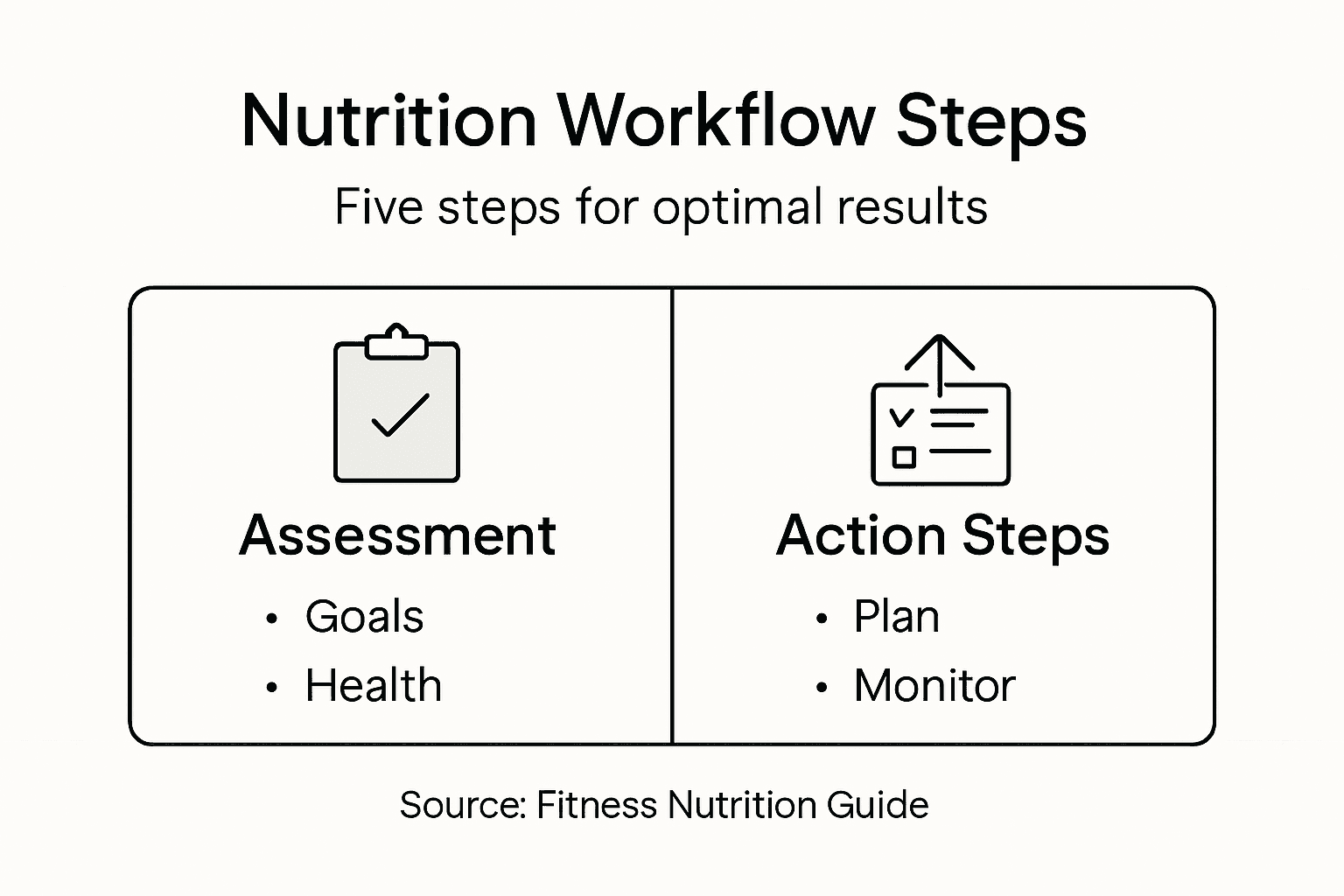
- Step 1: Assess Personal Goals And Health Status
- Step 2: Select Suitable Meal Plan And Macronutrient Targets
- Step 3: Personalize Nutrition And Schedule Delivery
- Step 4: Integrate Workouts And Lifestyle Coaching
- Step 5: Monitor Progress And Adjust Nutrition Workflow
Quick Summary
| Key Point | Explanation |
|---|---|
| 1. Assess Personal Health Data | Review body composition, fitness level, and health conditions for personalized nutrition. |
| 2. Set Tailored Macronutrient Targets | Determine specific macronutrient ratios based on fitness goals and metabolic rate. |
| 3. Personalize Meal Timing and Delivery | Schedule meals to fit your lifestyle and ensure nutritional consistency and adherence. |
| 4. Integrate Nutrition with Fitness Coaching | Align meal plans with workouts and include motivational support for effective results. |
| 5. Regularly Monitor and Adjust Plans | Continuously evaluate your progress and adapt your nutrition strategy as needed. |
Step 1: Assess Personal Goals and Health Status
Starting your fitness nutrition journey requires a comprehensive understanding of your current health status and specific wellness objectives. Personalized nutrition approaches begin with a thorough assessment that goes beyond generic dietary recommendations.
To effectively map out your nutrition strategy, you’ll need to collect and evaluate several key data points about your current health and fitness landscape. These critical elements include:
- Body composition metrics
- Current fitness level
- Existing health conditions
- Specific performance or aesthetic goals
- Dietary preferences and restrictions
- Genetic predispositions
The assessment process involves multiple steps that help create a holistic picture of your nutritional needs. Tailored nutrition advice considers not just your physical characteristics but also your lifestyle, behavioral patterns, and individual objectives.
Your initial evaluation should include professional consultations with nutritionists, fitness experts, or healthcare providers who can perform comprehensive diagnostic tests. These might encompass blood work, metabolic assessments, body composition scans, and detailed lifestyle questionnaires that reveal crucial insights into your metabolic functioning and potential nutritional requirements.
Here is a summary of professional assessments and why they matter for personalized nutrition:
| Assessment Type | Insight Provided | Impact on Nutrition Plan |
|---|---|---|
| Blood Work | Metabolic and nutrient status | Identifies deficiencies or risks |
| Body Composition Analysis | Fat/muscle distribution | Guides calorie/protein goals |
| Metabolic Rate Measurement | Energy expenditure rate | Adjusts daily caloric needs |
| Lifestyle Questionnaires | Behavioral patterns | Personalizes plan adherence |
Your personal health data is the blueprint for designing a nutrition strategy that truly works for you.
Pro tip: Keep a detailed health journal during your initial assessment to track baseline measurements and help professionals develop the most accurate nutrition plan possible.
Step 2: Select Suitable Meal Plan and Macronutrient Targets
After assessing your personal health status, the next critical phase involves designing a nutrition strategy that precisely matches your fitness objectives. Digital diet planning tools have revolutionized how individuals create personalized nutrition approaches tailored to their unique metabolic needs.
Selecting the right meal plan requires understanding your specific goals and current physiological condition. Your macronutrient targets should be strategically crafted based on multiple factors:
- Body composition goals
- Current metabolic rate
- Exercise intensity and frequency
- Performance objectives
- Existing health conditions
- Recovery requirements
Personalized nutrition algorithms emphasize the importance of moving beyond generic dietary recommendations. This means calculating precise protein, carbohydrate, and fat ratios that support your specific fitness journey.

To determine your ideal macronutrient breakdown, consider consulting with a registered nutritionist or utilizing advanced metabolic assessment tools. These professionals can help you develop a scientifically validated nutrition strategy that adapts to your body’s unique metabolic responses and performance demands.
Compare how nutrition strategies adapt to different fitness goals:
| Fitness Goal | Nutrition Strategy Focus | Typical Adjustments |
|---|---|---|
| Muscle Building | Higher protein intake | Increased calories, protein |
| Fat Loss | Caloric deficit, balanced macros | Reduced carbs/fats, portion control |
| Endurance Training | Emphasis on carbohydrates | Increased carb intake, timing optimization |
| General Wellness | Balanced, sustainable meals | Moderate macros, variety |
Your macronutrient strategy is not a one-size-fits-all solution but a dynamic blueprint for nutritional success.
Pro tip: Reassess your macronutrient targets every 6-8 weeks, as your body adapts and your fitness goals evolve.
Step 3: Personalize Nutrition and Schedule Delivery
With your macronutrient targets established, the next crucial step involves transforming your nutrition strategy into a practical, sustainable plan. Digital nutrition technologies now enable unprecedented customization of meal timing and delivery to match your unique lifestyle and fitness goals.
Personalizing your nutrition requires careful consideration of several key elements that ensure your meal plan integrates seamlessly with your daily routine:
- Meal timing preferences
- Work and exercise schedule
- Recovery and energy requirements
- Personal taste preferences
- Dietary restrictions
- Metabolic response patterns
Personalized nutrition delivery goes beyond simply selecting meals. It involves creating a comprehensive approach that adapts to your physiological rhythms and supports consistent nutritional adherence. This means strategically scheduling meal preparation, delivery, and consumption to optimize your body’s metabolic potential.
Consider working with nutrition professionals who can help you design a flexible delivery system that accommodates your changing lifestyle. Advanced meal services now offer tools that allow real-time adjustments to your nutritional plan, ensuring your diet remains aligned with your evolving fitness objectives.
Nutrition is not a static concept but a dynamic journey of continuous personal optimization.
Pro tip: Create a backup meal strategy for unexpected schedule changes to maintain nutritional consistency.
Step 4: Integrate Workouts and Lifestyle Coaching
Transforming your nutrition plan into comprehensive fitness success requires more than just meal preparation. Holistic fitness strategies emphasize the critical interconnection between nutrition, exercise, and lifestyle coaching to achieve optimal health outcomes.
Successful integration of workouts and nutrition coaching involves several key strategic elements:
- Synchronized training and nutrition schedules
- Performance tracking and adjustment
- Recovery-focused nutrition planning
- Mental health and motivation support
- Periodic goal reassessment
- Adaptive coaching techniques
Athletic performance optimization demands a comprehensive approach that considers your unique physiological needs and lifestyle constraints. This means developing a dynamic system where your workout intensity, nutritional intake, and personal coaching are continuously aligned and refined.
Effective lifestyle coaching goes beyond generic advice. It requires personalized attention that helps you navigate challenges, build sustainable habits, and maintain motivation through data-driven insights and consistent support. Your coach becomes a strategic partner in translating nutritional plans into tangible fitness results.
Your fitness journey is a collaborative process of continuous learning and adaptation.
Pro tip: Schedule monthly check-ins with your nutrition and fitness coach to ensure your strategy remains responsive to your evolving goals and body’s changing needs.
Step 5: Monitor Progress and Adjust Nutrition Workflow
Successful fitness nutrition requires continuous evaluation and strategic adaptation of your nutrition strategy. Digital nutrition tracking tools now provide unprecedented insights into your metabolic responses and nutritional effectiveness.
Effective progress monitoring involves tracking multiple interconnected metrics:
- Body composition changes
- Performance and energy levels
- Metabolic health indicators
- Nutritional adherence rates
- Physiological response patterns
- Goal achievement milestones
Personalized nutrition interventions demand a dynamic approach where your nutrition plan evolves with your changing physiological needs. This means implementing regular assessment checkpoints that allow for precise adjustments to your meal plans, macronutrient ratios, and overall nutritional strategy.
Consistent monitoring provides the critical feedback loop necessary for sustained fitness success. Your nutrition workflow should be treated as a living document, responsive to your body’s signals, performance metrics, and shifting wellness objectives. Leverage both quantitative data and qualitative feedback from your body to make informed nutritional modifications.
Progress is not linear, but strategic adaptation ensures continuous improvement.
Pro tip: Schedule quarterly comprehensive assessments with nutrition professionals to conduct deep-dive analyses of your metabolic health and nutritional effectiveness.
Master Your Nutrition Strategy with FreshFitnessFood
The article highlights common challenges such as assessing personal health data, creating precise macronutrient targets, and maintaining a flexible nutrition schedule to support fitness goals. These pain points often lead to confusion and inconsistency when trying to implement a truly personalized nutrition plan. FreshFitnessFood understands that effective fitness nutrition is about more than just meals. It requires an integrated approach that combines fresh, macro-balanced menus tailored to your unique goals with seamless delivery and expert lifestyle coaching.
Overcome the struggle of meal prep and tracking by choosing a service designed for your individual needs. Whether your focus is muscle gain, weight loss, or sustaining energy through balanced nutrition, FreshFitnessFood offers a variety of customizable plans that adapt as your fitness journey evolves. Say goodbye to guesswork and hello to a nutrition workflow built around your life and goals.

Ready to transform your fitness nutrition workflow into lasting success Take the next step toward optimized health and performance by exploring FreshFitnessFood’s tailored meal options. Experience the convenience of fresh meals designed with your unique metabolic needs in mind alongside professional coaching support. Visit FreshFitnessFood today and start fueling your fitness journey with precision and ease.
Frequently Asked Questions
What should I assess to start my fitness nutrition journey?
To begin your fitness nutrition journey, assess your body composition metrics, current fitness level, existing health conditions, and specific performance or aesthetic goals. Collecting this data will help in creating a personalized nutrition plan. Conduct a thorough evaluation with a professional to gather the necessary insights.
How do I select the right meal plan for my fitness goals?
Selecting the right meal plan involves understanding your body composition goals, metabolic rate, and exercise frequency. Calculate your macronutrient targets to align them with your fitness objectives. Consider consulting with a registered nutritionist to ensure your plan effectively meets your needs.
What elements should I include in my personalized nutrition schedule?
Include meal timing preferences, your work and exercise schedule, energy needs, and dietary restrictions in your personalized nutrition schedule. Ensure that your meal plan fits seamlessly into your daily routine. Adapt your schedule as necessary to maintain consistent nutritional habits.
How can I monitor my progress and adjust my nutrition plan?
Monitor your progress by tracking body composition changes, performance levels, and nutritional adherence rates. Conduct regular evaluations to make necessary adjustments to your meal plans and macronutrient ratios. Review your metrics quarterly to fine-tune your nutrition strategy for optimal results.
Why is integrating workouts and lifestyle coaching important for nutrition success?
Integrating workouts and lifestyle coaching is vital because it creates a cohesive approach to fitness, aligning your nutrition with your exercise routines. This collaboration enhances motivation and builds sustainable habits. Schedule regular check-ins with your coach to assess and adjust your combined nutrition and fitness strategy.