

Nutritional Coaching Explained: Personalized Success
Every Bucharest professional knows the challenge of balancing busy schedules with healthy eating goals. The search for lasting weight loss or muscle gain often feels complicated, yet true progress comes from personalized guidance and coaching, not quick fixes. Nutritional coaching stands out by adapting strategies to your individual needs and real-world constraints, helping you develop sustainable habits that align with your lifestyle. Discover how tailored support can transform your journey and make nutritional change actually work for you.
Table of Contents
- Core Principles Of Nutritional Coaching
- Types Of Nutritional Coaching Services
- How Personalized Nutrition Plans Work
- Client Responsibilities And Ethical Issues
- Risks, Limitations, And What To Avoid
Key Takeaways
| Point | Details |
|---|---|
| Personalized Coaching is Essential | Effective nutritional coaching tailors strategies to individual needs rather than applying a generic approach. |
| Sustainable Changes Over Temporary Fixes | Focus on building lasting habits rather than following rigid meal plans for quick results. |
| Collaboration is Key | Work with your coach to set realistic goals and adjust plans based on feedback from regular check-ins. |
| Be Aware of Limitations | Ensure your coach operates within ethical standards and avoids making unsupported health claims. |
Core Principles of Nutritional Coaching
Nutritional coaching in Bucharest operates on a simple foundation: helping you make sustainable changes, not temporary fixes. Unlike generic nutrition advice, effective coaching combines personalized guidance with behavior change strategies tailored specifically to your lifestyle.
The distinction matters here. Nutritional counseling differs from nutrition education in that it’s a supportive process where qualified professionals guide you to set realistic goals and create actionable plans. This isn’t about lecturing you on macros—it’s about understanding your unique barriers and preferences.
What Sets Effective Coaching Apart
Several core principles separate successful nutritional coaching from ineffective approaches:
- Individualization: Your coach adapts recommendations to your schedule, food preferences, and cultural background, not a one-size-fits-all template
- Behavior Change Focus: Real progress comes from shifting habits, not following rigid meal plans indefinitely
- Professional Guidance: Qualified coaches integrate proven strategies like Cognitive Behavioral Theory to help you overcome plateaus
- Goal Setting: You establish specific, measurable targets—not vague aspirations
The Science Behind Personalized Nutrition
Proper nutrition provides adequate nutrients in correct proportions to support your body’s functions and energy levels. For busy Bucharest professionals, this means knowing which nutrients matter most for your specific goal: weight loss, muscle gain, or sustained energy.
Your coach assesses your individual differences—metabolism, food tolerances, schedule constraints, and fitness objectives. Then they build a framework that actually fits your life.

Why Personalization Works for Your Goals
You’re not like everyone else at the gym. Your metabolism, preferences, and schedule are uniquely yours. A personalized approach acknowledges this.
Coaching helps you:
- Identify which nutrition strategies actually work for your body
- Build sustainable habits instead of white-knuckling through restrictions
- Adjust your plan as your goals or circumstances change
- Access professional support when motivation dips
Sustainable nutrition change requires individualized guidance that considers your unique circumstances, not standardized advice that ignores your reality.
Most people in Bucharest struggle with meal prep and time constraints. Personalized coaching recognizes these real-world challenges and builds solutions around them, rather than pretending they don’t exist.
Pro tip: Ask your coach how they’ll tailor recommendations to your schedule and food preferences—the best coaching is specific to you, not generic to everyone.
Types of Nutritional Coaching Services
Nutritional coaching isn’t one-size-fits-all. Different services address different needs, whether you’re managing weight, building muscle, or navigating mental health through diet. Understanding what’s available helps you choose the right fit for your Bucharest lifestyle.
Coaching services vary based on your specific goals and demographics. Some focus on broad evidence-based dietary guidelines, while others take specialized approaches tailored to your unique circumstances.
One-on-One Personal Coaching
This is the most direct option: you work with a single coach who understands your schedule, preferences, and obstacles. Your coach creates a customized plan that fits your life in Bucharest—not some generic template.
One-on-one coaching includes:
- Weekly or bi-weekly check-ins to track progress and adjust your plan
- Personalized meal recommendations based on your food preferences
- Real-time support when you hit motivation dips or face challenges
- Accountability that keeps you consistent toward your goals
Group Coaching and Workshops
Group sessions work well if you thrive with community support. You’ll learn alongside others pursuing similar goals while paying less than individual coaching.
These programs typically cover nutrition basics, meal planning strategies, and habit-building techniques. The group dynamic creates motivation through shared experiences.
Specialized Behavioral and Mental Health Coaching
Nutritional coaching integrates psychology to address mental health alongside physical nutrition goals. This specialized approach recognizes that food choices connect to emotional wellbeing, stress management, and psychological patterns.
Behavioral coaching helps you:
- Identify triggers driving unhealthy eating patterns
- Develop coping strategies for stress and emotional eating
- Build sustainable habits instead of relying on willpower
- Address the psychological side of nutrition, not just macros
Workplace and Community-Based Programs
Some organizations offer nutrition coaching integrated into wellness initiatives. These programs use evidence-based nutrition guidelines to support employees or community members in specific settings.
These services are often more affordable and accessible, though less personalized than private coaching.
The best coaching type matches your personality, budget, and how you prefer to learn—whether solo guidance, group motivation, or specialized behavioral support.
Your choice depends on whether you want individual attention, community accountability, specialized mental health support, or budget-friendly options.
Pro tip: Ask prospective coaches about their credentials and whether they specialize in your specific goal (weight loss, muscle gain, or mental health support) before committing to any program.
Here’s a comparison of common nutritional coaching service types to help you decide what fits best:
| Service Type | Individualization Level | Typical Cost | Best For |
|---|---|---|---|
| One-on-One Coaching | Highly personalized | Higher (private rate) | Deep support, complex or specific goals |
| Group Coaching/Workshops | Moderate | More affordable | Motivation from peers, building general habits |
| Behavioral Health Coaching | Tailored to needs | Variable, often higher | Addressing emotional eating or mental health |
| Workplace/Community Program | Lower, broad guidelines | Usually lowest | Basic education, larger groups, accessibility |
How Personalized Nutrition Plans Work
Personalized nutrition plans aren’t created in a vacuum. They follow a structured process where your coach assesses your situation, collaborates with you on realistic goals, and builds a plan you can actually follow. This collaborative approach is what makes them work.
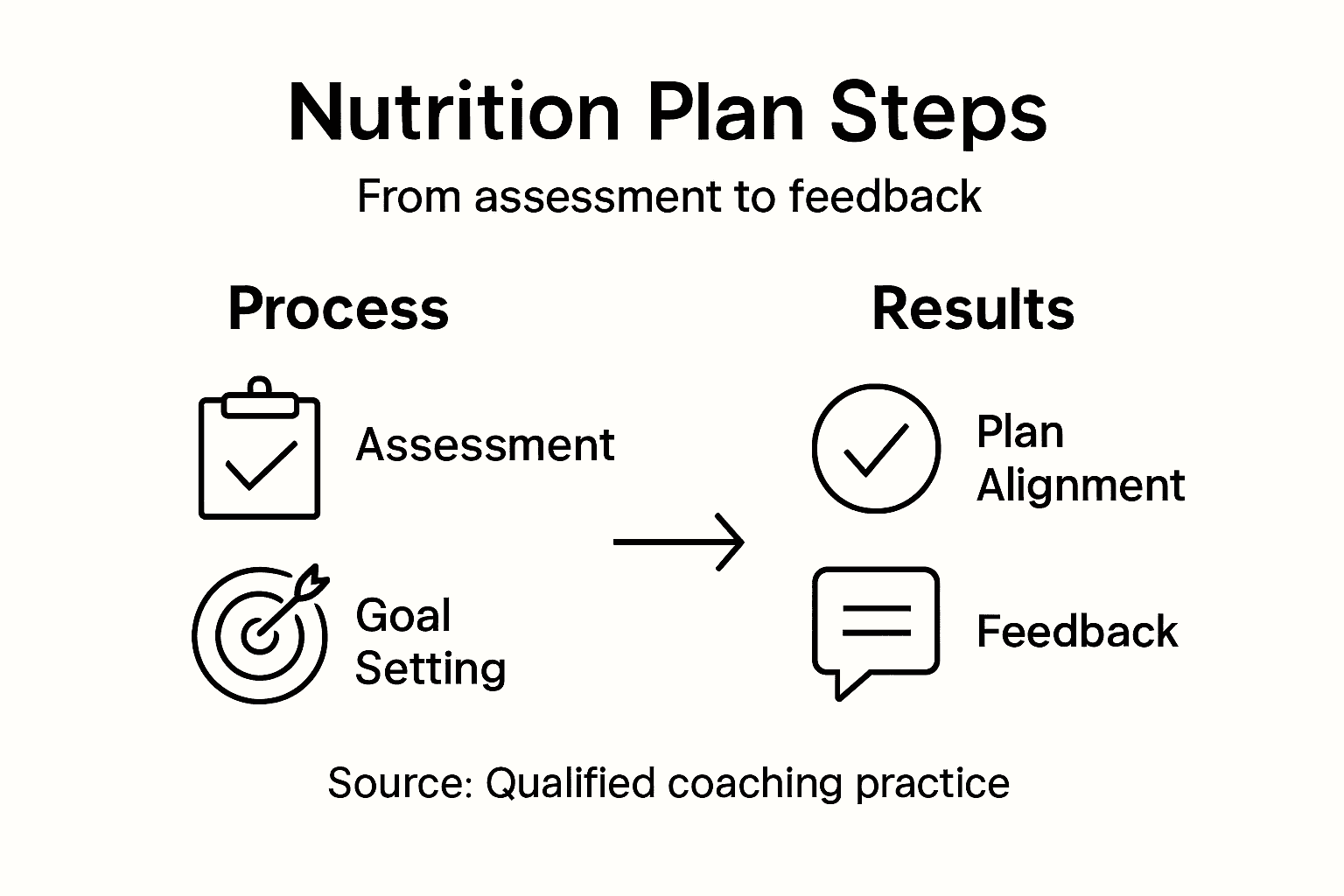
The process starts with understanding you: your health status, lifestyle constraints, food preferences, and specific goals. From there, your coach develops a practical roadmap tailored to your circumstances in Bucharest.
Step 1: Nutrition Assessment
Your coach begins by evaluating your current eating patterns, health history, and lifestyle. This isn’t about judgment—it’s about gathering data to inform your plan.
The assessment covers:
- Current dietary habits and typical daily meals
- Health conditions, allergies, and food intolerances
- Your schedule, budget, and access to foods
- Energy levels, fitness goals, and body composition objectives
- Stress levels and emotional eating patterns
Step 2: Collaborative Goal Setting
Personalized plans involve collaborative goal setting between you and your coach. Together, you establish realistic, measurable targets that align with your actual life, not an idealized version.
Realistic goals in Bucharest might look like: losing 8 pounds in 3 months, building muscle while maintaining energy for work, or stabilizing energy throughout the day.
Step 3: Plan Development and Alignment
Your coach creates a nutrition plan that aligns with current dietary guidelines while respecting your preferences. The plan emphasizes nutrient-dense foods and balanced macros suited to your goals.
This isn’t a restrictive diet. It’s a flexible framework that fits your schedule and food preferences.
Step 4: Implementation and Feedback
You begin following the plan while your coach provides ongoing support. Regular check-ins reveal what’s working and what needs adjustment based on your real-world experience.
Personalized plans evolve as you progress. Your coach incorporates feedback and adjusts recommendations to keep you moving toward your goals sustainably.
Effective personalized plans adapt to your life, not the other way around—they’re built for sustainability, not perfection.
The key difference: generic diets ignore your constraints. Personalized plans work within them.
Pro tip: Choose a coach who schedules regular follow-ups (weekly or bi-weekly) and actually adjusts your plan based on your feedback—that’s what separates working plans from forgotten ones.
To clarify the process, here is a summary of key steps in effective personalized nutrition planning:
| Step | Core Activity | Primary Benefit |
|---|---|---|
| Assessment | Review habits and health history | Identifies unique needs and barriers |
| Collaborative Goal Setting | Set measurable, realistic targets | Aligns plan to your lifestyle |
| Plan Development | Build tailored nutrition framework | Ensures plan is practical for you |
| Implementation & Feedback | Monitor progress and adjust | Maintains accountability and progress |
Client Responsibilities and Ethical Issues
Nutritional coaching works only when both you and your coach hold up your end of the relationship. Understanding your responsibilities and the ethical standards that protect you creates a foundation of trust and accountability.
This isn’t just about following a meal plan. It’s about showing up honestly, communicating openly, and honoring the professional relationship you’ve established with your coach.
Your Responsibilities as a Client
Successful coaching requires active engagement from you. You’re not passive—you’re a partner in the process.
Your key responsibilities include:
- Communicating honestly about what you’re eating and how you’re feeling
- Following the agreed-upon plan as closely as your real life allows
- Attending scheduled check-ins and providing feedback on what’s working
- Being transparent about obstacles, struggles, or changes in your situation
- Asking questions when you don’t understand recommendations
Ethical Standards That Protect You
Ethical nutritional coaching requires confidentiality and informed consent from qualified professionals. Your coach should respect your privacy, explain what they’re recommending and why, and stay within their professional scope.
Ethical coaches:
- Keep your personal information and health data completely confidential
- Explain recommendations clearly so you understand what you’re agreeing to
- Don’t prescribe supplements or make medical claims beyond nutrition
- Refer you to doctors or specialists when health issues exceed their expertise
- Respect your autonomy in making final decisions about your nutrition
Red Flags: When Something Isn’t Right
You should notice if your coach pressures you into extreme restrictions, makes medical diagnoses, or disregards your concerns. Good coaches listen. They adjust plans based on feedback.
A coach acting unethically might:
- Promise unrealistic results like losing 20 pounds in 4 weeks
- Dismiss your concerns or push harder when you’re struggling
- Share your information without permission
- Recommend treatments or diagnoses outside their qualifications
Ethical practice safeguards your welfare and builds trust—the foundation of any effective coaching relationship.
You deserve a coach who respects your boundaries, maintains confidentiality, and prioritizes your wellbeing over everything else.
Pro tip: Before hiring a coach, ask about their credentials, confidentiality policies, and what happens if a recommendation doesn’t work for you—their answers reveal whether they operate ethically.
Risks, Limitations, and What to Avoid
Not all nutrition coaching is created equal. Understanding the risks and limitations protects you from wasting time and money on ineffective or even harmful guidance. Knowing what to avoid is just as important as knowing what to seek.
Many people in Bucharest fall victim to coaches who overstep their expertise or make unrealistic promises. Being informed helps you spot these red flags before committing.
Coaches Operating Outside Their Scope
Nutrition coaching must stay within professional scope to avoid risks like providing medical nutrition therapy without proper credentials. A qualified coach gives general nutrition guidance, not medical diagnoses or treatment plans.
Coaches should NOT:
- Diagnose medical conditions like diabetes, celiac disease, or eating disorders
- Prescribe specific diets for medical conditions without physician collaboration
- Recommend pharmaceutical supplements as medical treatments
- Claim they can “cure” or “treat” diseases through nutrition alone
- Make unsupported health claims
Misinformation and Ineffective Techniques
Risks include misinformation and ineffective counseling techniques that waste your time and money. Poor coaches may push outdated nutrition advice, extreme restriction, or fad approaches.
Avoid coaches who promote:
- Elimination diets without scientific basis
- Detox claims or extreme “cleanses”
- Specific supplements as magic solutions
- One-size-fits-all meal plans ignoring your preferences
- Unrealistic timelines like dropping 20 pounds in 4 weeks
Breach of Confidentiality and Coercion
Your personal health information should remain private. A coach sharing your data without consent violates your trust and possibly your legal rights.
Also watch for coercion—ethical coaches respect your readiness for change. They don’t pressure you into extreme measures or shame you for struggling.
Common Limitations to Understand
Coaches with insufficient training may lack evidence-based knowledge. They might not understand nutrition science deeply or adjust plans based on your actual results.
Good coaches acknowledge their limitations, refer you to specialists when needed, and prioritize your welfare over pushing you toward unrealistic goals.
Nutritional coaching works best alongside, not instead of, medical care. If you have health conditions, work with your doctor and a qualified coach together.
Pro tip: Ask any prospective coach for their specific credentials, whether they follow evidence-based guidelines, and what they won’t do—their honest answers reveal their professionalism.
Achieve Your Personalized Nutrition Goals with Fresh Fitness Food
Struggling to find a nutrition plan that truly fits your unique lifestyle and goals can be frustrating. The article highlights how individualization, behavior change, and professional guidance are essential for lasting success. Fresh Fitness Food understands these challenges by offering fresh, macro-balanced meals tailored to your preferences and fitness objectives. Whether your focus is weight loss, muscle gain, or maintaining sustained energy, their solutions are designed to work with your schedule and taste, eliminating the stress of meal prep.

Discover how easy it is to integrate personalized nutrition into your busy life by exploring Fresh Fitness Food’s meal plans. Take the first step toward sustainable change with meals and coaching crafted around your needs. Visit Fresh Fitness Food now and experience the convenience and support that align perfectly with expert nutritional coaching principles.
Frequently Asked Questions
What is nutritional coaching?
Nutritional coaching is a supportive process where qualified professionals help clients make sustainable dietary changes tailored to their individual lifestyles and goals, rather than offering generic advice.
How does personalized nutrition work?
Personalized nutrition plans involve assessing your unique dietary habits, health history, and lifestyle constraints. Coaches then work with you to set realistic goals and develop a customized plan to achieve them.
What types of nutritional coaching services are available?
Common types of nutritional coaching services include one-on-one personal coaching, group coaching and workshops, specialized behavioral and mental health coaching, and workplace or community-based programs.
What should I look for in a nutritional coach?
When selecting a nutritional coach, consider their qualifications, approach to personalized plans, commitment to ethical practices, and ability to adapt recommendations to your specific needs and lifestyle.