

Role of Meal Timing in Fitness Success
Every European fitness lover has felt the challenge of squeezing balanced nutrition into a packed schedule. Juggling work, workouts, and family makes it easy to overlook how meal timing directly impacts muscle gain, energy, and weight management. By adopting chrononutrition—the practice of eating with your body’s natural rhythms—you can simplify your routine and sharpen your results, without adding stress to your day.
Table of Contents
- Defining Meal Timing And Its Core Principles
- Circadian Rhythms And Nutrient Absorption
- Meal Frequency Versus Meal Timing
- Key Meal Timing Strategies For Fitness Goals
- Risks Of Poor Meal Timing And How To Avoid Them
- Personalizing Meal Timing For Busy Schedules
Key Takeaways
| Point | Details |
|---|---|
| Importance of Meal Timing | Aligning meal consumption with the body’s circadian rhythms can significantly enhance metabolism and overall health outcomes. |
| Meal Consistency over Frequency | Maintaining consistent meal times is more critical for metabolic health than the number of meals consumed daily. |
| Strategic Nutrient Intake | Optimal nutrient timing around physical activity improves energy levels, recovery, and performance. |
| Risks of Poor Timing | Irregular eating patterns can lead to metabolic dysfunction and health complications, highlighting the need for structured meal schedules. |
Defining Meal Timing and Its Core Principles
Meal timing represents a strategic approach to nutrition that transcends traditional eating patterns by synchronizing food consumption with the body’s natural metabolic rhythms. At its core, chrononutrition explores how the precise timing of nutrient intake can significantly influence metabolism, energy levels, and overall fitness performance.
Research reveals that meal timing is not simply about what you eat, but when you eat. Emerging scientific research demonstrates that aligning meal consumption with our body’s circadian rhythms can profoundly impact health outcomes, including metabolism regulation and disease prevention.
The key principles of effective meal timing include:
- Maintaining consistent meal schedules
- Consuming larger meals earlier in the day
- Avoiding late-night eating
- Synchronizing nutrient intake with physical activity
- Respecting individual metabolic variations
Understanding meal patterns requires recognizing that our bodies respond differently to food based on time of day. Research methodologies in nutrition highlight the complexity of measuring these intricate metabolic interactions, emphasizing that meal timing is not a one-size-fits-all approach.
Pro tip: Experiment with meal timing by tracking your energy levels, workout performance, and body composition to discover your optimal nutritional rhythm.
Circadian Rhythms and Nutrient Absorption
Circadian rhythms represent the body’s internal 24-hour biological clock that orchestrates complex metabolic processes, fundamentally influencing how nutrients are processed and absorbed. These intricate rhythmic patterns control everything from hormone secretion to metabolic efficiency, creating a dynamic internal environment that responds differently to nutrients throughout the day.
Physiological research demonstrates that our metabolic systems are not uniform but instead fluctuate dramatically across daily cycles. Glucose tolerance, insulin sensitivity, and nutrient processing peak during daylight hours, suggesting that meal timing plays a crucial role in optimizing metabolic health and preventing potential dysfunction.
Key characteristics of circadian-based nutrient absorption include:
- Higher metabolic efficiency during daytime hours
- Decreased insulin sensitivity during nighttime
- Variations in digestive enzyme production
- Fluctuating hormone levels affecting nutrient processing
- Metabolic adaptations based on light and darkness cycles
Metabolic research from medical experts reveals that disrupting natural circadian rhythms through irregular eating patterns can lead to significant metabolic challenges. Late-night eating, for instance, can impair the body’s ability to effectively metabolize nutrients, potentially contributing to weight gain and metabolic disorders.
Aligning nutrition with your body’s natural rhythms can transform how effectively you process and utilize nutrients.
Pro tip: Consume your largest meals during daylight hours and minimize food intake after sunset to support your body’s natural metabolic programming.
Meal Frequency Versus Meal Timing
The debate between meal frequency and meal timing has long intrigued fitness enthusiasts and nutritional scientists alike. While traditional approaches emphasized consuming multiple small meals throughout the day, emerging research suggests that meal timing might be a more critical factor in metabolic health and fitness performance.
Systematic review research indicates that restricting meal frequency to 2-3 balanced meals per day and implementing time-restricted feeding can significantly improve glycemic control and weight management. This approach challenges the previous conventional wisdom of consuming 5-6 smaller meals daily.
Key comparative insights between meal frequency and timing include:
- Timing trumps frequency in metabolic impact
- Consistent meal schedules matter more than meal count
- Circadian rhythm alignment influences nutrient processing
- Time-restricted feeding can improve insulin sensitivity
- Individual metabolic variations play a crucial role
Cardiometabolic research reveals that meal irregularity independently increases cardiometabolic risk factors. Maintaining consistent meal times appears more important than the total number of meals consumed, suggesting that metabolic health is deeply connected to the predictability and timing of nutritional intake.
Metabolic efficiency is less about how often you eat and more about when and how consistently you eat.
Pro tip: Experiment with reducing meal frequency while maintaining consistent meal times to optimize your metabolic performance and simplify your nutrition strategy.
Key Meal Timing Strategies for Fitness Goals
Meal timing strategies are not just theoretical concepts, but practical approaches that can dramatically transform fitness outcomes. Understanding how and when to consume nutrients can mean the difference between average results and exceptional performance.

Strategic nutritional research reveals that aligning food intake with natural circadian rhythms can optimize energy expenditure and weight control. Consuming the majority of calories during active daytime hours reduces weight gain risk and enhances metabolic efficiency.
Key meal timing strategies for fitness goals include:
- Concentrate calorie intake during daylight hours
- Time pre-workout meals for sustained energy
- Schedule post-workout nutrition for muscle recovery
- Implement time-restricted feeding windows
- Minimize late-night eating
- Align meal timing with individual activity levels
Nutrient timing around training emphasizes the importance of strategic meal planning. This approach involves precise nutritional interventions before, during, and after physical activity to maximize energy availability, muscle synthesis, and overall performance.
Precision in meal timing can be as important as the nutritional content itself.
Pro tip: Create a personalized meal timing log to track how different nutrient schedules impact your energy, recovery, and fitness progress.
To better understand how meal timing choices impact common fitness goals, review this comparison:
| Fitness Goal | Optimal Meal Timing Approach | Typical Benefits |
|---|---|---|
| Muscle Gain | Pre- and post-workout meals | Enhanced muscle recovery |
| Weight Loss | Daytime calorie concentration | Improved fat metabolism, appetite control |
| Endurance Performance | Balanced meals around activity | Sustained energy, lower fatigue |
| Metabolic Health | Time-restricted feeding windows | Better insulin sensitivity |
Risks of Poor Meal Timing and How to Avoid Them
Poor meal timing can sabotage even the most dedicated fitness efforts, creating metabolic challenges that undermine performance and health goals. Understanding the potential risks is crucial for developing a strategic nutritional approach that supports your fitness journey.
Metabolic research highlights significant consequences of irregular eating patterns, particularly the impact of skipping breakfast or consuming late-night meals. These nutritional missteps can trigger a cascade of metabolic disruptions that affect overall health and fitness performance.
Key risks associated with poor meal timing include:
- Increased blood sugar instability
- Reduced metabolic efficiency
- Higher risk of weight gain
- Compromised muscle recovery
- Decreased energy levels
- Potential hormonal imbalances
- Impaired nutrient absorption
Cardiometabolic studies demonstrate that irregular meal timing can lead to serious long-term health complications, including insulin resistance and increased cardiovascular risk. Maintaining consistent meal schedules becomes a critical strategy for metabolic health and fitness success.
Consistency in meal timing is not just a recommendation, but a fundamental pillar of metabolic wellness.
Pro tip: Create a structured meal schedule that aligns with your daily activities and stick to it religiously to minimize metabolic disruptions and optimize your fitness potential.
Personalizing Meal Timing for Busy Schedules
Busy professionals face unique challenges in maintaining consistent nutritional strategies, requiring innovative approaches to meal timing that adapt to unpredictable work and life demands. Personalizing nutrition isn’t about perfect adherence, but creating flexible systems that support metabolic health despite variable schedules.
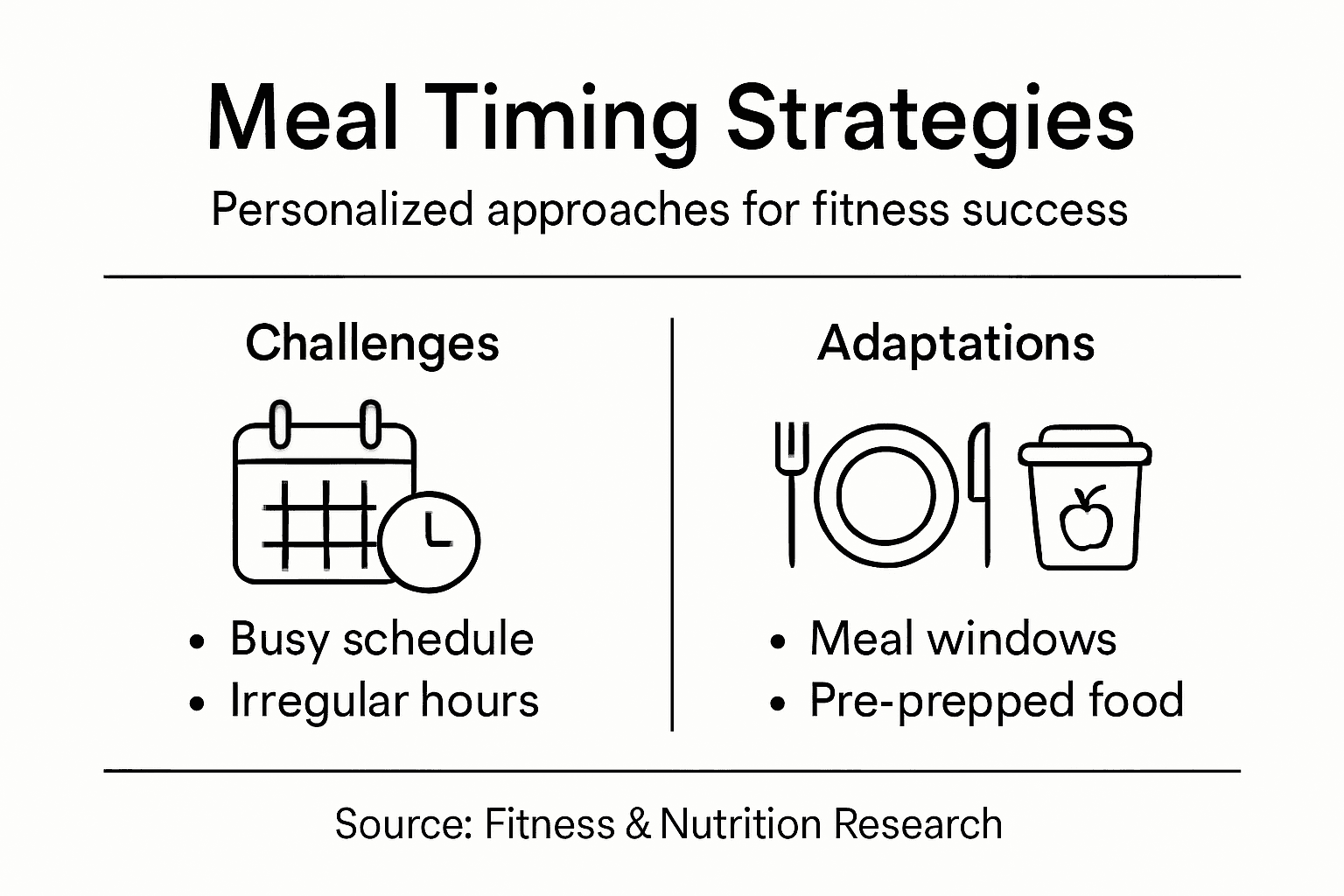
Strategic nutrition research emphasizes the importance of establishing consistent meal patterns, even amid chaotic daily routines. By understanding individual metabolic needs and creating adaptable nutritional frameworks, busy individuals can optimize their fitness potential without feeling overwhelmed.
Key strategies for personalizing meal timing include:
- Batch preparing meals in advance
- Using meal prep containers for portable nutrition
- Creating modular meal plans
- Establishing 2-3 consistent anchor meal times
- Implementing quick, nutrient-dense meal alternatives
- Using smartphone apps for meal tracking
- Planning meals around primary daily activities
Circadian rhythm research reveals that prioritizing food intake during daylight hours remains crucial, even with complex schedules. The goal is maintaining metabolic consistency while providing enough flexibility to accommodate real-world challenges.
Adaptability is the key to sustainable nutritional success in a dynamic lifestyle.
Pro tip: Design a flexible meal timing strategy with 2-3 non-negotiable meal windows that you can reliably maintain, regardless of daily variations.
Here’s a quick reference on meal timing adaptations for busy professionals:
| Challenge | Adaptation Strategy | Potential Impact |
|---|---|---|
| Unpredictable schedule | Set anchor meal times | Improved metabolic stability |
| Limited prep time | Batch cooking, meal prep containers | Less skipped meals, convenience |
| Long workdays | Nutrient-dense, portable options | Maintained energy, better focus |
| Frequent travel | Modular meal planning | Consistent nutrition anywhere |
Master Your Meal Timing for Fitness Success with Fresh Fitness Food
Struggling to keep your meal schedule consistent while chasing your fitness goals? The article highlights how meal timing impacts metabolism, energy levels, and muscle recovery. Key challenges include avoiding late-night eating, managing meal frequency, and syncing your nutrition with your daily activity and circadian rhythms. These factors can feel overwhelming, especially for busy professionals aiming for weight loss, muscle gain, or improved metabolic health. Fresh Fitness Food understands these pain points and offers fresh, macro-balanced meals tailored to your personal fitness journey.

Take control of your nutritional rhythm now by choosing from customized meal plans designed to match your training and lifestyle needs. Whether you want to optimize your nutrient timing for enhanced muscle recovery or prefer time-restricted feeding windows to boost metabolism, our flexible, ready-to-eat meals remove the guesswork and prep time. Visit Fresh Fitness Food to explore how easy it is to maintain consistent meal timing that fits your schedule. Start your journey to improved fitness with personalized meal solutions and integrate nutrition, exercise, and lifestyle coaching for lasting results. Don’t wait – fuel your success with smarter meal timing today.
Frequently Asked Questions
What is meal timing and why is it important for fitness?
Meal timing is a nutritional strategy that focuses on when you eat rather than just what you eat. It is important for fitness because aligning food consumption with your body’s natural circadian rhythms can optimize metabolism, energy levels, and overall performance.
How does meal timing affect metabolism?
Meal timing affects metabolism by influencing nutrient absorption and metabolic efficiency based on the time of day. Consuming larger meals earlier in the day when metabolic processes are most efficient can lead to better health outcomes and weight management.
Should I focus on meal frequency or meal timing for better fitness results?
Recent research suggests that meal timing might be more critical than meal frequency. Maintaining consistent meal schedules, particularly aligning them with circadian rhythms, can improve metabolic health more effectively than simply increasing the number of meals per day.
What are some practical strategies for effective meal timing?
Practical strategies for effective meal timing include concentrating calorie intake during daylight hours, scheduling meals around physical activity, minimizing late-night eating, and implementing time-restricted feeding windows to enhance overall metabolic performance.