

Role of Nutrition in Fitness: Unlocking Optimal Results
Long workdays in Bucharest can make sticking to fitness goals challenging when nutrition falls by the wayside. For health-conscious professionals, finding convenient meals that deliver a precise balance of macronutrients is crucial for muscle growth, energy, and sustainable weight management. Scientific reviews confirm that personalized nutrition and targeted meal timing transform workout results, helping you unlock performance whether following vegan or keto diets.
Table of Contents
- Defining Nutrition’s Impact on Fitness Success
- Key Nutrients for Exercise Performance
- How Meal Timing Affects Results
- Macro-Balanced Diets: Vegan, Keto, and More
- Pitfalls to Avoid in Fitness Nutrition
Key Takeaways
| Point | Details |
|---|---|
| Nutrition is fundamental for fitness success | Effective nutrition directly influences athletic performance, recovery, and overall adaptation to training. |
| Personalized nutritional strategies are crucial | Tailoring nutrition to individual metabolic profiles enhances performance and supports fitness goals. |
| Meal timing affects metabolic performance | Strategically timing nutrient intake can optimize energy levels and recovery. |
| Avoid common nutritional pitfalls | Recognizing and navigating misconceptions can help maintain progress and achieve long-term health. |
Defining Nutrition’s Impact on Fitness Success
Nutrition is the foundational cornerstone of achieving remarkable fitness success. Far beyond simply consuming calories, effective nutritional strategies directly influence athletic performance, muscle development, recovery, and overall physiological adaptation. Nutritional science reveals that what you eat fundamentally determines how effectively your body responds to physical training.
Research demonstrates that personalized nutrition plays a critical role in fitness outcomes. According to a systematic review on dietary strategies for sports performance, targeted nutritional approaches can dramatically enhance an athlete’s capabilities. Key nutritional factors include:
- Optimal macronutrient balance for muscle protein synthesis
- Strategic carbohydrate intake for glycogen replenishment
- Precise protein consumption supporting muscle growth
- Micronutrient supplementation tailored to individual metabolic needs
- Hydration protocols matching specific training intensities
The physiological mechanisms connecting nutrition and fitness are complex and interdependent. Proper nutrient timing, macronutrient ratios, and metabolic adaptation work synergistically to transform dietary inputs into athletic performance. Proteins rebuild muscle tissue, carbohydrates restore energy reserves, and micronutrients facilitate cellular repair and immune function.
Nutrition is not just fuel – it’s the blueprint for your body’s performance potential.
Metabolic adaptation represents a sophisticated process where nutritional interventions can literally reshape an individual’s physiological capabilities. By understanding and implementing scientifically validated nutritional strategies, athletes can unlock unprecedented levels of performance and recovery.
Pro Tip: Invest in a comprehensive nutritional assessment that analyzes your unique metabolic profile to design a truly personalized fitness nutrition plan.
Key Nutrients for Exercise Performance
Nutrient optimization forms the critical foundation for maximizing exercise performance and achieving peak physiological potential. Different nutrients play unique roles in supporting muscular function, energy production, recovery, and overall athletic performance. Understanding how specific nutrients interact with metabolic processes can transform an individual’s fitness journey.
Research highlights several key nutrients essential for exercise performance. According to sports nutrition and recovery research, critical nutrients include:
- Proteins: Essential for muscle repair and growth
- Carbohydrates: Primary fuel for high-intensity activities
- Branched-chain amino acids: Support muscle recovery and reduce fatigue
- Vitamins C and E: Provide antioxidant protection during intense training
- Minerals: Support metabolic functions and cellular energy production
The body’s nutritional demands dramatically change during physical activity. Metabolic efficiency requires precise nutrient intake that matches training intensity and individual physiological requirements. Proteins rebuild muscle tissue, while carbohydrates replenish glycogen stores and provide immediate energy for performance.
Nutrition is the strategic weapon that transforms potential into performance.
Complex interactions between nutrients determine overall exercise effectiveness. Ergogenic nutritional supplements like creatine, amino acids, and carefully timed protein intake can significantly enhance strength, endurance, and recovery processes.
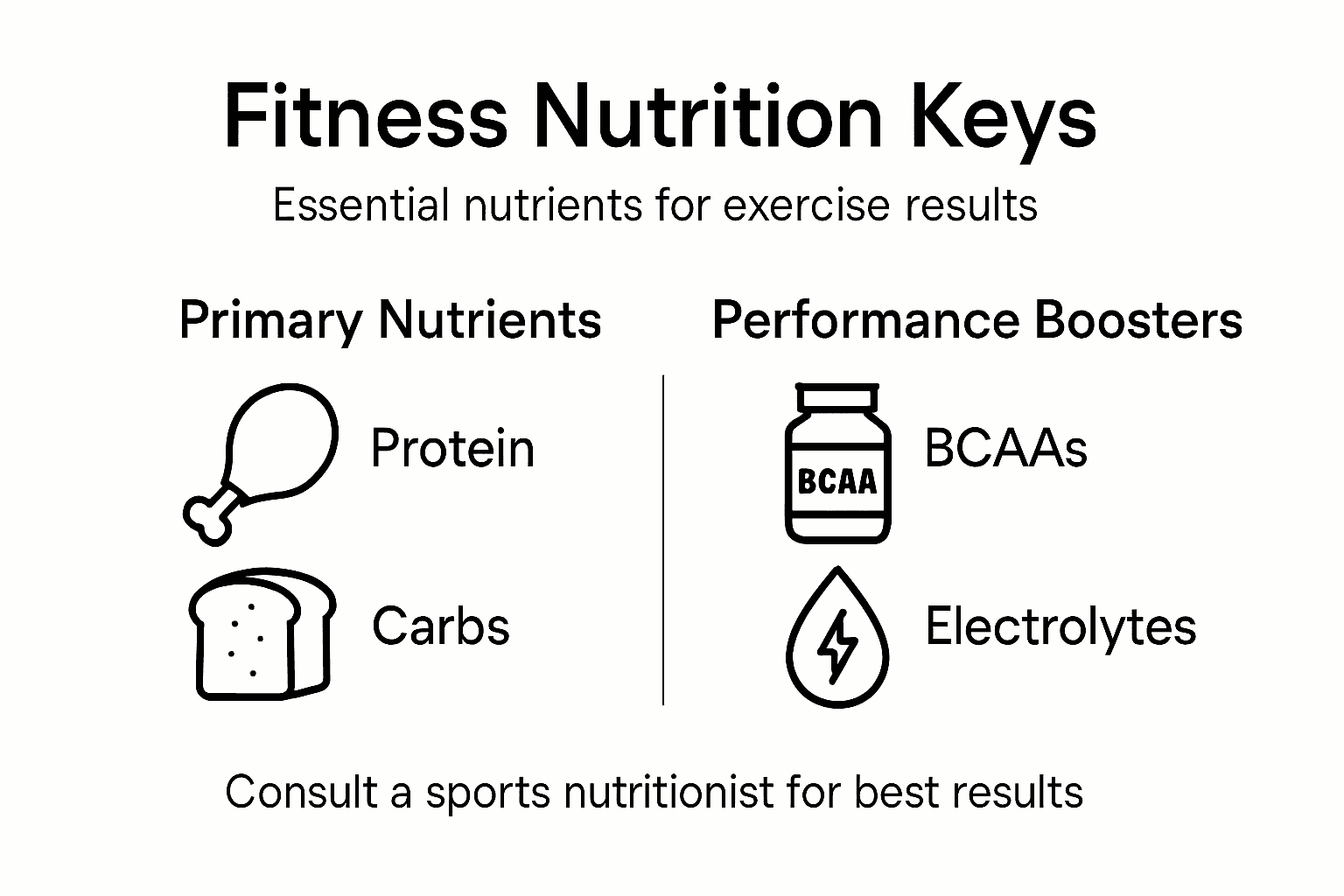
Pro Tip: Consult a sports nutritionist to develop a personalized nutrient strategy that precisely matches your unique metabolic profile and fitness goals.
How Meal Timing Affects Results
Meal timing represents a critical yet often overlooked component of fitness nutrition that can dramatically influence metabolic performance and body composition. The strategic placement of nutrients throughout the day can significantly impact energy levels, muscle recovery, and overall physiological responses to exercise.
Chrononutrition research reveals how aligning food intake with our body’s natural circadian rhythms can optimize metabolic health. Key insights into meal timing include:
- Consuming proteins within 30 minutes post-workout maximizes muscle protein synthesis
- Distributing carbohydrate intake around training sessions enhances energy availability
- Eating larger meals earlier in the day supports more efficient metabolic processing
- Maintaining consistent meal intervals helps regulate hormonal balance
- Avoiding late-night heavy meals prevents metabolic disruption
The body’s metabolic machinery operates like a precision instrument, with nutrient absorption and utilization varying dramatically throughout different times of day. Metabolic windows represent critical periods when the body is most receptive to specific nutrient types, making precise meal timing crucial for achieving fitness goals.
Your metabolism doesn’t just process food – it responds to strategic nutritional timing.
Understanding individual metabolic responses requires a personalized approach. Different fitness goals – whether muscle gain, fat loss, or performance enhancement – demand unique nutritional strategies that consider not just what you eat, but precisely when you consume specific nutrients.

The table below highlights the impact of meal timing strategies on exercise results:
| Meal Timing Strategy | Key Benefit | Ideal For |
|---|---|---|
| Protein post-workout | Maximizes muscle repair | Muscle gain, strength training |
| Carbohydrate loading pre-exercise | Boosts energy availability | Endurance sports |
| Early larger meals | Supports fat metabolism | Weight management |
| Consistent intervals | Regulates hormones | Hormonal balance, recovery |
| Avoiding late meals | Reduces fat storage risk | Fat loss, better sleep |
Pro Tip: Track your meal timing and energy levels for two weeks to identify your body’s optimal nutritional rhythm and performance windows.
Macro-Balanced Diets: Vegan, Keto, and More
Macro-balanced diets represent sophisticated nutritional strategies that go far beyond traditional eating approaches, carefully calibrating protein, carbohydrate, and fat intake to optimize fitness performance. Understanding the nuanced differences between various dietary frameworks can dramatically transform an individual’s metabolic efficiency and athletic potential.
Comprehensive dietary pattern research reveals critical insights into popular nutritional approaches. Different macro-balanced diets offer unique benefits and challenges:
- Vegan Diets: Plant-based nutrition with potential micronutrient complexities
- Ketogenic Diets: High-fat, low-carbohydrate approach emphasizing metabolic adaptation
- Mediterranean Diet: Balanced approach focusing on whole foods and lean proteins
- Paleo Diet: Emphasizing ancestral food consumption patterns
- Flexitarian Diet: Flexible plant-forward approach allowing occasional animal proteins
Each dietary strategy demands precise nutritional engineering to meet individual fitness goals. Metabolic flexibility becomes crucial, requiring athletes to understand how different macro compositions influence energy production, muscle recovery, and overall physiological performance.
Nutrition is not one-size-fits-all – it’s a personalized performance optimization strategy.
Understanding the biochemical interactions between macronutrients and individual metabolism requires a nuanced, scientific approach. Sports nutrition strategies consistently emphasize the importance of tailoring dietary approaches to specific athletic requirements, preferences, and physiological responses.
Here’s how different macro-balanced diets stack up for fitness goals:
| Diet Type | Main Advantage | Possible Challenge | Best For |
|---|---|---|---|
| Vegan | Rich in fiber, low in cholesterol | Careful planning for protein and B12 | Endurance athletes, heart health |
| Keto | Promotes fat burning | Difficult for high-intensity training | Body recomposition, weight loss |
| Mediterranean | Heart-healthy fats, balanced macros | Moderate protein, not low carb | General health, longevity |
| Paleo | Whole foods, high in protein | Can be restrictive, costly | Muscle gain, natural eating |
| Flexitarian | Adaptable, easier adherence | May lack protein at times | Those seeking flexibility |
Pro Tip: Consult a registered sports nutritionist to develop a personalized macro-balanced diet plan that aligns precisely with your unique fitness objectives and metabolic profile.
Pitfalls to Avoid in Fitness Nutrition
Fitness nutrition represents a complex landscape fraught with potential misconceptions and counterproductive strategies that can derail even the most dedicated athletes. Understanding and navigating these nutritional pitfalls becomes crucial for maintaining consistent progress and achieving long-term health and performance goals.
Diet strategy research reveals several critical nutritional traps that individuals frequently encounter. Common pitfalls include:
- Implementing extreme, unsustainable dietary restrictions
- Neglecting individual metabolic differences
- Prioritizing short-term weight loss over long-term nutrition
- Adopting one-size-fits-all approaches to nutrition
- Ignoring micronutrient balance while focusing solely on macronutrients
- Failing to adapt nutrition strategies as fitness goals evolve
The human metabolism is a sophisticated system that requires nuanced, personalized nutritional approaches. Metabolic adaptation demands intelligent, gradual dietary modifications rather than radical, shock-based interventions that trigger defensive physiological responses.
Sustainable nutrition is a marathon, not a sprint – progress trumps perfection.
Successful fitness nutrition involves understanding biochemical individuality and developing flexible, adaptive strategies that align with personal physiological responses. Recognizing that nutrition is a dynamic process, not a static prescription, enables athletes to make intelligent, sustainable dietary choices.
Pro Tip: Track your nutritional intake and physiological responses for at least one month to develop a truly personalized understanding of your body’s unique metabolic requirements.
Unlock Your Fitness Potential with Personalized Nutrition Solutions
The article highlights a common challenge faced by fitness enthusiasts and athletes — translating complex nutritional science and metabolic adaptation into actionable, sustainable strategies. If you struggle with meal timing, balancing macronutrients on diets like keto or vegan, or avoiding common nutritional pitfalls, you are not alone. Achieving optimal performance demands a personalized nutrition plan that matches your unique metabolic profile and fitness goals.
At Fresh Fitness Food, we bring these critical concepts to life by offering fresh, macro-balanced meals tailored specifically to your needs. Whether your aim is muscle gain, weight loss, or improved recovery, our customizable options support your metabolic efficiency with meals designed for peak energy, recovery, and endurance. Experience the convenience of expertly prepared, nutritionally optimized meals built around your lifestyle and goals.

Take control of your fitness journey today. Explore our custom meal plans crafted to align perfectly with your dietary preferences and metabolic demands. Start fueling your body the right way and unlock the blueprint for your highest performance potential now.
Frequently Asked Questions
What is the impact of nutrition on fitness performance?
Nutrition plays a critical role in fitness performance as it influences muscle development, recovery, and overall physiological adaptation to training. A well-structured nutritional strategy can enhance athletic capabilities and optimize energy utilization.
How does meal timing affect my fitness results?
Meal timing is essential in maximizing energy levels and muscle recovery. Consuming proteins and carbohydrates strategically around workout sessions can significantly enhance metabolic performance and support fitness goals.
What key nutrients should I focus on for optimal exercise performance?
Key nutrients for exercise performance include proteins for muscle repair, carbohydrates for energy, branched-chain amino acids for recovery, and essential vitamins and minerals for overall metabolic function.
How can I personalize my nutrition for fitness goals?
Personalizing your nutrition involves assessing your individual metabolic profile and aligning it with your fitness objectives. Working with a sports nutritionist can help create a tailored dietary strategy that optimizes your performance and recovery.