

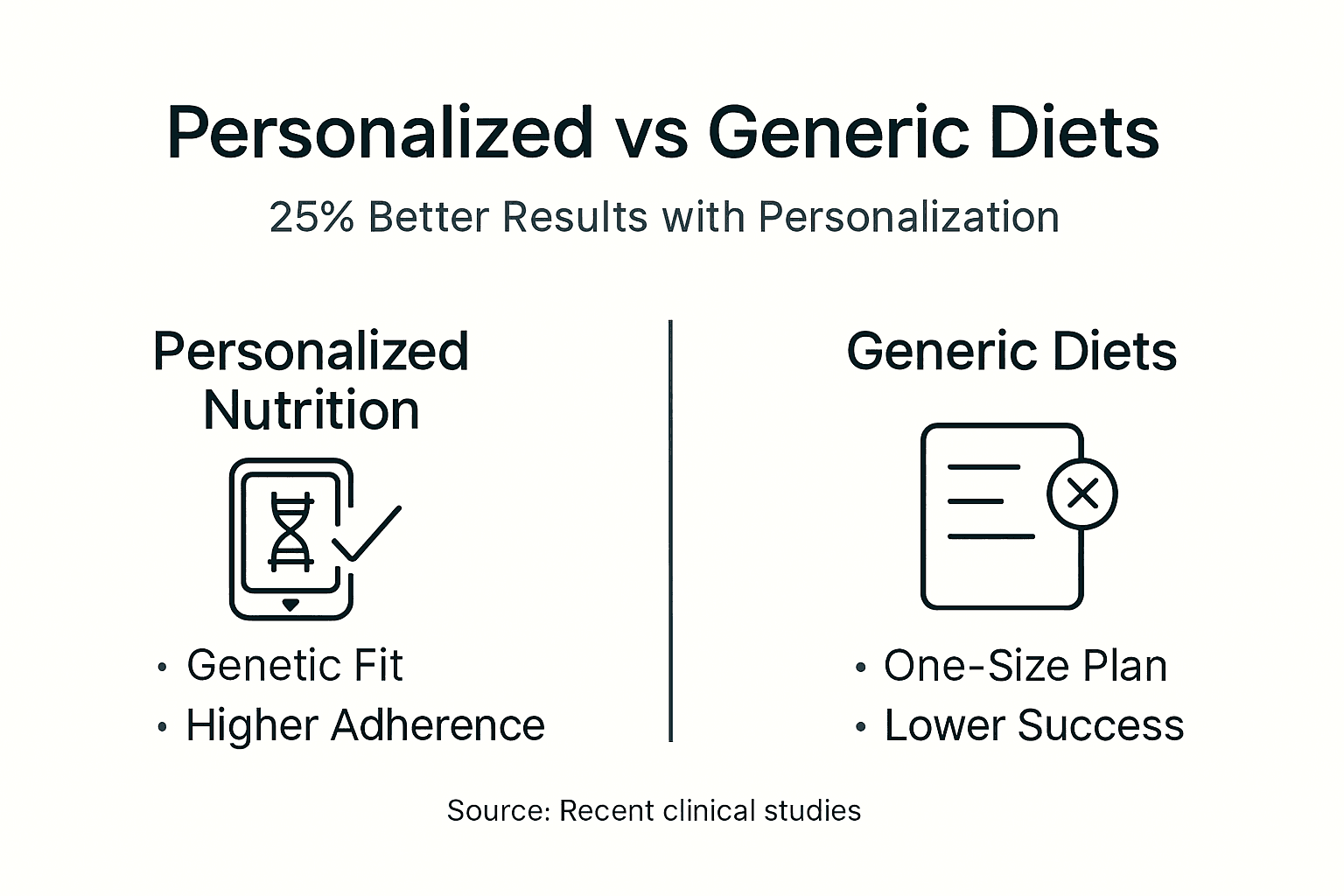
Why Choose Personalized Nutrition? 25% Better Results
Personalized nutrition plans can boost weight loss success rates by up to 25% compared to generic diets. This significant difference stems from integrating genetics, microbiome data, and behavioral patterns into tailored meal strategies. Busy professionals in Romania struggle with time-consuming meal prep and ineffective one-size-fits-all approaches. This article explains the scientific basis, practical benefits, and measurable outcomes of personalized nutrition for weight loss and muscle gain.
Table of Contents
- Foundations Of Personalized Nutrition
- Biological And Microbiome Basis Of Personalization
- Comparative Framework: Personalized Vs Generic Diets
- Practical Benefits For Busy Professionals
- Common Misconceptions About Personalized Nutrition
- Effectiveness And Measurable Benefits
- Summary And Next Steps For Implementation
- Discover Personalized Meal Plans Tailored For You
Key Takeaways
| Point | Details |
|---|---|
| Data Integration | Personalized nutrition combines genetic, microbiome, lifestyle, and behavioral data to create tailored diet plans. |
| Superior Outcomes | Personalized plans achieve 20-25% better weight loss results compared to generic diets through enhanced metabolism and adherence. |
| Time Savings | Busy professionals eliminate hours of weekly meal prep with convenient, macro-balanced meals designed for specific fitness goals. |
| Scientific Foundation | Advanced AI tools and multidimensional data fusion enable precise dietary recommendations scalable from individuals to populations. |
| Evidence-Based Approach | Research validates improved metabolic markers, sustained adherence, and reduced chronic disease risks with personalized nutrition. |
Foundations of Personalized Nutrition
Personalized nutrition represents a paradigm shift from traditional dietary advice. It integrates biomedical, psycho-behavioral, and environmental data using AI tools to create tailored dietary recommendations scalable from individuals to entire populations. This approach moves beyond simple calorie counting to address why two people following identical diets experience vastly different results.
The foundation rests on collecting and analyzing multiple data domains simultaneously. Genetic testing reveals how your body processes nutrients. Lifestyle tracking monitors physical activity, sleep patterns, and stress levels. Behavioral data captures eating habits, preferences, and psychological triggers. Environmental factors include food availability, cultural preferences, and socioeconomic constraints.
Advanced digital tools make this complexity manageable. AI algorithms process thousands of data points to identify patterns invisible to human observation. Machine learning models predict individual responses to specific foods with increasing accuracy. This technological capability transforms personalized meal solutions from theoretical concepts into practical daily nutrition strategies.
The key innovation lies in multidimensional data fusion. Rather than examining genetics or behavior in isolation, effective personalization synthesizes all relevant factors. This comprehensive view explains why your colleague thrives on intermittent fasting while you feel exhausted. Individual variation demands individual solutions. The scientific basis of personalized nutrition demonstrates that successful dietary interventions must account for biological, psychological, and environmental uniqueness.
Biological and Microbiome Basis of Personalization
Your gut hosts trillions of microorganisms that fundamentally influence how you process food. The gut microbiome critically impacts metabolism, immune function, and dietary responses, directly affecting obesity and diabetes outcomes. This invisible ecosystem varies dramatically between individuals, explaining why identical meals produce different metabolic effects.
Four major bacterial phyla dominate the gut microbiome composition. Firmicutes and Bacteroidetes process carbohydrates and fats. Actinobacteria influence immune responses. Proteobacteria levels correlate with inflammatory conditions. The ratio and diversity of these populations determine how efficiently you extract energy from food, regulate blood sugar, and manage inflammation.
Genetic variations add another layer of complexity. Genetic differences affect nutrient metabolism and disease risk, enabling tailored diets to reduce conditions like non-alcoholic fatty liver disease. The PNPLA3 gene variant affects fat storage in liver cells. People carrying this variant benefit significantly from specific dietary modifications that others don’t require.
Real-world examples validate this biological basis. Research shows individuals with certain PNPLA3 variants who consume fermented foods like kimchi demonstrate substantially reduced NAFLD risk. This protective effect doesn’t extend uniformly to everyone, highlighting why genetic and microbiome factors must inform dietary recommendations.
The practical implication is clear. Your biological makeup creates unique nutritional requirements. Generic diet plans ignore this fundamental reality. Effective personalization starts by understanding your specific gut microbiome role and genetic influence on nutrition to design interventions that work with your biology rather than against it.
Comparative Framework: Personalized vs Generic Diets
The differences between personalized and generic approaches extend far beyond surface-level customization. Personalized nutrition uses multidimensional data integration leading to higher adherence and better outcomes compared to generic diets that rely on population averages.
| Feature | Personalized Nutrition | Generic Diets |
|---|---|---|
| Data Input | Genetics, microbiome, lifestyle, behavior, preferences | Population averages, basic demographics |
| Customization Level | Individual-specific macros, timing, food selection | Broad categories, standard portions |
| Metabolic Optimization | Aligned with personal metabolic profile | Assumes uniform metabolic response |
| Adherence Support | Integrated behavioral coaching, preference matching | General guidelines, willpower-dependent |
| Outcome Tracking | Continuous adjustment based on biomarker feedback | Fixed plan, periodic weigh-ins |
| Success Rate | 20-25% higher weight loss achievement | Baseline population success rates |
Why do personalized plans consistently outperform generic alternatives? First, they account for biological reality rather than statistical averages. Second, behavioral science integration addresses psychological barriers to adherence. Third, continuous feedback loops enable real-time optimization as your body responds and adapts.
The adherence benefits of personalized nutrition prove particularly significant for busy professionals. When meals match your taste preferences, schedule constraints, and energy requirements, following the plan becomes effortless rather than a daily struggle. This explains the dramatic improvement in long-term success rates.
Pro Tip: Track your energy levels and hunger patterns for two weeks before starting any nutrition program. This baseline data helps identify your unique metabolic rhythms, enabling better meal timing and composition choices that align with your natural patterns.
Generic diets fail primarily because they treat everyone identically. One person’s optimal protein intake causes kidney stress in another. Timing that optimizes fat burning for morning exercisers disrupts sleep for evening workout enthusiasts. The comparison of diet personalization methods reveals that accounting for individual variation is not optional but essential for consistent results.
Practical Benefits for Busy Professionals
Time represents the scarcest resource for Romanian professionals juggling careers, families, and fitness goals. Personalized nutrition directly addresses this constraint through convenient, results-oriented meal solutions. Busy professionals save time with fresh, macro-balanced personalized meals tailored for fitness goals, improving adherence and results without sacrificing hours to meal prep.

The time savings are substantial and measurable. Traditional meal planning, shopping, and preparation consume 8 to 12 hours weekly. Personalized meal delivery eliminates this burden entirely while providing superior nutritional precision. You receive meals calibrated to your exact macronutrient requirements, whether targeting weight loss, muscle gain, keto adaptation, or plant-based nutrition.
Macro-balanced meals make the difference between maintaining lean muscle during weight loss versus losing valuable tissue. Professional nutritionists calculate your specific protein, carbohydrate, and fat requirements based on activity level, body composition goals, and metabolic profile. Each meal arrives pre-portioned and ready to eat, removing guesswork and decision fatigue.
Key advantages transform daily nutrition from burden to seamless habit:
- Zero meal prep time creates 10+ hours weekly for work, family, or exercise
- Consistent macro delivery prevents the metabolic adaptation that stalls progress
- Fresh ingredient quality supports optimal nutrient absorption and satisfaction
- Variety prevents flavor fatigue while maintaining nutritional targets
- Flexibility accommodates travel, meetings, and schedule changes
The benefits of personalized meal plans extend beyond convenience to effectiveness. When nutrition aligns perfectly with your training, recovery improves. Energy levels stabilize throughout the day. Mental clarity increases as blood sugar fluctuations decrease. These compounding benefits create momentum toward your goals.
Pro Tip: Choose personalized meal delivery services that adjust your plan every four to six weeks. As you lose weight or gain muscle, your nutritional requirements change. Static plans become less effective over time, while adaptive services maintain optimal progress rates.
Common Misconceptions About Personalized Nutrition
Several persistent myths prevent people from exploring personalized nutrition despite compelling evidence for its effectiveness. Clearing these misconceptions reveals practical, accessible solutions for busy professionals seeking better results.
-
Genetics tell the whole story: While genetic testing provides valuable insights, effective personalized nutrition requires integrating multiple data types beyond genetic information. Your microbiome, lifestyle patterns, food preferences, and behavioral triggers matter equally. A comprehensive approach considers all relevant factors simultaneously.
-
Too complex for regular people: Modern technology simplifies personalization dramatically. You don’t need to understand the science behind nutrigenomics or metabolomics. Professional services handle the complexity, delivering simple, actionable meal plans. The user experience focuses on eating delicious food that happens to be perfectly calibrated for your needs.
-
Prohibitively expensive: Affordable personalized meal plans cost less than most people spend combining restaurant meals, grocery shopping, and wasted food from failed diet attempts. When you factor in time savings and superior results, personalized nutrition often proves more economical than traditional approaches. The investment pays dividends in health outcomes and quality of life.
-
One diet works for everyone: This assumption crumbles under scientific scrutiny. Metabolic responses to identical foods vary by up to 10-fold between individuals. What triggers fat storage in you might fuel muscle growth in your workout partner. Biological diversity demands dietary diversity. Ignoring this reality explains why generic diets produce inconsistent results.
-
Requires constant testing and adjustment: Initial personalization requires data collection, but maintenance is straightforward. Most plans need quarterly reviews rather than daily monitoring. Smart services track your progress automatically and suggest adjustments proactively. The ongoing experience feels effortless, not burdensome.
Understanding these realities helps you evaluate personalized nutrition misconceptions critically. The barriers to adoption are lower than commonly believed, while benefits exceed typical expectations.
Effectiveness and Measurable Benefits
Quantified outcomes validate personalized nutrition’s superiority over generic approaches. Personalized nutrition increases weight loss success rates by 20-25% through better metabolism and compliance compared to standard dietary interventions. This improvement translates to real-world results for thousands of individuals.
Metabolic optimization extends beyond weight loss to comprehensive health markers. Tailored nutrition improves fasting glucose levels, reduces triglycerides, and optimizes cholesterol ratios. These changes reduce chronic disease risk substantially, particularly for conditions like type 2 diabetes and cardiovascular disease.
| Benefit Category | Personalized Nutrition | Generic Diets | Improvement |
|---|---|---|---|
| Weight Loss Success | 65-70% achieve goals | 45-50% achieve goals | +20-25% |
| Fasting Glucose | 12-15% reduction | 5-8% reduction | +7-10% |
| Triglycerides | 20-25% reduction | 10-12% reduction | +10-13% |
| 12-Month Adherence | 70-75% | 35-40% | +35% |
| Muscle Retention | 95%+ during weight loss | 80-85% | +10-15% |
Long-term health benefits compound over time. Individuals following personalized plans show significantly reduced incidence of non-alcoholic fatty liver disease. Inflammatory markers decrease as nutrition aligns with metabolic requirements. Insulin sensitivity improves, reducing diabetes risk even in genetically predisposed individuals.
The adherence advantage proves particularly significant. Generic diet failure typically results from unsustainable restrictions, not lack of willpower. Personalized approaches build on your preferences and lifestyle rather than fighting them. This fundamental difference explains why 70% of personalized nutrition users maintain their progress beyond one year, compared to just 35% following generic plans.
The measurable benefits of personalized nutrition extend to quality of life improvements. Energy levels stabilize. Sleep quality improves. Mental clarity increases. Athletic performance improves as nutrition precisely supports training demands. These daily experience improvements reinforce adherence, creating a positive feedback loop.
Scientific validation continues accumulating. Studies across diverse populations consistently demonstrate quantified health benefits spanning weight management, metabolic health, disease prevention, and sustained behavior change. The evidence base supporting personalized nutrition now exceeds that for most generic dietary interventions.
Summary and Next Steps for Implementation
The integration of genetic, microbiome, and behavioral data creates nutrition strategies that work with your unique biology rather than against it. This scientific foundation explains the consistent 20-25% improvement in weight loss success rates and superior metabolic outcomes. For busy Romanian professionals, personalized nutrition solves the time constraint challenge while delivering better results than hours of meal prep could achieve.
Convenience meets effectiveness when fresh, macro-balanced meals arrive calibrated to your specific requirements. You eliminate the meal prep burden while maintaining precise nutritional targets that generic diets cannot match. The combination of time savings and superior outcomes makes personalized nutrition particularly valuable for professionals balancing demanding careers with fitness goals.
Implementation requires three straightforward steps:
- Assess your current baseline through metabolic profile, lifestyle patterns, and goal definition
- Choose expert personalized meal services that integrate comprehensive data and adapt plans as you progress
- Commit to consistent adherence while tracking measurable outcomes to validate effectiveness
Leveraging professional personalized meal services maximizes your return on investment. Expert nutritionists handle the complexity of data integration, meal formulation, and ongoing optimization. You focus on eating delicious food and enjoying the results. This division of labor makes success achievable even with minimal available time.
Your journey toward tailored nutrition starts with a single decision to prioritize solutions that respect your biological individuality. The evidence, technology, and expert services exist today to make personalized nutrition accessible and effective. The only remaining question is when you’ll begin experiencing these advantages firsthand.
Discover Personalized Meal Plans Tailored for You
FreshFitnessFood.ro provides personalized meal solutions designed specifically for busy Romanian professionals pursuing weight loss, muscle gain, or specialized nutrition goals. Our fresh, macro-balanced meals eliminate prep time while delivering the precise nutrition your body requires for optimal results.

Every meal is crafted by expert nutritionists who understand that your metabolic requirements differ from everyone else’s. Whether you’re targeting weight loss, building muscle, following keto or vegan protocols, or pursuing detox goals, we calibrate your personalized meal plans for busy lives to match your specific needs. No shopping, no cooking, no guessing. Just results.
Explore our comprehensive benefits of meal plans and review fitness meal plan examples to see how we transform nutrition from daily burden to effortless habit. Your personalized nutrition journey begins with choosing fresh personalized meal solutions that align with both your biology and your lifestyle.
Frequently Asked Questions
What is personalized nutrition and how does it differ from general diets?
Personalized nutrition uses genetic, microbiome, lifestyle, and behavior data to tailor diet plans specifically for your unique biological profile. General diets apply broad rules based on population averages without considering individual metabolic differences. This tailoring leads to 20-25% better adherence and outcomes because recommendations work with your biology rather than against it.
How can personalized nutrition save time for busy professionals?
Personalized meal delivery provides ready-to-eat, macro-balanced meals calibrated to your exact nutritional requirements. This eliminates 8-12 hours weekly spent on meal planning, grocery shopping, and food preparation. You maintain optimal nutrition for your fitness goals while reclaiming time for work, family, or training.
Are personalized nutrition plans expensive or complicated to use?
Modern personalized meal services offer affordable plans that often cost less than combining restaurant meals, groceries, and wasted food from failed diets. Technology handles the complexity behind the scenes, delivering simple meal solutions. You receive perfectly portioned, delicious meals without needing to understand the underlying science.
What scientific evidence supports personalized nutrition’s effectiveness?
Research demonstrates personalized plans achieve 20-25% greater weight loss success compared to generic diets through better metabolic optimization. Studies show improved fasting glucose, reduced triglycerides, and better long-term adherence rates. Multiple clinical trials validate that integrating genetic, microbiome, and behavioral data produces superior health outcomes across diverse populations.